


Yahaya Bello and the Call of History: A Leadership Journey Rooted in Service, Security, and National Aspiration
By Prince Muhammed Otaiki
His Excellency Alhaji Yahaya Bello, CON, has once again affirmed his enduring political relevance in Nigeria’s dynamic landscape with a confident and impactful appearance at the presidential congress of the All Progressives Congress (APC), the nation’s ruling party, where his presence transcended mere ceremony to reflect the stature of a statesman whose influence continues to expand across Kogi State, the North Central zone, and the broader national political terrain.
In contemporary Nigerian politics, such relevance is neither accidental nor fleeting but earned through consistent engagement, resilience, and a genuine connection with the aspirations of the people, as Alhaji Yahaya Bello has come to embody the hopes of many Nigerians seeking purposeful leadership and a redefinition of governance anchored firmly in security, development, and inclusion, with his political journey resonating strongly among citizens who believe true leadership must be grounded in service and courage rather than convenience.
Ododo, Bello: Kogi’s Power Duo Eye Re-election, Senate Seat Amid Voter support
Across Kogi State and beyond, many now view him as a leader primed for greater national responsibility, including the ultimate call to serve at the highest levels of Nigeria’s political life, a sentiment not isolated but echoed through sustained public support and advocacy, fostering a growing consensus among his supporters that Alhaji Yahaya Bello, CON, should be encouraged and backed to advance into national legislative service through the Senate of the Federal Republic of Nigeria.
This platform is widely regarded as strategic, offering a vital opportunity for his wealth of experience, innovative ideas, and leadership philosophy to further contribute to national development and democratic stability, where in a democracy, political appreciation is never abstract but expressed concretely through participation, loyalty, and the ballot, making the prospect of electing him into the Senate both a recognition of his past service and a strategic investment in future national leadership, a collective affirmation that good governance, decisive action, and unwavering commitment to security and development merit acknowledgment and continuity.
His tenure as governor marked a defining turning point in the political and developmental history of Kogi Central and Kogi State at large, transforming a region once mired in stagnation and neglect into one infused with renewed direction and purpose, symbolizing for many citizens a liberation from longstanding political underdevelopment and a decisive break from decades-old patterns that had stifled progress, a perception rooted not in empty rhetoric but in tangible, visible transformation. Across Kogi State, infrastructural development surged with fresh momentum as roads, public facilities, and institutional frameworks received unprecedented attention, enhancing connectivity, accessibility, and economic vitality, with these projects transcending mere physical structures to embody responsive governance and lay a robust foundation for broader social and economic growth, while beyond infrastructure, his administration boldly expanded opportunities in political and economic spheres, enabling countless individuals previously sidelined from relevance and participation to access new pathways through inclusive policies and deliberate empowerment initiatives that fostered genuine participation, ownership, and a profound sense of collective responsibility.
Perhaps the most defining pillar of his leadership was security, addressed in a region long plagued by complex threats through decisive actions and coordinated strategies that dramatically reduced risks to lives and property, turning Kogi Central from a hotspot of insecurity into a bastion of restored confidence for residents, investors, and travelers alike, where security was elevated beyond a mere policy slogan into a moral imperative, yielding stability that revitalized economic activity, spurred investment, and fortified social cohesion as communities once gripped by fear embraced normalcy and renewed hope. For many Nigerians grappling with the country’s persistent security challenges, this singular achievement underscores his readiness for greater national responsibility, standing as a testament to leadership that delivers under pressure.
As Nigeria hurtles toward the 2027 elections, the political environment has grown increasingly dynamic and competitive, with various political and non-political interests asserting themselves amid essential democratic contestation, though concerns mount when ambition clashes with the collective public interest or ideological clarity fades into obscurity.
Within this evolving landscape, Alhaji Yahaya Bello, CON, has emerged as a prominent figure in national discourse, his constitutional decision to seek party candidature and fully engage in the democratic process drawing both fervent support and pointed criticism, yet in a true democracy, the right to contest is no provocation but a sacred guarantee, and attempts to vilify individuals for legitimate ambition only erode the foundations of democratic governance.
Political parties may diverge and ideologies compete, but democracy flourishes when diversity of thought is respected, making the call for political tolerance and maturity more urgent than ever, urging that ideas vie on the merits of vision, record, and service rather than division or hostility.
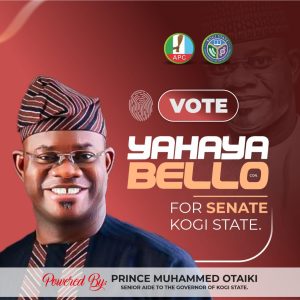
The intention of Alhaji Yahaya Bello, CON, to contest for the Senate thus represents not a departure but continuity in a leadership journey anchored in accountability, peace, and national unity, aligning hard-earned experience with opportunity and vision with institutional responsibility, as faith and optimism continue to shape the outlook of his believers, who with deep conviction hold that by the will of Allah, Yahaya Bello, CON, will triumph through peaceful, transparent, and credible elections, a confidence rooted not just in faith but in the people’s recognition of leadership that yields tangible results.
As the electoral season intensifies, it is imperative that all stakeholders prioritize peace before, during, and after the polls, for democracy thrives in an atmosphere of respect, restraint, and unyielding adherence to the rule of law, where every aspirant deserves to contest freely without intimidation or obstruction, and elections must remain arenas for contests of ideas, records, and vision rather than battlegrounds of conflict, with leaders and citizens alike resisting the temptation to weaponize politics at the expense of national cohesion.
In this spirit, prayers and goodwill extend to the people of Kogi Central and Nigeria as a whole: may wisdom guide political choices, may peace reign across communities, and may leadership forever remain anchored in service to humanity.
Prince Muhammed Otaiki