

AGILE Trains Education Officers on Data Management to Improve Girl-Child Education in Nasarawa
By Roseline Okafor, Nasarawa
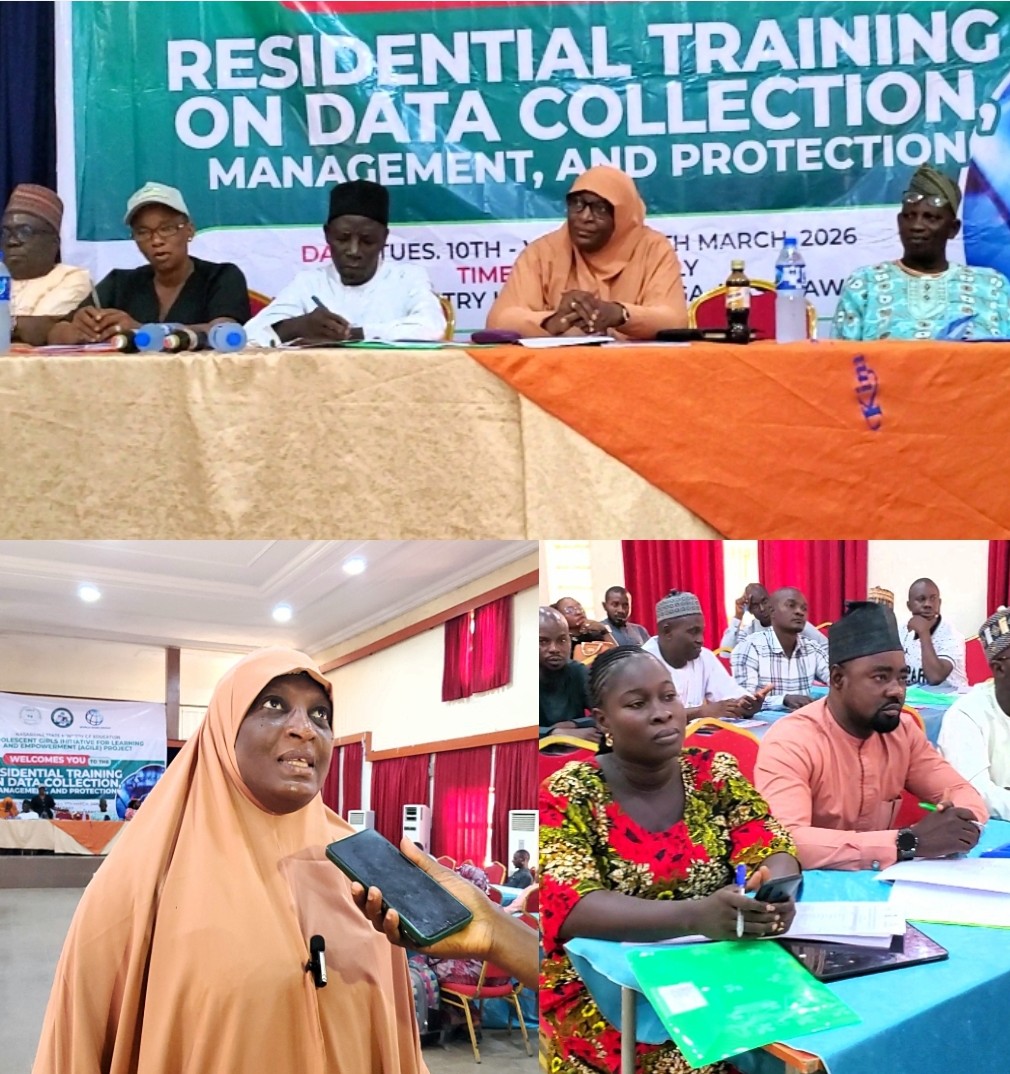
The Adolescent Girls’ Initiative for Learning and Empowerment (AGILE) project, supported by the World Bank, has organized a 2 days training programme on the Education Management Information System (EMIS) to strengthen education data management in Nasarawa State.
The program which took place at Kini Country home in Akwanga on Wednesday.
The two day training brought together education directors and evaluators from various agencies to build their capacity in data collection, representation, utilization, and reporting within the education sector.
Declaring the training open, the Commissioner for Education, John W. Mamman, emphasized the importance of accurate and reliable data in strengthening the state’s education system.
He noted that effective data management will assist the government in making informed decisions and improving the planning and implementation of educational programs.
Committee Commends Oborevwori Over Rising Delta Youth Enlistment In Military, Paramilitary Services
Also speaking, the AGILE Project Coordinator, Nasarawa State, Hajiya Aishatu Aliyu Isoga described the training as critical to the success and sustainability of education interventions.
According to her, “This training is very key as it is going to inform the government’s decision on the sustainability of some of these interventions and also help us track where we are lagging behind to enable us have an impactful implementation.”
She explained that one of the major objectives of the AGILE project is to obtain accurate data on the girl-child population, including those currently in school, those who have dropped out, and those who are out on the streets, in order to provide appropriate interventions.
“We are also seeing to it that we get the data of the girl-child who are in school and those who are not, after which we balance it properly as it should be,” she said.
The coordinator further revealed that the project also operates a Conditional Cash Transfer programme, which supports girls with their school needs and encourages them to remain in school.
She added that the training is specifically designed to aid data collection, data representation, and reporting, urging participants to make effective use of the knowledge gained during the progratrainingl
Participants at the training were drawn from the Quality Education Office, Local Government Education Authorities (LGEA), the Ministry of Education, Nasarawa State Universal Basic Education Board (SUBEB), and the Nasarawa State Bureau of Statistics.
According to the coordinator, bringing participants from different institutions is necessary to ensure timely and accurate data collection across all relevant education units, which will help guide government policies and decisions.
Also speaking, the Lead Facilitator of the training, Aliyu Usman, stated that the programme would equip participants with practical knowledge on data collection, data utilization, and reporting.
He stressed that data remains the backbone of effective planning and administration, noting that no meaningful activity can be carried out in any work sector without proper data management and therefore urged participants to apply the knowledge gained in their respective offices to ensure efficient workflow and improved data management.
Some participants who spoke during the training also expressed optimism about the impact of the programme.
One of the participants, Ahmed Dalhatu Ahmed, an evaluator from the Quality Education Evaluation Office in Akwanga, noted that the training would greatly improve the capacity of education officers in managing educational data.
Similarly, Fatima Lawal, an evaluator from the Masaka Evaluation Office, said effective data management would go a long way in strengthening the education sector.
She added that participants would ensure the knowledge gained from the training is put into practice in order to achieve the common goal of improving data management and educational development in the state.