




NSUK’s 58th Inaugural Lecture Sparks Intense Debate on Africa’s Leadership Crisis.
By Roseline Okafor, Nasarawa.
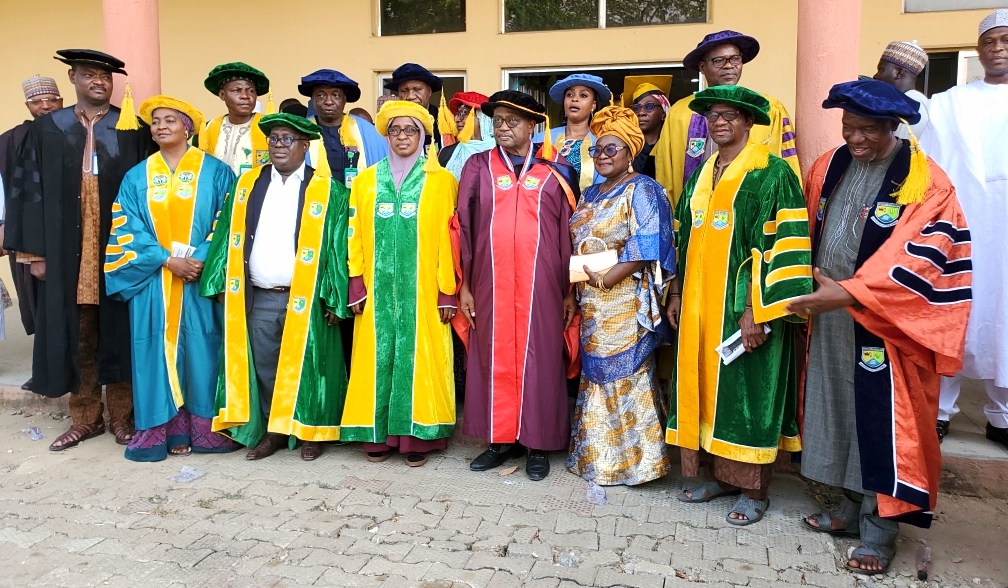
Scholars and dignitaries converged at Nasarawa State University (NSUK) Keffi’s Assembly Hall on Wednesday, dissecting the crippling psychological and leadership challenges stalling Africa’s progress.
The thought-provoking discussion shed light on the continent’s pressing issues, urging a radical shift in leadership paradigms where experts emphasized that Africa’s development is hindered by a toxic mix of fractured minds and fragile systems, calling for value-driven leadership and principled governance.
The inaugural lecturer, Prof. Andrew Zamani’ delved into the intricate relationship between human psychology and governance, shedding light on Africa’s stubborn development challenges. Titled “The Fractured African Psyche and the Burden of Leadership: Challenges and Prospects for Sustainable Development,” the lecture offered a nuanced exploration of the continent’s leadership crisis.
Zamani’s thesis centered on the notion that Africa’s development is hindered by a deeply ingrained psychological paradigm that shapes leadership styles and governance structures, arguing that transformative leadership is key to unlocking sustainable development, emphasizing the need for leaders to prioritize the greater good over personal interests.
“Africa’s fractured psyche is not a disorder but a dysfunction with potential risks of becoming a disorder. It is important to examine the processes by which minds are fractured,” he explained.
He further identified several indicators pointing to widespread psychological and social dysfunction across the continent, including state fragility, executive insecurity, youth restiveness, violent extremism, substance abuse, mental health challenges, and existential neurosis.
“The will of the people in leadership recruitment is often not allowed to prevail through the electoral process. Electoral fraud at political party level is now called ‘consensus building,’” he asserted.
In her opening remarks, the Vice Chancellor of the university, Prof. Sa’adatu Hassan Liman, described the lecture as both timely and significant, emphasizing the urgent need for a rethink in leadership approach across Africa.
“This lecture is timely. Leadership is often shaped by authoritarian tendencies, and Africa is in dire need of development. I urge everyone to take home key lessons from this lecture and put them into practice,” she stated.
In a goodwill message, the Dean of the Faculty of Social Sciences, Dr. Yahaya Adadu, highlighted the relevance of the topic, noting that understanding the psychological dimensions of leadership is critical to addressing societal challenges.
The lecture not only challenged existing governance structures but also called for a shift toward value-driven leadership rooted in accountability, inclusivity, and psychological balance.
The event reached its climax with the presentation of an award to Prof. Zamani by the Vice Chancellor, in recognition of his dedication and contributions to the growth of Psychology within the institution.
The 58th inaugural lecture, beyond its academic significance, served as a mirror to Africa’s internal struggles, leaving attendees with a renewed sense of responsibility to rethink leadership and rebuild societal values for sustainable development.