




The Gains Of APC’s South-South Congress And The Road To 2027
By Fred Latimore Oghenesivbe, Esq.
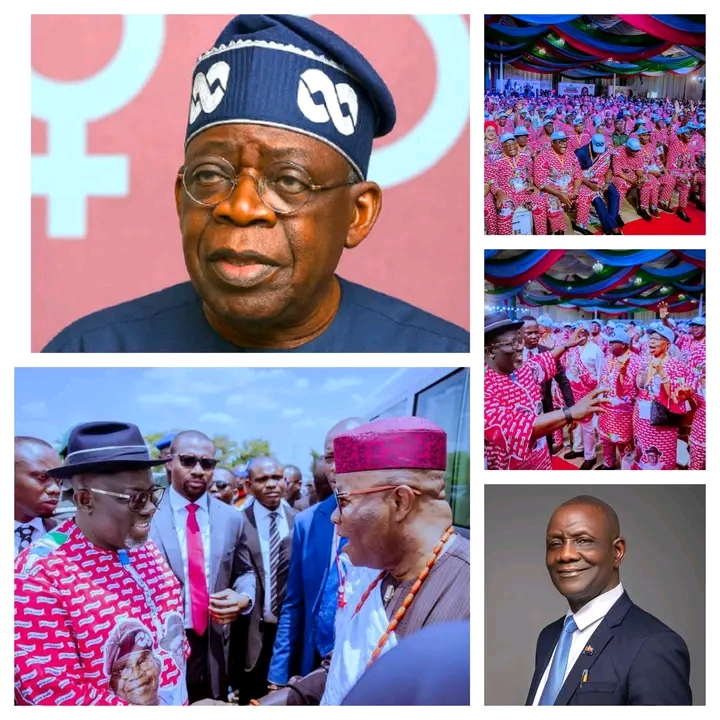
In a carefully choreographed display of unity and political intent, the All Progressives Congress (APC) in Nigeria’s South-South geopolitical zone has redrawn its internal map, electing a new Zonal Executive Committee, positioning the region as a national political powerhouse, and reinforcing its relevance in national electoral politics.
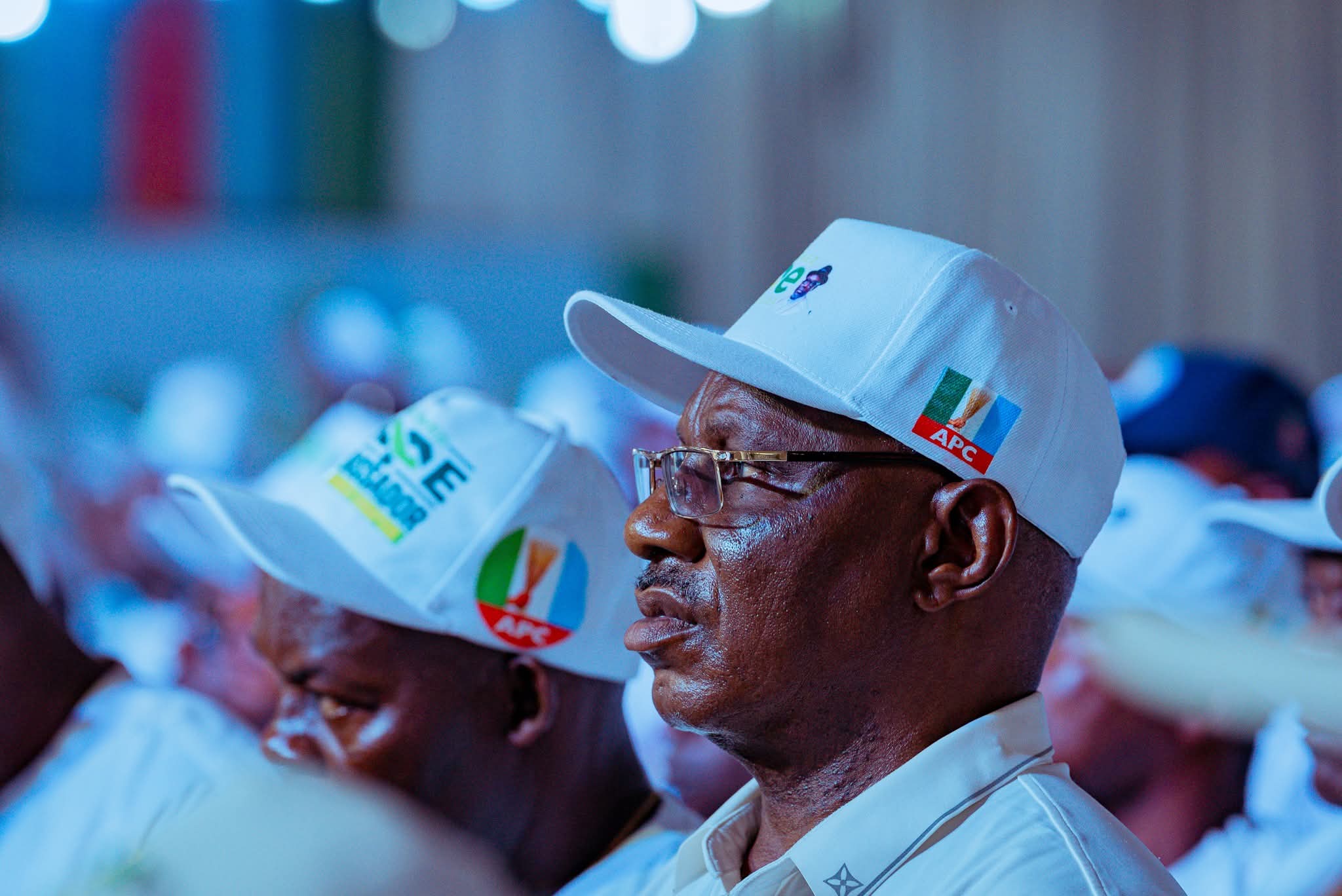
The congress, held in Asaba, was less a contest of ballots and more a performance of consensus. With governors, lawmakers, and party heavyweights in attendance, the process unfolded with striking unanimity, motions were moved, seconded, and adopted without resistance, dissolving the old order and ushering in new leadership in one seamless, purposeful, and peaceful political gathering.
At the center of this recalibration is Chief Victor Giadom, who retains his seat as National Vice Chairman (South-South), flanked by a team tasked with deepening the party’s roots in a region long considered pivotal to national politics, given its undeniable economic importance as Nigeria’s largest crude oil-producing zone.
Yet beneath the smooth surface of consensus lies a deeper calculation. This became evident when Senate President Godswill Akpabio addressed the gathering, conveying the goodwill of President Bola Ahmed Tinubu. He framed the South-South not as a recovering outpost of APC influence, but as a potential electoral powerhouse in Nigeria’s political chessboard.
His challenge was direct, emphasizing the urgent need to transform the region into the ruling party’s highest vote-yielding zone by 2027. For a region that once stood at arm’s length from APC dominance, that ambition borders on audacious. Yet, the political class appears aligned. Governors across party lines and internal factions echoed a shared refrain, focusing on unity, consolidation, and alignment with the center.
Delta State Governor, Rt Hon Sheriff Oborevwori, cast the congress as proof of organizational strength, while Bayelsa’s Douye Diri went further, declaring that the South-South was, perhaps for the first time in recent memory, “speaking with one voice.”
That claim, while aspirational, reflects a strategic shift away from internal factionalization toward collective bargaining power, presenting a united front capable of negotiating relevance within national power equations.
Other governors, including Umo Eno, Bassey Otu, Monday Okpebholo, and Siminalayi Fubara, reinforced this message, underscoring the strategic benefits of aligning regional politics with federal authority. Consensus, in this context, is more than a procedural choice, it is a deliberate political strategy.
By eliminating the friction of contested elections within the party, APC leaders in the South-South are projecting stability, discipline, and readiness for the larger electoral contest ahead. It is hoped that this engineered unity will withstand the pressures of real electoral competition, while grassroots mobilization strengthens to match the confidence expressed on the congress floor.
More critically, the APC must convert elite consensus into mass voter loyalty in a region historically central to Nigeria’s electoral dynamics. For now, the optics are clear: a region once fragmented is closing ranks. The message to opponents is unmistakable, the APC South-South is positioning itself for a decisive outing in 2027.
The battle has already begun, and the South-South intends to matter, as attention now shifts to the party’s National Convention scheduled for March 27 and 28 in Abuja.
***
The writer, Dr. Fred Latimore Oghenesivbe, Esq., is an APC chieftain and Director General of the Delta State Bureau for Orientation and Communications.