
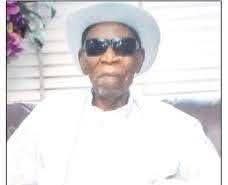
Churches, political groups to honour Itsekiri Bible translator Deacon Stephen Ejueyitsi Aganbi
Churches in the Niger Delta region are set to honour Itsekiri Bible Translator and dominant political force during the Second Republic, Deacon Stephen Ejueyitsi Aganbi.
“Hundreds of people, including high profile politicians, religious leaders and business moguls will honour Deacon Stephen Ejueyitsi Aganbi on Wednesday, December 10, 2025 in Koko” a statement by the Chief Executive Officer of Akogate Group, Felix Aganbi said.
Tagged “Koko Sings for Deacon Stephen Aganbi”, the statement said artists and church choirs from across the country have been invited to the special carol service in honour of a man of character, courage and compassion.
The event scheduled for Wednesday, December 10 at Canaan Land, Koko Road will bring guests from Nigeria and abroad.
Deacon Stephen Aganbi was a lawyer, a community leader and a lover of God. He was a highly reputed politician of the Second Republic in Nigeria and the Olare-Aja (community leader) of Koko’’.
The nonagenarian, gifted interpreter and scholar died on Thursday, March 19, 2020.
The 99-year-old legal luminary, politician par excellence and an astute intellectual was interred on Saturday, May 9, 2020 in his hometown.
Deacon Aganbi served as chairman for the Itsekiri Bible Translation Project, the team that completed the Old and New Testament translation in the Itsekiri language.
Meanwhile, the 2025 Canaan Land Smart City Golf Tournament and Business conference will begin on Friday, December 12 in Delta State.
“Koko Town has the huge potential for investment, particularly in real estate, agriculture, health, tourism and other areas. So we are expecting investors and some of the most famous and highly-ranked golfers in the sport’s history and in the contemporary game from different parts of the world” a statement by the Chief Executive Officer of Akogate Group, Felix Aganbi, said.
The golf tournament and business and conference will be held from 12-14 December, 2025 in Canaan Land, Koko Town.
“Koko Town is a hub for fishing and shrimping operations. There are a lot of oil and gas companies. Whether you are a local or foreign investor or looking at residential or commercial properties, there is something for everyone in Koko.”
The statement said “the event will showcase the diverse range of opportunities that the port town has to offer”
On security, Aganbi said “Steps have been taken to ensure that visitors from within and outside the country have a secure and conducive atmosphere within which to assess the economic opportunities of Koko.”
He emphasized the tight security in Koko and the hospitality for which the residents are known.
“Top business men in Nigeria and abroad, members of the diplomatic corps and key actors in government across the country are looking forward to converging on Koko beginning from December 12, 2025. They are excited by the prospect of experiencing the hospitality for which the good people of Koko are known for and the vast opportunities for commerce, tourism and industry.”
According to Aganbi, the event is expected to drive long term sustainable economic participation and create new opportunities for local and foreign investors in the area.
“It will provide valuable insights into untapped business opportunities, encourage private sector participation, showcase the real estate and tourism potentials of Koko and unite the people and the communities.
“Situated off Benin-Sapele expressway, the port town is 30 minutes’ drive from Benin City and over 45 minutes away from Warri town by road. Koko has the best aquatic products in Nigeria as of today. Completion of the coastal road will reduce travel time between Delta and Lagos to less than two hours. There are ongoing refinery projects. People who are coming to Koko will be in for a surprise” he added.
Credit: Felix Aganbi
2. Okpe Leaders Oppose Delta Monarch
Top Okpe leaders on Sunday kicked against the narrative of Okpe as Urhobo, listing the errors in Orodje’s recent declaration.
“At its meeting on November 15, 2025, the National Executive Council (NEC) of the Okpe Union (Worldwide) exhaustively discussed Orodje’s declaration. Relying on historical facts in debunking the grave errors in the Orodje’s declaration, the union provided the evolution of the Orodje’s disturbing flip-flop of policy pronouncements, a flip-flop which falsifies Okpe History and exposes Orhue l as an enemy of the Okpe Kingdom whose national interests he swore to promote and defend when he was crown as the Orodje of Okpe Kingdom on July 29, 2006.”
In the response to the Orodje of Okpe Kingdom by the National Executive Council of the Okpe Union (Worldwide), the union narrated how His Royal Majesty began to move away from his role as the chief promoter and defender of Okpe Identity in favour of his personal aggrandizement.
“He cautioned the then NEC of the Okpe Union (Worldwide) to stop the agitation for the recognition of Okpe as a distinct ethnic nationality, because, according to him, the advocacy will diminish his chances of becoming the Chairman of the Delta State Traditional Rulers’ Council. That notwithstanding, the Orodje was trying to walk on both sides of the street at the same time by internally espousing Okpe as a distinct ethnic nationality while externally he was collaborating with the anti-Okpe Identity forces to undermine the internal cohesion of the Okpe Nation.”
The union accused Orodje of sacrificing Okpe national interest for a pot of Ukodo prepared by his political masters ahead of the 2027 elections.
“This is political correctness gone awry. The Okpe Union, and indeed all sons and daughters of Okpeland, are greatly distressed by the video of HRM Orhue l making rounds about our identity. As proud children of Okpe, we have access to several literatures and ancestral information about our origin which has never been disputed by the Orodje who is the traditional ruler as at today. Perhaps he is in possession of new facts and documents which have altered our ancestry. The time to produce it is now. It is highly regrettable that our revered Traditional ruler would grant such weighty interviews about the core of our existence without presenting facts and references.”
The union denounced Orodje’s declaration, which undermines the rich cultural heritage and dignity of the Okpe people.
“As the mouth-piece of the Okpe Nation, the Okpe Union rejects the Orodje’s de-marketing of our ethnic nationality and asserts our pride in our identity, culture, and sovereignty. While we sympathize with various political actors who in a bid to score political mileage have been manipulating ethnic boundaries for political gains, we cannot comprehend how the custodian of our rites and traditions will join the fray. Several monarchs have betrayed their respective countries. Why did Orodje shift from his strong position as a promoter of Okpe as a distinct ethnic nationality that he brilliantly articulated on September 1, 2007, to become a shameless apologist for Urhobo ethnic nationality? Historians will compare the declaration of Orhue l and the dictatorship of Esezi l, to determine which of the two is more injurious to the Okpe Nation.”
The union called on members of the Okpe Union (Worldwide), and indeed all Okpe sons and daughters to remain united under the umbrella of the Okpe Union in the continued advocacy for the recognition of Okpe as a distinct ethnic nationality.
“The struggle is going to be long and difficult, but the redemption of the Okpe Nation is worth the battle. A kingdom exists because there was a Nation that produced it. Thus, a king or an Orodje cannot be superior to the Nation that birthed it. This is particularly true of the Okpe Kingdom where the Okpe Nation congregates to elect one of its male citizens as the Orodje via a democratic electoral process. The sovereignty of an Orodje does not grant him an absolute or dictatorial power or authority, but is derived from the results of the electoral process on behalf of the Okpe Nation. When the four princely brothers, our ancestors – Orhue, Orhoro, Evbreke, and Esezi – decided to establish the Okpe Kingdom, they did so from the bowel of the Okpe Nation. Thanks to the Okpe Union, the Okpe Kingdom in the modern era was resuscitated in 1945 after an interregnum of 166 years. During this period, there were no Orodjes because there was no kingdom, but the Okpe Nation continued to exist and was represented by power brokers in several Okpe communities that exercised independence and sovereignty. It is therefore our historical and sacred responsibility, as members of the Okpe Union, to ensure that the Okpe monarchy remains a symbol of unity and strength of the Okpe Nation, and not to degenerate into anarchy and dictatorship.
The statement signed by Prof. O. Igho Natufe, President General, Okpe Union (Worldwide), Barrister Kingsley Ehensiri Akpederin, General Secretary, Okpe Union (Worldwide) and Barrister Victor Oruno, National Publicity Secretary, Okpe Union (Worldwide) recalled a study initiated and financed by HRM Orhue l, where Udogun Okpe stated emphatically that “Okpe is indubitably known to be a distinct and autonomous Kingdom, an ethnic entity from its beginning.
“The people and their language are distinct and are named after their progenitor, Okpe, whose four sons founded the present day Okpe Kingdom. But externally, simultaneously, the Orodje’s emissaries, mostly Palace Chiefs, continued their anti-Okpe Identity narratives by their false claim that “Okpe is Urhobo”. The Orodje’s declaration that “Okpe is a dialect of Urhobo” lends credence to the statements of his emissaries that “Okpe is Urhobo”. From all available historical sources, Okpe is a distinct language from the Urhobo language. The Orodje’s declaration is not only a blatant distortion of Okpe History, but a shameless public denial of Okpe Identity. History will Judge if this seismic shift was influenced by the Orodje’s personal interest or by Okpe national interest’’.
On November 5, 2025, an undated video of HRM Orhue l, Orodje of Okpe Kingdom, appeared on several Okpe platforms, as well as on some non-Okpe platforms. In the video Orhue l categorically declared that “Okpe is a dialect of the Urhobo” and therefore not a distinct ethnic nationality. This declaration injected another level of schism between the Okpe Union and HRM Orhue l. We consider this declaration a falsity by a Monarch who is supposed to know the truth.
The Union highlighted the three main migratory waves from Benin Kingdom to the present territory of Delta Central Senatorial District in the Ogiso period of Benin Monarchy.
“The first was in the 1170s under the reign of the 1st Oba of Benin, Oba Oronmiyan (1170 – 1200 AD) that saw the settlement of a group known as “Usobo” (Urhobo) in Ughelli and other villages. The second wave was the last Usobo migration that settled in contemporary Abraka in the 1370s, under the reign of the 10th Oba of Benin, Oba Ogbeka (1370 – 1400 AD). The migration of Okpe from Benin Kingdom occurred during the reign of the 16th Oba of Benin, Oba Ozolua (1483 – 1504 AD). Oba Ozolua conquered several territories, including Ijebu Ode, Ondo, and towns in contemporary Edo State. For his unprecedented military conquests in Benin History, he earned the appellation “Ozolua, n’ ibaromi” meaning “Ozolua the Conqueror”. He had several sons, including Prince Eze of Aboh, and Prince Igboze that migrated to contemporary Delta Central Senatorial District in 1550, and whose son, Prince Okpe had four princely sons: Orhue, Orhoro, Evbreke, and Esezi. They resided individually and collectively in several villages, moving from Olomu to Okperikpere (Okpe Isoko) and through contemporary Ozoro en-route to Orerokpe. It is instructive to note that, when the Four Princely Brothers, our forefathers founded the Okpe Kingdom with its headquarters in Orerokpe, it was established as an independent ethnic nationality and not as a clan or an appendage of any other ethnic nationality. This historical fact underlines the distinct ethnic nationality of the Okpe of Delta State which was extinguished by the British Colonial Office.”
For purely its administrative convenience, the Union said the British Colonial Office fused diverse ethnic nationalities into one.
“This British policy gave rise to the falsity of classifying Okpe as a clan of Urhobo. Most contemporary Okpe were born and raised in this falsity.
“By administering the Okpe under the Urhobo umbrella, the British set in motion a process that led to the gradual but systematic attempt to deny Okpe ethnicity which was erroneously subsumed under the Urhobo. Over time, this grave error of British colonialism assumed a “truth” of its own as the outside world and several Okpe began to refer to the Okpe as “Urhobo.” This falsity was inherited by post-colonial Nigerian governments. A similar fate befell the Isoko of “Eastern Urhobo.” However, unlike the Okpe, their western counterpart, the Isokos were able to extricate themselves from the Urhobo appellation and restored their independence as a distinct ethnic nationality. Okpe and Urhobo do not share a common ancestry, or a common language. The Urhobo argument that Okpe is “Urhobo” is anchored on the concept of transferred colonialism from British rule to Urhobo rule in post-colonial Nigeria. This diabolical plot is facilitated by internal fifth columnists that, in most cases, have an Urhobo parent and therefore posit that “Okpe is Urhobo.”
The Union also underscored a growing realization among leading Okpe personalities to follow the Isoko example.
“Two subjective factors seem to conspire against this legitimate proposition. First, the Urhobo argument is that Okpe will be weakening the Urhobo nation if they emulate Isoko. Second, some Okpe, after being assimilated into the Urhobo fabric as a consequence of flawed colonial policy, seem conditioned to accept Urhobo as their nationality. Both viewpoints are based on weak and false argumentations. To endorse either is to condone the denial of Okpe nationality. And to suggest that by upholding their nationality the Okpe will weaken the Urhobo nation, we are invited to accept the lie that “Okpe is Urhobo”. On the contrary, the extrication of Okpe from Urhobo will strengthen the independence of both ethnic nationalities. They each need to re-define their respective identities’’.
The union said the uniqueness of the Okpe Nation was that each Okpe national is a descendant of one or two of the four ruling houses of the Okpe Kingdom, as depicted in the genealogy of the Okpe people: Orhue, Orhoro, Evbreke, and Esezi.
“Thus, the Okpe ethnicity satisfies all the properties of statehood and nationality as the nationals share the same common ancestry, the same language, culture, and traditions. The Okpe Kingdom has a clearly defined territory under a single monarchy and a permanent population of Okpe ethnicity. In fact, Okpe is one of the few ethnic nationalities in Nigeria that possess these clearly defined properties. The others are, inter alia, in alphabetical order, Benin, Nupe, and Itsekiri, etc.”
Major General Felix Mujakperuo (RTD) was crown as HRM Orhue l, Orodje of Okpe Kingdom on July 29, 2006; after a 2-year interregnum. He immediately positioned himself as the chief advocate of Okpe as a distinct ethnic nationality. Not only did he and several Okpe chiefs participate actively in the deliberations of the 1st Okpe Voice World Conference held in Sapele, October 17 – 18, 2006, he hosted a delegation of Okpe leaders drawn from the Okpe Union Nigeria, the Okpe Union of North America (OUNA), and the Okpe Union UK, under the auspices of the OKPE VOICE, at the Palace, on October 20, 2006, to review and approve the resolutions and communiqué of the Conference. The communiqué included, the recognition of Okpe as a distinct ethnic nationality, the establishment of an all Okpe federal constituency, the teaching of Okpe language in all primary and secondary schools in Okpe Nation, etc.
HRM Orhue l delivered a powerful landmark address entitled Tradition and Governance in the Okpe Kingdom: A Keynote Address, on September 1, 2007 At The 3rd Annual Convention Of The Okpe Union Of North America Held At Marriott Hotel, College Park, Maryland, Usa August 31 – September 03, 2007. This was a defining moment in the struggle for the recognition of Okpe as a distinct ethnic nationality.
The Orodje succinctly declared: “Okpe is a unique ethnic nationality. It has distinctive roots in ancient history, tradition, culture, customs and language.”
He added: “Our people are rooted in migration from the Bini Kingdom. This historical experience is similar to most other ethnic nationalities of the Western Niger Delta. Of all these nationalities however, Okpe History, language, tradition, and culture are closer to those of Bini which form part of the Edo group of languages”.
Orhue l endorsed the conclusions of R. E. Bradbury and Rev. Dr. Charles E. Osume, (The Okpe People, 2006 edition), about the origin of the Okpe, he classified Okpe as “a unique ethnic nationality” with “distinctive roots in ancient history, tradition, culture, customs and language” irrespective of its similarity “to most other ethnic nationalities of the Western Niger Delta”.
Regarding the wrongful excision of Okpe territory from the Okpe Kingdom, HRM Orhue l was very categorical in expressing the position of the Okpe on this issue. He averred: “Let me also mention briefly that although the Okpe Kingdom covers the two local government areas of Sapele and Okpe, our people and communities are located in towns and villages presently and wrongly included in some neighbouring local government areas, for example, Ohorhe in Uvwie Local Government”.
In the keynote address, HRM Orhue l positioned himself as the chief promoter and defender of Okpe national interest. He subsequently established an Udogun Okpe Education Committee to liaise with the Nigerian Educational Research and Development Council (NERDC) to ensure the recognition of Okpe Language as a teaching subject in Okpe Nation.
Signed: Prof. O. Igho Natufe, President General, Okpe Union (Worldwide), Barrister Kingsley Ehensiri Akpederin, General Secretary, Okpe Union (Worldwide) and Barrister Victor Oruno, National Publicity Secretary, Okpe Union (Worldwide) recalled a study initiated and financed by HRM Orhue l