
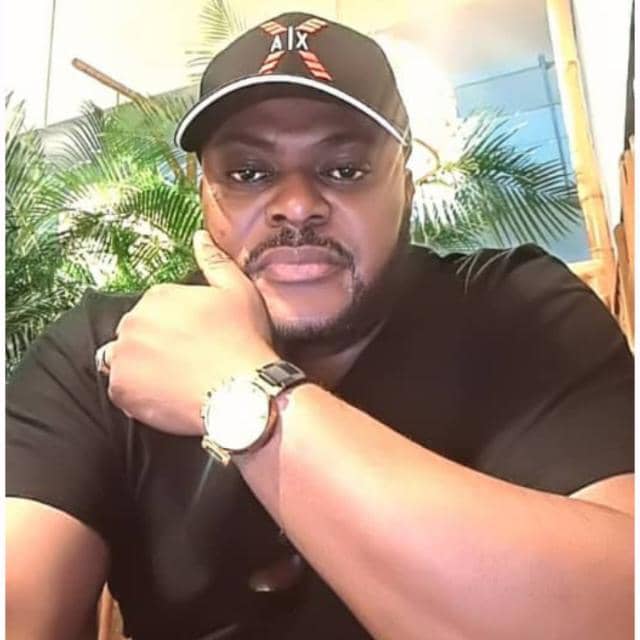
The Measure of a Life: Why Wealth Can’t Buy True Success – By Dr. Donald Peterson
Nigerians chase success like it’s the holy grail. We hustle for decades, redefining it to fit our dreams. But experts say we’re measuring the wrong things.
Dr. Donald Peterson, a renowned thinker, warns: Most of us confuse living with piling up cash. Big houses, fat bank accounts – we think they equal a full life.
There’s something we get wrong about success, I think. We spend decades chasing it, defining it, reshaping it to fit whatever story we’re telling ourselves at the moment. But here’s the uncomfortable truth: most of us are measuring the wrong things entirely.
I’ve been thinking about this a lot lately. How we conflate living with accumulating. How we mistake the size of our estate for the depth of our existence. It’s an easy trap to fall into, honestly. The world gives us scoreboards everywhere we look. Bank balances. Property portfolios. LinkedIn endorsements. And we keep score diligently, believing somehow that these numbers will add up to something meaningful at the end.
But they don’t. Not really.
Consider Howard Hughes. Here was a man who had everything by conventional measures. Brilliant engineer, aviation pioneer, Hollywood producer, one of the wealthiest people on earth. At his peak, he controlled airlines, casinos, defense contracts worth billions. He dated movie stars. He broke aviation records. The world was literally his playground.
And yet.
His final years were spent naked in a penthouse suite, terrified of germs, watching the same films on repeat, his fingernails grown into grotesque spirals because he refused to let anyone close enough to trim them. When he died in 1976, the man who once owned half of Las Vegas weighed barely 90 pounds. His body was so malnourished and damaged that fingerprints were needed to identify him. The FBI had to confirm it was actually Howard Hughes.
What happened? He had accumulated everything and lost the only thing that mattered: his humanity. His ability to connect, to trust, to simply be with other people. All that wealth became a prison of his own making.
Maybe that’s an extreme example. But is it really?
I went to a funeral last year. Not someone I knew well, but someone prominent in our community. Successful businessman. Multiple properties. The kind of man who always picked up the check, not out of generosity particularly, but to remind everyone at the table who had the most. His eulogy was delivered by a paid associate because, as it turned out, he didn’t have any real friends. His children showed up out of obligation, stayed for exactly the required time, and left. The whole service felt hollow, like we were burying a bank account rather than a person.
Contrast that with my grandmother’s funeral. She died with maybe 30,000 Naira to her name. Lived in the same modest house for fifty years. Worked as a petty trader and never earned much. But her service to humanity ? Was outstanding . People flew in from different states. Former mentees, now in their sixties, wept openly. The church added an extra hour because so many people wanted to share stories.
The difference wasn’t what they owned. It was how they made people feel.
My grandmother remembered names. She asked about your children specifically, by name, recalled details from conversations six months prior. When you left her presence, you felt seen. Valued. A little bit better about yourself and the world. That’s wealth of a different order entirely.
We live in an age obsessed with accumulation. To be fair, some of this makes sense. Security matters. Poverty is real and brutal, and having resources is genuinely important. I’m not romanticizing financial struggle here.
But somewhere along the way, we crossed a line. We moved from “enough” to “more” and forgot to notice when more stopped adding anything except weight.
Jeff Bezos has how many billions now? Enough to fund his space hobby as a side project. Does that amount of wealth make him proportionally happier than someone with, say, ten million? A hundred million? Research suggests no. Studies on wealth and happiness show diminishing returns after about 75,000 to 100,000 annually, the point where basic security is assured. After that, more money correlates weakly with life satisfaction at best.
And yet we keep chasing it. Keep sacrificing time with our children for one more deal. Keep missing dinners, anniversaries, the small moments that actually construct a life, all for numbers in an account that we’ll never spend.
Think about the people you actually admire. Not the ones you’re supposed to admire or the ones with the most impressive resumés. The people who genuinely inspire you, who you’d want to emulate if you had the courage.
I doubt many of them are hedge fund managers.
My list includes people like my old literature professor who spent his career teaching at a small state university, published exactly three books of poetry that sold maybe 2,000 copies combined, and changed the way hundreds of students understood language and meaning. He lived in the same book-cluttered apartment for forty years. Died with a net worth of perhaps 80,000 Naira. At his memorial, former students read his poems and explained how he’d altered the trajectory of their lives with one conversation, one perfectly chosen book recommendation, one moment of genuine attention.
Or consider someone like Fred Rogers. Mister Rogers earned a comfortable middle-class living but was never wealthy by American standards. He could have monetized his brand a thousand different ways, could have become a multimillionaire easily. Instead, he kept doing the work he believed mattered: talking to children with respect, teaching emotional literacy, making people feel worthy of love.
When he died, the tributes were extraordinary. Not because of what he owned, but because of how he made millions of children and their parents feel: safe, valued, capable of growth. That’s the kind of wealth that compounds across generations.
History is littered with cautionary tales of accumulation without wisdom, wealth without grace.
Take John D. Rockefeller in his prime. One of the richest American who ever lived when adjusted for inflation, worth perhaps $400 billion in today’s dollars. He built an empire through ruthlessness that became legendary. Crushed competitors without mercy. Manipulated markets. By middle age, he was so universally hated that hired guards protected him constantly from assassination attempts.
The stress nearly killed him. His hair fell out, his digestion failed, he developed a host of stress-related illnesses. He couldn’t sleep. The man who could buy anything couldn’t buy peace. It wasn’t until his later years, when he started giving away his fortune and focusing on philanthropy, that his health improved and he found something resembling contentment. He had to learn the hard way that accumulation and living are not the same thing.
Or consider the countless executives who climbed every ladder, accumulated every marker of success, only to die of heart attacks at 52. The celebrities who overdose in mansion bathrooms, surrounded by every material comfort except a reason to stay alive. The business moguls whose children won’t speak to them, whose legacy is measured in shareholder value and nothing else.
These aren’t exceptions. They’re warnings we keep ignoring.
So what’s the alternative? How do we measure a life if not by what we accumulate?
I think it comes down to something simpler and infinitely harder: presence.
How present were you in your own life? How deeply did you experience the moments you were given? Did you notice the light changing in autumn? Did you really listen when your child tried to tell you about their day? Did you create spaces where others felt safe to be themselves?
Did you make people feel smaller or larger when they encountered you?
That last question might be the most important one. We all leave impressions, create ripples that extend beyond our immediate awareness. Some people enter a room and the air gets heavier. Others walk in and suddenly everyone breathes easier. This isn’t about charisma or charm. It’s about whether you’ve done the internal work to show up as a whole person, capable of seeing others as whole people too.
Maya Angelou said it perfectly: “People will forget what you said, people will forget what you did, but people will never forget how you made them feel.”
That’s not a soft platitude. It’s the fundamental architecture of human existence. We’re social creatures. We build our sense of self through relationships, through reflection in others’ eyes. The quality of your life is inseparable from the quality of your relationships, and the quality of your relationships depends entirely on how you make people feel.
Living well, as opposed to accumulating well, requires different skills entirely.
It requires attention. Real attention, not the performative kind where you’re present physically but mentally drafting your next email. It means putting your phone away during dinner. It means asking follow-up questions because you actually care about the answer. It means noticing when someone’s energy shifts and caring enough to ask why.
It requires generosity, but not the kind that comes with naming rights. The generosity of time, of genuine interest, of making space for others to shine. Some of the most generous people I know have modest incomes. They’re generous with encouragement, with belief in others’ potential, with the willingness to help someone move apartments or edit a resumé or just listen when life gets heavy.
It requires vulnerability. This might be the hardest part. Our culture of accumulation teaches us to armor up, to present only success, to hide anything that might be perceived as weakness. But real connection requires the opposite. It requires admitting when you’re struggling, asking for help, showing up as imperfect and human.
It requires presence in discomfort. Sitting with a friend through grief even when you can’t fix it. Having difficult conversations instead of ghosting. Staying engaged with the world’s problems even when it would be easier to retreat into comfort and privilege.
Here’s a thought experiment I return to regularly: Imagine your funeral. Not in a morbid way, just as a clarifying exercise.
Who’s there? What are they saying? Are they talking about your deals, your acquisitions, your net worth? Or are they telling stories about moments you shared, ways you helped them, times you made them laugh or think or feel less alone?
If you could hear one thing at your funeral, what would you want it to be?
For me, the answer comes quickly: I’d want someone to say I made their life a little easier, a little brighter. That I paid attention. That I showed up when it mattered. That my presence added something positive to the world beyond what I consumed or controlled.
That’s not about sainthood or perfection. It’s about intention. About choosing connection over accumulation when those two things conflict, which they often do.
Maybe the question isn’t “What did you achieve?” but “What did you cherish?”
Not “How much did you accumulate?” but “How deeply did you appreciate?”
Not “What did you own?” but “What owned your attention?”
Not “How successful were you?” but “How kind were you?”
The thing about these alternative measurements is that they’re available to everyone. You don’t need wealth or status or credentials to be present, to be generous, to make people feel valued. These are choices we can make regardless of our circumstances.
And they’re choices that compound over time in ways that matter. The colleague you mentored might mentor ten others. The child you really listened to might grow up to listen to their own children. The kindness you showed a stranger might ripple outward in ways you’ll never see but that change the texture of the world nonetheless.
I don’t have this figured out, to be honest. I still get caught up in scorekeeping sometimes, still feel the pull of accumulation, still measure myself against metrics that don’t actually matter. It’s hard to resist when the entire culture is pushing the opposite message.
But I’m trying to notice when I’m slipping into that mindset. Trying to return to what I know is true: that the best moments of my life have never been about what I owned. They’ve been about connection. About feeling fully alive in a moment. About making someone laugh or helping them feel understood or simply being present with them in their joy or sorrow.
The people I remember most fondly aren’t the wealthiest people I’ve known. They’re the ones who made me feel like I mattered, who saw something in me I hadn’t seen in myself, who took the time to be fully present in our interactions.
That’s the life I want to build. Not the one with the most impressive asset column, but the one rich in attention, presence, and connection. The one where people feel better for having known me, not poorer.
Because in the end, that’s all we really have: the moments we create, the feelings we generate, the ways we touch each other’s lives. Everything else is just furniture we can’t take with us.
And maybe that’s not such a bad thing to realize while there’s still time to live accordingly.
Dr. Donald Onyibe Peterson serves as Special Adviser to the Delta State Government on Entrepreneurship Development.
He is a prominent businessman, politician, and academic from Ime-Obi, Agbor in Ika South Local Government Are