
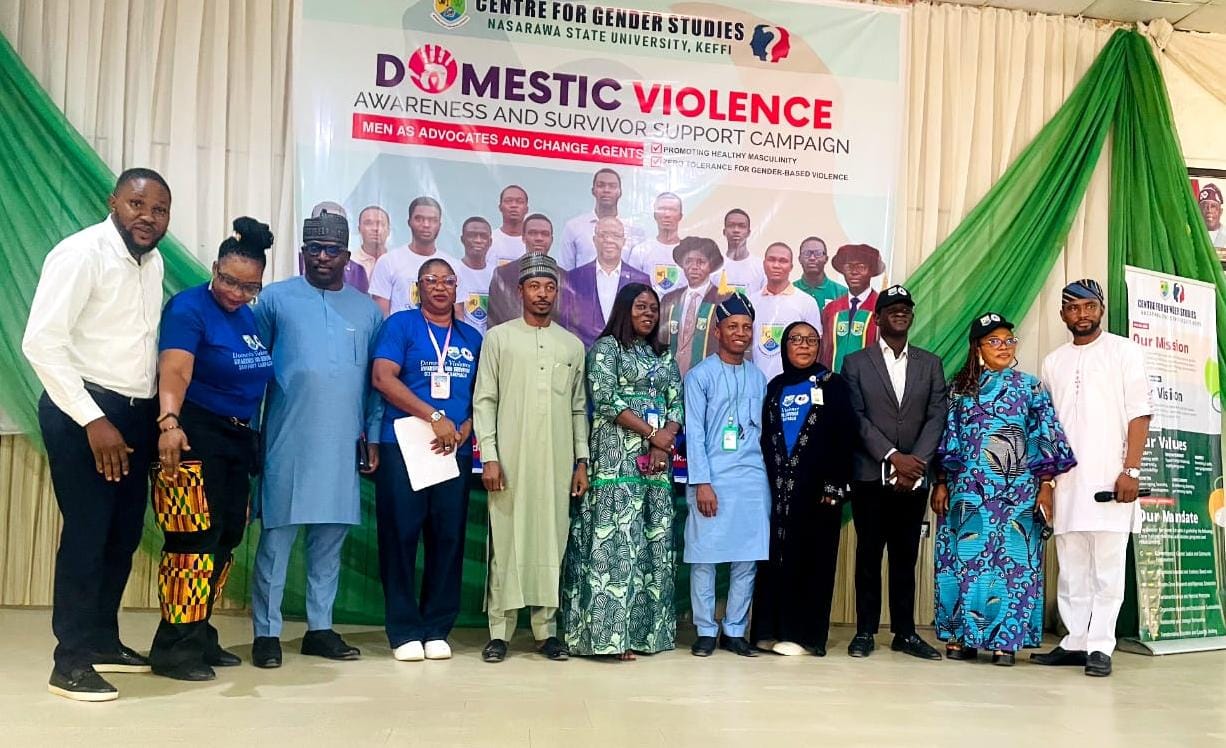
NSUK Gender Studies Center Promotes Healthy Masculinity, Zero Tolerance for GBV
By Roseline Okafor, Nasarawa
The Center for Gender Studies, Nasarawa State University Keffi on Wednesday, organized a Domestic Violence Awareness and Survivor Support Campaign at the Assembly Hall of Nasarawa State University Keffi (NSUK), with the theme: “Men as Advocates and Change Agents: Promoting Healthy Masculinity, Zero Tolerance for Gender-Based Violence.
The Center for Gender is pushing for healthy masculinity and zero tolerance for gender-based violence, promoting positive male role models and challenging harmful norms.
The Vice Chancellor of NSUK, Prof. Sa’adatu Hassan Liman, who was represented by the Deputy Vice Chancellor (Administration), Halima Doma Kutigi, expressed delight over the initiative. She noted that the University remains committed to curbing domestic violence across all genders, particularly addressing the often-overlooked challenges faced by men.
Dr. Ibrahim Tanko Unveils NSG’s AI Initiative in Schools at Nsuk 5th seminar series
According to her, while gender-based advocacy has traditionally focused on women, the new approach recognizes that men also face emotional and psychological struggles that deserve attention.
She commended the Center for what she described as a timely and commendable initiative, stressing that mental health directly affects productivity and intellectual capacity.
“We must create room for honest and responsible masculinity,” she stated, assuring the University’s continued support for programs that promote inclusivity and healthy social values.
In their goodwill messages, Prof. Becky Aliegba and Dr. David Chima emphasized the importance of balanced gender conversations, urging men to become active advocates against violence while embracing emotional intelligence and accountability.
The Program Coordinator of the Center, Dr. Hajara Ahmed (II), encouraged participants to engage fully in the lecture, describing it as an opportunity to reshape societal narratives surrounding masculinity and mental health.
Similarly, the Ag. Director of the Center, Dr. Comfort Adokwe-Obed, highlighted the extensive preparations undertaken by her team to ensure the success of the program.
She urged students to pay keen attention, noting that the knowledge gained would be beneficial not only to individuals but also to society at large.
Delivering the keynote address, Lieutenant Colonel Obed Magai Tsoken spoke on the topic: “Men’s Mental Health and Security: Redefining Strength in Today’s Society.” He addressed the need to break societal myths about masculinity and stressed that emotional intelligence is a strength rather than a weakness.
He encouraged men to speak up about disrespectful behavior, teach younger boys positive values, and support survivors of abuse.
According to him, opening up reduces isolation, shame, and the pressure to prove masculinity through dominance, while fostering empathy and accountability.
Also speaking at the event, Dr. Chidi Nwagu presented a talk on men’s health, focusing on recognizing stress and depression, healthy emotional expression, and when to seek professional help.
He explained that mental health promotion involves measures aimed at optimizing positive mental well-being within the population, noting that depression often contributes significantly to mental health challenges and emphasized the importance of early identification and seeking support.
Dr. Ochanya Mercy Yakubu Lamai, Deputy Director of the Center, stated that the program was designed to change prevailing narratives around masculinity, reiterating that men should feel encouraged to speak out whenever they face challenges in order to safeguard their mental health.
The event also featured a panel discussion themed: “Men as Partners in Preventing Gender-Based Violence.” Panelists included Lt. Col. Obed Magai Tsoken, Dr. Chidi Nwagu, Mr. Stanley Mamuda, Dr. Abdullahi Mohammed, Pst. Thomas Akwaden, Mr. Kabiru Bala, and Dr. Salamatu Ekpo.
The discussants shared diverse perspectives on the role of men as allies in combating gender-based violence and fostering safer communities just as Participants interviewed, expressed satisfaction with the program, describing it as enlightening and impactful. Many pledged to apply the lessons learned in promoting respect, empathy, and zero tolerance for violence within their spheres of influence.