
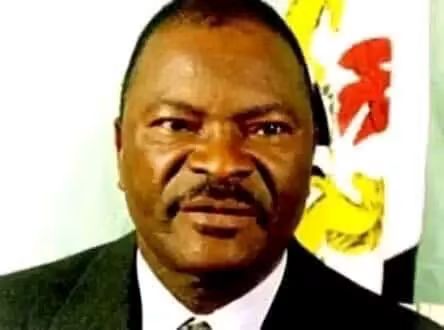
By Yahaya Idris, Lokoja
The death of former Kogi State Governor Ibrahim Idris, popularly known as Ibro, has revived memories of one of the most unusual governorship journeys in Nigeria’s recent political history.
Idris died in the United Kingdom on Sunday, September 20, 2026, at the age of 77. His death was confirmed by family sources and subsequently acknowledged by the Kogi State Government.
The Omala born politician and business tycoon served as governor from 2003 to January 2012, making his tenure one of the longest in Kogi’s democratic history.
But behind those years was a remarkable electoral saga.
2003: The beginning
Ibrahim Idris contested the 2003 Kogi governorship election on the People’s Democratic Party (PDP) platform.
He defeated the incumbent, Abubakar Audu, and assumed office on May 29, 2003.
2007: Victory challenged
Four years later, Idris was declared winner of the 2007 governorship election.
Audu, who contested under the All Nigeria People’s Party (ANPP), challenged the result in court.
The dispute centred on the exclusion of Audu’s name and photograph from the ballot.
The election tribunal eventually annulled the election and ordered a fresh poll. The Court of Appeal affirmed the decision in February 2008.
Clarence Olafemi takes over as Governor
With Idris and his Deputy Philip Salawu removed from office pending the fresh election, Clarence Olafemi, the then Speaker of the Kogi State House of Assembly, became acting governor on February 6, 2008.
But the political story was far from over.
March 29, 2008: Ibro returns
The Independent National Electoral Commission (INEC) conducted the fresh governorship election on March 29, 2008.
Idris won again.
He defeated Audu and returned to office.
His victory transformed the political crisis into another chapter of litigation, as Audu again challenged the result.
The tribunal and later the Court of Appeal upheld Idris’ victory.
Why did he stay until 2012?
The unusual sequence created another constitutional question.
Idris and other governors affected by annulled 2007 elections argued that their tenure should restart from the date they won their rerun elections.
The Supreme Court rejected the argument in January 2012.
As a result, Idris left office in January 2012, rather than beginning another full four-year term from the 2008 rerun.
His daughters and the 2006 air disaster
In October 2006, while Idris was governor, three of his daughters boarded ADC Airlines Flight 53.
The aircraft crashed near Abuja.
Ninety-six people died while nine survived.
All three of Idris’ daughters were among those who survived the unfortunate situation.
In a later interview, Idris recalled the frightening experience and said he believed their survival was an act of God’s mercy.
Politics and violence
The period also witnessed intense political rivalry and episodes of political violence in Kogi.
Reports and academic accounts have documented political clashes and thuggery connected to electoral competition in the state, including violence involving rival political groups.
https://guardian.ng/life/toyin-abraham-speaks-on-pregnancy-loss-rejects-apc-campaign-role/
State mourning
Following his death, Governor Ahmed Usman Ododo declared three days of mourning and ordered the Nigerian and Kogi State flags flown at half-mast in government offices and designated public institutions.
The governor also announced that Idris would receive a state burial.
President Bola Ahmed Tinubu also expressed condolences to the Idris family and described the late former governor’s years in office as an important chapter in Kogi’s political and developmental history.