




Reclaiming the Founding Vision: Charting a Renewed Path for Nasarawa State Towards 2027
By Tanimu Fatima Galadimawa
In the heart of Nigeria’s North-Central region, Nasarawa State stands as a testament to the bold dreams of its founding fathers, who more than two decades ago fought not just for the carving out of another administrative entity from the map, but for the birth of a vibrant society rooted deeply in the pillars of unity, fairness, economic opportunity, and inclusive development that would embrace every ethnic group and community within its borders.
This was no ordinary ambition; it was a profound vision to bring government tantalizingly close to the people, to unleash the untapped potentials of local communities, and to foster balanced growth that would bridge the yawning gaps between bustling urban centers and forgotten rural hinterlands, ensuring that no corner of the state lagged behind in the march towards progress.
SACA Hosts Splendid 2025 Irewha Hunting Festival, Showcasing Egbira Cultural Splendour
The founding aspiration burned brightly with clarity and purpose: to sculpt a peaceful and productive Nasarawa, propelled by the rich bounties of agriculture, the untapped wealth of solid minerals, the transformative power of education, and the steady hand of responsible leadership that placed the collective good above all else.
The pioneers envisaged a model state of harmonious coexistence, where the beautiful tapestry of diverse cultures, traditions, and peoples would serve as a source of unassailable strength rather than a fracture point for division and strife, and where the sacred trust of public office would be wielded as a tool for selfless service to the masses, rather than a ladder for personal aggrandizement or the insatiable pursuit of wealth at the expense of the commonweal.
As Nasarawa State hurtles towards the pivotal political crossroads of 2027, it is imperative that the public discourse pivots resolutely back to these sacrosanct original ideals, reigniting the flames of hope that once illuminated the path to statehood.
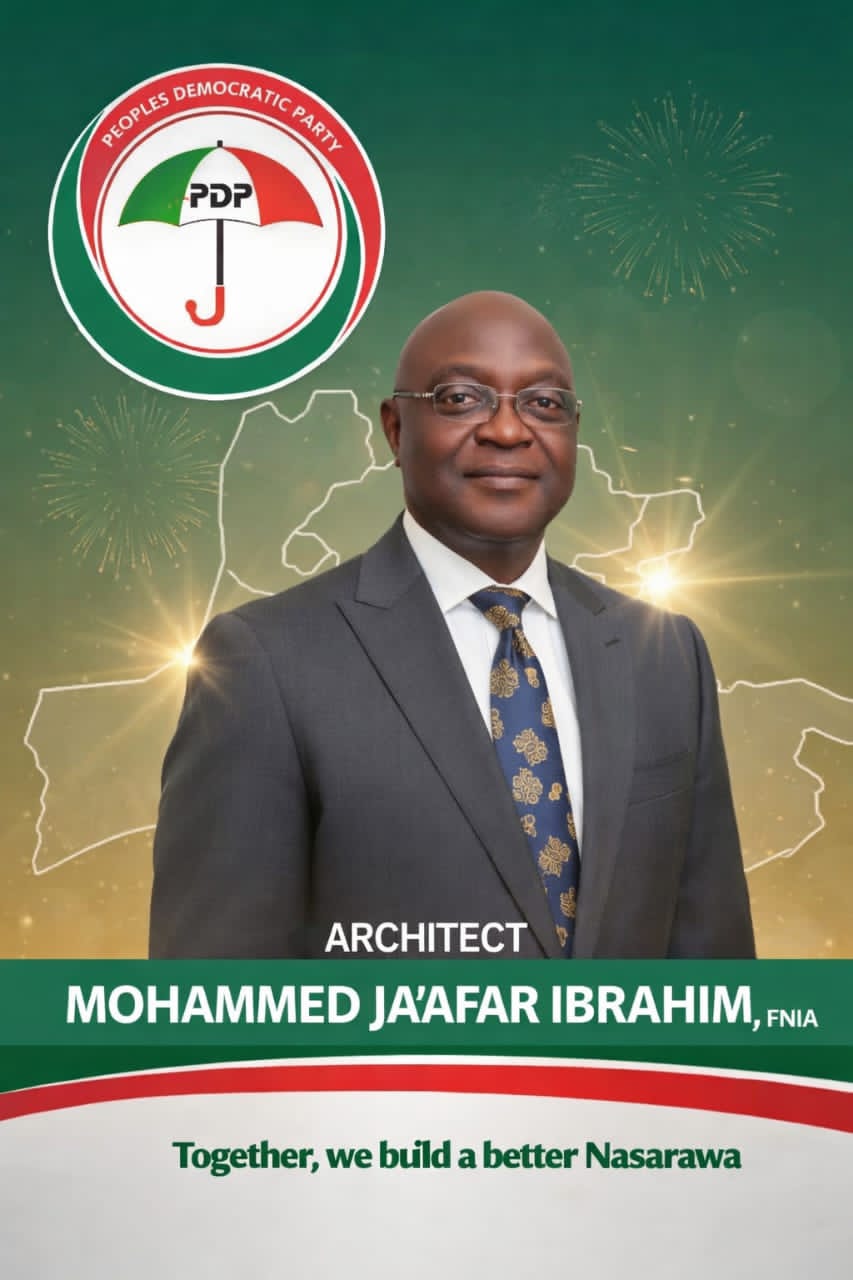
At the forefront of this renewal emerges the compelling vision embodied by Architect Mohammed Ja’afar Ibrahim, whose blueprint for governance represents a calculated and heartfelt recommitment to purpose-driven leadership, underscored by meticulous strategic planning, the comprehensive renewal of critical infrastructure, robust empowerment programs for the teeming youth population, and sweeping institutional reforms designed to meticulously restore the eroded confidence of the people in their leaders and the machinery of state.
At the core of this revitalized agenda lies an unshakeable conviction that true development must be deliberate, intentional, and far-reaching, extending economic growth beyond the concrete jungles of urban elites to empower the hardworking farmers tilling vast farmlands, the skilled artisans honing their crafts in local markets, and the resilient small businesses striving against odds in every one of the state’s local government areas.
Education and skills development, in this paradigm, transcend mere social welfare handouts to become the mighty engines of enduring prosperity, equipping the youth not as perpetual beggars scrambling for scraps of survival, but as innovative creators and architects of boundless opportunities that will propel Nasarawa into a self-sustaining future.
No less vital in this grand reclamation is the relentless pursuit of peace and unbreakable social cohesion, echoing the founding fathers’ dream of a state where open dialogue, the unyielding pursuit of justice, and genuine inclusion act as bulwarks against the shadows of recurring conflicts that have occasionally marred the landscape.
Reviving this foundational principle demands leadership of steel and vision—one that places equity at the forefront, fortifies the foundations of local governance structures for true grassroots participation, and painstakingly rebuilds the bridges of trust spanning diverse communities, ensuring that harmony becomes the enduring legacy of Nasarawa.
Thus, the vision for Nasarawa State as it eyes 2027 is no radical rupture from its storied past, but a glorious restoration of it, realigning the levers of modern governance with the pristine dreams that midwifed the state’s creation amid the euphoria of nation-building. It summons forth leadership forged in the fires of competence, ironclad accountability, and prophetic foresight, poised to convert the state’s abundant potentials into tangible, measurable progress that touches every life.
In this luminous context, Architect Mohammed Ja’afar Ibrahim’s projected leadership narrative rises not as an interloper, but as the seamless continuation of the founding mission: to erect a stable, prosperous, and forward-gazing Nasarawa State, where development is equitably shared among all, governance pulses with humanity and empathy, and the future is not left to chance but deliberately secured for generations yet unborn.