
By Fred Latimore Oghenesivbe, Esq
Economic summits are ultimately judged not only by the calibre of their speakers or the elegance of their communiqués, but by whether they generate genuine investor confidence and produce measurable outcomes.
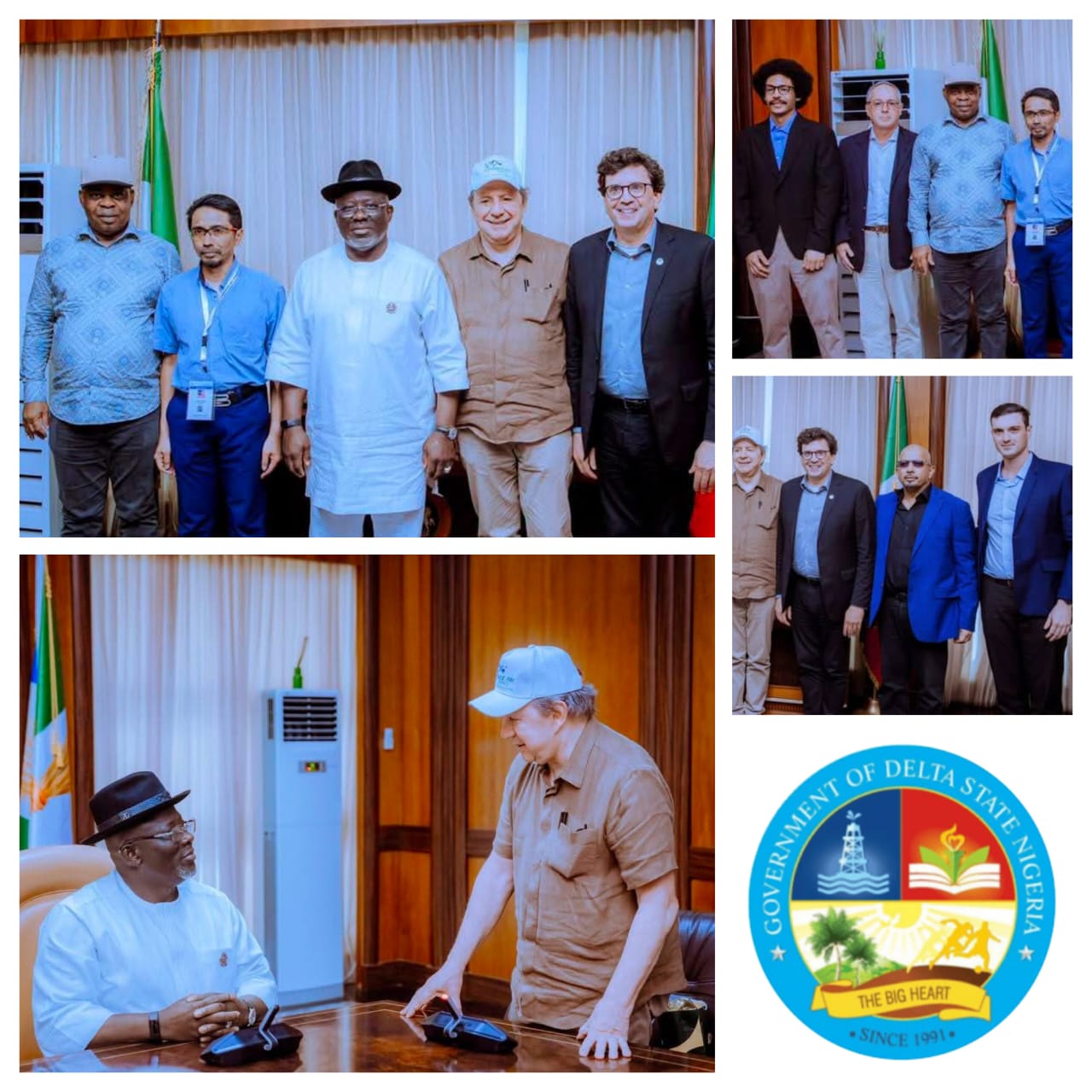
As the Delta State Economic and Investment Summit drew to a close in Asaba on Wednesday, Brazilian and Malaysian investors moved beyond the conference hall to inspect strategic investment sites across the state, including the Kwale Special Economic Zone, before paying a courtesy visit to Governor Sheriff Oborevwori at Government House.
Their engagements represented one of the clearest indications that the summit was designed to move beyond discussions and into practical investment opportunities. The decision by the investors to inspect projects and investment locations after two days of deliberations demonstrated that Delta’s economic proposition was being assessed not only through presentations but through physical realities on the ground.
For years, Nigerian states have organised investment summits that produced impressive declarations but delivered limited measurable outcomes. Delta’s challenge is to ensure that its economic summit belongs to a different category, one defined by actual projects, capital inflows, technology transfer and jobs rather than promises.
Governor Sheriff Oborevwori has framed this ambition as a responsibility to both the present and future generations. Receiving the investor delegations after their inspections, he stated: “We cannot continue to depend only on oil. We must lay a solid foundation outside the oil sector for this generation and those coming after us. That is why this economic summit is very important.”
That message captures the economic reality confronting Delta and other resource-dependent economies. Oil remains important, but it can no longer be the only foundation of economic development. Fluctuating global energy markets, changing consumption patterns and the long-term transition away from fossil fuels make diversification an economic necessity rather than a political slogan.
The governor also assured investors that Delta was prepared to provide the conditions required for sustainable business growth. “We are ready for business. We are providing the infrastructure investors require, including good roads and a peaceful environment. Nobody wants to invest where there is no return, and Delta offers strong investment opportunities,” he said.
Infrastructure, security, regulatory efficiency and policy consistency will ultimately determine whether investor interest translates into long-term commitments. Investment brochures can attract attention, but functioning institutions and a stable business environment create confidence.
The signals from the visiting investors are encouraging. After participating fully in the three-day summit and inspecting key investment locations, the Brazilian delegation identified three areas with immediate potential: cassava processing, a 100-megawatt thermal power project within the Kwale Special Economic Zone, and integrated cattle ranching.
More significant was the delegation’s commitment to return to Delta in October with additional investors to execute Memoranda of Understanding, conclude feasibility studies and finalise joint venture agreements. Serious investors rarely commit to further engagements unless they see genuine commercial potential.
Leader of the Brazilian delegation, Roberto Fonseca, said the investors were leaving Delta with renewed confidence after their engagements with government officials, business leaders and inspections of investment sites. He expressed optimism that the discussions would translate into concrete projects.
The proposed cassava processing initiative, in particular, highlights the potential for agriculture to become a major driver of industrial growth. Beyond producing food, the project could create value chains linked to pharmaceuticals, cosmetics, plastics and other industries while introducing improved agricultural technology and productivity methods.
Malaysia’s interest in partnering with Delta on the proposed development of about 12,000 acres of farmland further reinforces the state’s agricultural potential. Malaysian High Commissioner to Nigeria, Aiyub Omar, described his first visit to Delta as impressive and identified agriculture as a major area for collaboration.
A strategic partnership with Malaysia could support the modernisation of Delta’s agricultural value chains, expand agro-processing, create jobs and strengthen food production. However, such opportunities will only deliver results if they move from discussions to implementation.
That remains the ultimate test of the Delta Economic and Investment Summit. Announcements generate headlines, but execution creates economic transformation. Memoranda of Understanding do not automatically become factories, power plants or processing facilities. They require transparent governance, regulatory efficiency, sustained engagement and a commitment from all parties to deliver. From all indication, Delta State is ready for business.
If the commitments made by the Brazilian and Malaysian delegations and other investors translate into operational investments, the summit may well be remembered as a turning point when Delta moved from showcasing its potential to unlocking it.
For businesses, communities and young people across the state, the expectation is clear: not another summit, but tangible investments that create jobs, diversify the economy and build an enduring future beyond oil for generations to come.
***
Fred Latimore Oghenesivbe, Esq is the Director-General of the Delta State Bureau for Orientation and Communications, Governor’s Office, Asaba. He is a legal practitioner and a member of the Institute of Legal and Policy Studies (ILPS), with a strong interest in governance, public policy, strategic communications and economic development.