
Elections are often noisy.
There will be rallies, posters, billboards, jingles, endorsements, defections, accusations and promises. Candidates will mount podiums and tell us what they intend to do. Supporters will tell us why their candidate is the best. Opponents will tell us why he is the worst.
But governance happens differently.
Governance often happens quietly, behind closed doors, around tables where difficult decisions are made.
A governor sits in rooms most citizens will never enter.
In those rooms, there may be no cheering crowd. No party faithful chanting slogans. No television cameras. Sometimes, there will be only a few people, a difficult problem, competing interests and a decision that could affect millions of lives.
That is why, before Benue people vote in 2027, I propose a simple test.
Forget the campaign podium for a moment.
Put the candidate in the room.
Put him where the decisions will actually be made.
Then ask yourself whether that is the man you want speaking for Benue.
Let us try it with Chief Michael Kaase Aondoakaa, SAN.
ROOM ONE: THE SECURITY ROOM
It is shortly after midnight.
The Governor receives disturbing reports of security breaches in a Benue community.
Families have been displaced. Casualties are feared. Security commanders are being contacted. Abuja must be engaged. The Governor needs reliable intelligence immediately.
By morning, senior security officials are sitting around a table.
There are maps. Intelligence reports. Conflicting accounts. Questions of deployment, logistics, jurisdiction and strategy.
There will be no campaign speech to read.
The Governor must listen, interrogate, understand and decide.
He must know what to demand from the Federal Government. He must understand the constitutional responsibilities of the different security agencies. He must be firm enough to defend his people.
And beyond the immediate response, he must confront the larger questions.
How do displaced families return home?
How do farmers safely return to their fields?
How does government rebuild communities?
How do we prevent the next attack rather than merely condemn the last one?
Now put Michael Aondoakaa in that room.
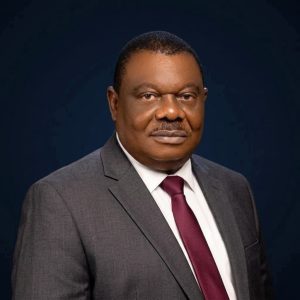
A Senior Advocate of Nigeria. A former Attorney-General of the Federation and Minister of Justice. A man who has operated at the highest levels of the Nigerian state and understands the institutions, personalities and processes through which federal power works.
You may like him or dislike him.
But ask yourself:
Would you be uncomfortable having that man represent Benue at that table?
ROOM TWO: THE INVESTMENT ROOM
This time, the atmosphere is different.
A delegation of international investors is in Makurdi.
They are interested in Benue’s agricultural potential.
Their proposal sounds impressive: billions of naira in investment, thousands of hectares, processing plants, jobs, export opportunities and supporting infrastructure.
Beautiful PowerPoint slides are projected onto the wall.
Everyone is smiling.
But somewhere inside the hundreds of pages before the Governor are the details that will determine whether Benue gets a transformative investment or a terrible deal.
How much land?
On what terms?
For how long?
Who owns what?
How many jobs are guaranteed to Benue people?
Where will the company pay its taxes?
What happens to host communities?
What environmental obligations will the investor carry?
Who owns the infrastructure at the expiration of the agreement?
What happens if the investor defaults?
This is where governance becomes negotiation.
The people sitting opposite the Governor will likely have experienced lawyers, accountants, economists and consultants protecting every kobo of their client’s interest.
Who is protecting Benue’s interest?
Put Aondoakaa in the room.
Lawyer.
Senior Advocate.
Former Attorney-General of the Federation.
Farmer.
Businessman.
A man who understands that agriculture is not merely about planting crops but about capital, markets, processing, value chains and enterprise.
Then ask yourself:
If Benue were your personal company and billions of naira were on the table, would you trust him to negotiate for you?
ROOM THREE: THE ABUJA ROOM
Now imagine a more politically sensitive situation.
The Federal Government proposes a major national policy.
Perhaps it concerns land.
Perhaps agriculture.
Perhaps livestock.
Perhaps taxation, mining, security or another matter affecting the rights and resources of Benue State.
There are powerful interests behind it.
Benue has reservations.
The Governor is invited to Abuja.
Across the table are ministers, senior federal officials, lawyers and advisers. There may even be pressure to accept what is presented as a national consensus.
This is where speaking from Makurdi is not enough.
The Governor must understand federalism.
He must understand the Constitution.
He must know the limits of federal authority and the rights of a state.
He must know when to negotiate, when to compromise and when to say, respectfully but firmly:
No. This is not in the interest of Benue State.
Put Michael Aondoakaa in that room.
This is a former chief law officer of the federation.
He has seen the federal machinery from the inside.
He understands how Abuja works because he has worked in Abuja at a level where consequential national decisions were made.
That experience does not mean Abuja will automatically agree with him.
It means Abuja will know that the man sitting across the table understands the terrain.
There is a difference.
For a state like Benue, that difference could be invaluable.
ROOM FOUR: THE CONTRACT ROOM
A road project is proposed.
The cost runs into tens of billions of naira.
Engineers make their presentation.
Consultants provide estimates.
Contractors explain why the project will cost what they say it will cost.
Government officials recommend approval.
The documents arrive on the Governor’s table.
This is public money.
Every additional billion unnecessarily spent on one contract is a billion unavailable for another road, hospital, school, water project or agricultural programme.
The Governor cannot personally be an engineer, accountant, lawyer, economist and quantity surveyor.
No governor can.
But he must possess something equally important:
the capacity to ask intelligent questions and the confidence to challenge the answers.
Why does one kilometre cost this much?
What was the competitive procurement process?
Who carried out the valuation?
What are the payment milestones?
What guarantees protect the state?
What happens if the contractor abandons the project?
Why should Benue accept these terms?
Put Aondoakaa in that room.
The value of having a lawyer of his standing as governor would not be that he personally drafts every agreement.
It would be that those presenting agreements to the government know there is a governor capable of understanding what he is being asked to sign.
Sometimes, good governance begins with a simple sentence:
“Bring that document. Let me see it.”
ROOM FIVE: THE YOUTH ROOM
This may be the most important room of all.
There are no generals here.
No ministers.
No multinational executives.
Just young Benue men and women.
Graduates.
Farmers.
Software developers.
Artisans.
Entrepreneurs.
Young people with ideas but little capital.
Young people who have submitted countless job applications.
Young people watching friends leave Benue for Abuja, Lagos and other places because they cannot see enough opportunities at home.
They are sitting across from their Governor.
And they ask him:
“Sir, what future does Benue have for us?”
This is where credentials alone become useless.
They cannot eat a résumé.
They cannot build families on political slogans.
They need an economy.
They need security.
They need electricity.
They need internet connectivity.
They need access to capital.
They need industries that buy what our farmers produce.
They need government policies that help businesses survive rather than frustrate them.
They need a Benue where agriculture is connected to processing, processing to industry, industry to markets and markets to jobs.
Put Aondoakaa in this room too.
Then demand answers from him.
His experience must translate into opportunities for these young people.
His knowledge must become policy.
His contacts must become investment.
His understanding of agriculture must become agro-industrialisation.
His national exposure must produce local results.
That is the standard.
Because experience is valuable only when ordinary people can feel its consequences.
THAT IS WHAT AN ELECTION REALLY DOES
When we vote for a governor, we are doing something far more consequential than choosing the person whose photograph will hang in government offices.
We are choosing who enters the room on our behalf.
When the President calls, someone enters the room for Benue.
When investors arrive, someone sits across from them for Benue.
When security commanders meet, someone speaks for Benue.
When billions of naira in contracts are considered, someone approves or rejects them for Benue.
When federal policies threaten our interests, someone must defend Benue.
When our young people demand a future, someone must provide credible answers.
You and I will not be in most of those rooms.
The Governor will.
That is why competence matters.
That is why experience matters.
That is why temperament matters.
That is why knowledge of institutions matters.
And that is why the 2027 election must go beyond party slogans and political sentiments.
NOW PUT AONDOAKAA IN THE GOVERNOR’S CHAIR
Michael Kaase Aondoakaa has already occupied one of the most consequential offices in Nigeria.
He has been Attorney-General of the Federation and Minister of Justice.
He has risen to the rank of Senior Advocate of NigNigeria
He has practised law.
He has participated in agriculture and business.
He has interacted with government at its highest levels.
He understands Abuja, but he also understands the farm.
He has sat with the powerful, but he knows the communities from which he came.
None of these automatically entitles him to become Governor of Benue State.
Democracy does not work that way.
But they entitle his candidacy to serious consideration.
The question should therefore not simply be:
Do I like Michael Aondoakaa?
Politics is too important to be reduced to personal affection.
Ask instead:
Can he do the job?
Can he negotiate?
Can he defend Benue?
Can he understand complex agreements?
Can he attract investment?
Can he make difficult decisions?
Can he assemble competent people?
Can he look powerful interests in the eye and insist on what is right for Benue?
Can his years of experience be converted into security, farms, industries, jobs and prosperity?
Those are better questions.
And before you answer them, conduct one final experiment.
Close your eyes.
Forget the posters.
Forget the campaign songs.
Forget the political parties.
Forget the social-media arguments.
Imagine the security room.
The investment room.
The Abuja room.
The contract room.
The room filled with young Benue people demanding a future.
Now place Michael Kaase Aondoakaa in the Governor’s chair in each of those rooms.
Watch him across the table.
Imagine the questions.
Imagine the pressure.
Imagine what is at stake.
Then ask yourself:
Is this a man I would trust to speak for Benue when I am not in the room?
If your answer is yes, then perhaps you have also answered a much bigger question.
Who should be Governor of Benue State in 2027?
Written by Terver Akase, PhD