
…Says Trust, Effective Communication, Community Ownership Critical to Sustainable Development
By Yahaya Idris, Asaba
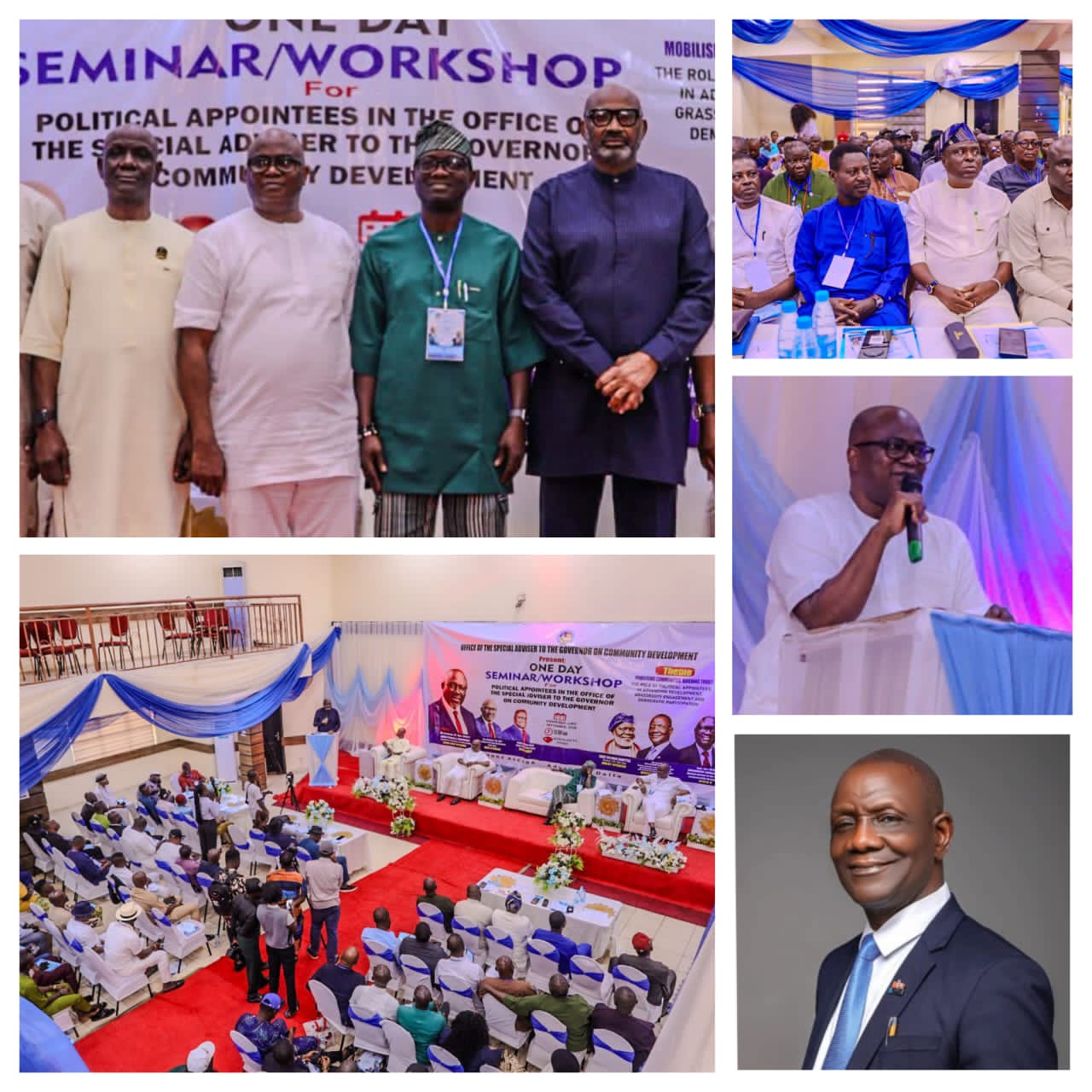
The Director-General, Delta State Bureau for Orientation and Communications, Dr Fred Latimore Oghenesivbe, has urged political appointees responsible for Community Development to deepen grassroots engagement, build public trust and make communities active partners in government programmes.
Oghenesivbe made the call on Wednesday while delivering a keynote paper at a seminar organised by the Special Adviser to the Delta State Governor on Community Development, Ambassador Dr Toyin Agbolayah, at Hotel Benizia, Asaba.
https://globaltimesnigeria.com/2026/09/24/ndlea-warns-delta-students-illicit-drugs/
The seminar had as its theme, “Mobilizing Communities, Building Trust: The Role of Political Appointees in Advancing Development, Grassroots Engagement and Democratic Participation.”
Oghenesivbe presented a paper titled “Community Engagement and Bridge Building as Integral Components of the M.O.R.E. Agenda.”
Earlier, the Secretary to the State Government and representative of the Governor, Dr Kingsley Emu, and the Chief of Staff to the Governor, Hon. Prince Johnson Erijo, advised political appointees handling Community Development to maintain regular engagement with community leaders, stakeholders and residents across the state.
They urged the appointees to build mutually beneficial relationships between government and the people, foster trust and promote meaningful engagement.
The officials stressed that, as representatives of the Governor at the grassroots, the appointees had an important responsibility to translate the administration’s development vision into tangible outcomes within communities.
Development Happens in Communities
Oghenesivbe said government policies might be formulated in offices, but their actual impact was ultimately measured in communities.
He stressed that effective governance required a functional bridge between government and the people.
“Government may formulate policies in offices, but development happens in communities.”
According to him, trust remains critical to securing meaningful cooperation between citizens and government.
The Director-General said political appointees occupied a strategic position in the relationship between government and the people, adding that they must effectively communicate government programmes, listen to citizens, represent legitimate community concerns and responsibly manage public expectations.
Communities Must Be Partners in Development
Oghenesivbe noted that communities possessed first-hand knowledge of their development challenges, including infrastructure, education, water supply, youth empowerment and other local needs.
He therefore urged Community Development appointees to engage residents before, during and after the implementation of government programmes.
The Director-General distinguished between mobilisation and meaningful engagement, explaining that while mobilisation could bring people together, genuine engagement provided citizens with opportunities to contribute to decisions affecting their communities.they
He advised that feedback generated during community engagements should be properly documented and transmitted to relevant authorities for consideration and appropriate action.
Oghenesivbe Advocates Inclusive Consultations
Oghenesivbe also called for inclusive consultations involving traditional rulers, Community Development Associations, women, youths, farmers, traders, artisans, professionals, persons living with disabilities, civil society organisations and other relevant stakeholders.
He said communities should not be viewed merely as beneficiaries of government projects but as partners in identifying needs, monitoring implementation and sustaining development outcomes.
According to him, greater community ownership would enhance the sustainability of government projects and strengthen citizens’ confidence in public institutions.
Participation Must Go Beyond Elections
Speaking on democratic participation, Oghenesivbe said citizens’ involvement in governance should extend beyond elections.
He identified town-hall meetings, stakeholder consultations, community visits, feedback mechanisms and the responsible use of digital platforms as important avenues for strengthening grassroots participation.
He urged political appointees to communicate responsibly and provide clear information about government programmes, implementation timelines and areas requiring further consultation.
Effective communication, he said, would promote better understanding and cooperation between government and communities.
Appointees Urged to Prioritise Service
Oghenesivbe urged political appointees to continue to regard public office as an opportunity to serve the people and support the administration’s development objectives.
He said sustained engagement with communities would promote stronger partnerships, greater ownership of government initiatives and improved development outcomes.
The Director-General called for continued collaboration among government officials, community leaders and citizens in advancing the M.O.R.E. Agenda.
He stressed that regular communication, inclusive participation and constructive feedback would strengthen the connection between government and the grassroots and contribute to the sustainable development of Delta State.