

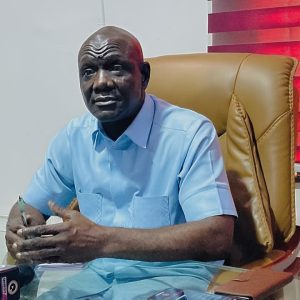
By Dr Wilfred Latimore Oghenesivbe, Esq.
The unfortunate violence that erupted during the Nigeria Democratic Congress (NDC) campaign visit to Uduere Community in Ughelli North Local Government Area of Delta State, resulting in the reported deaths of six persons, is a painful reminder of the dangers of political intolerance and the consequences of allowing partisan interests to undermine peaceful coexistence.
As we approach 2027, our collective message must be unequivocal: campaign with ideas, persuade with policies, mobilise through lawful democratic engagement and compete with dignity. Allow every political party to reach out to the people, and allow every citizen to make a free and informed political choice.
The Uduere tragedy is not merely a political incident; it is a serious assault on the values of constitutional democracy, the sanctity of human life and the fundamental freedoms guaranteed to Nigerian citizens.
Delta State belongs to all Deltans. Its communities are not political fiefdoms, and its citizens are not subjects of any political authority. Every Nigerian has a constitutional right to freedom of association, freedom of expression and freedom of movement, subject only to lawful limitations. These rights must be protected before, during and after elections.
The loss of lives in Uduere is deeply regrettable and deserves the unequivocal condemnation of all well-meaning Deltans, regardless of political affiliation, ideological persuasion or personal political ambition. No political party, candidate, campaign organisation or individual has the right to endanger the lives of citizens in pursuit of political relevance.
The families of those who lost their loved ones in Uduere deserve compassion, support and justice. The injured deserve appropriate medical attention, while affected residents deserve reassurance that their safety will be protected.
Government should consider appropriate humanitarian assistance for the bereaved families and victims, without prejudice to the criminal investigation. Beyond official statements and condemnations, the tragedy requires practical interventions that demonstrate the value placed on human life.
Ultimately, the peace currently enjoyed in Delta State must be sustained. It must not be sacrificed on the altar of the 2027 general elections. No political ambition is worth the blood of a single Deltan. No senatorial aspiration, governorship ambition, legislative contest or party supremacy struggle should be allowed to destroy the peaceful relationships that have sustained our communities over the years.
Political power is temporary, but the consequences of violence can be permanent. Political competition should be defined by ideas, policy alternatives, leadership credentials and the ability to mobilise citizens through persuasion, not intimidation, threats or violence.
As Delta State gradually approaches the 2027 general elections, political actors must understand that the preservation of peace is a collective responsibility. Elections are temporary political exercises, but the consequences of violence can endure for generations. Political offices will change hands, candidates will emerge and others will lose elections, but the people of Delta State will continue to live together as neighbours, brothers, sisters and members of the same communities long after the elections. It would therefore be unfortunate for anyone to sacrifice the enduring peace of our state on the altar of transient political ambitions.
The Nigerian Constitution provides a clear framework for political participation and democratic engagement. Section 40 of the 1999 Constitution, as amended, guarantees every citizen the right to assemble freely and associate with other persons, including the right to form or belong to political parties, trade unions and other associations for the protection of their interests. This constitutional guarantee is fundamental to multiparty democracy and must be respected by all political actors, community leaders, security agencies and public office holders.
Similarly, Section 41 guarantees every Nigerian citizen the right to move freely throughout Nigeria and to reside in any part of the country. These provisions are not privileges to be granted at the discretion of political office holders, traditional authorities or local power brokers. They are constitutional rights. Consequently, no political party or group of supporters should assume the authority to determine which citizens may enter a community, conduct political consultations, organise meetings or campaign for their preferred candidates, provided such activities are undertaken within the ambit of the law.
The constitutional right to freedom of association must also be understood in its proper democratic context. A community cannot be converted into the exclusive political territory of a particular party, candidate or political tendency. Every Nigerian citizen has the right to support the All Progressives Congress (APC), the Peoples Democratic Party (PDP), the Nigeria Democratic Congress (NDC), the Labour Party or any other duly registered political party without fear of intimidation, harassment or physical attack.
Political pluralism is a defining characteristic of constitutional democracy, and political differences should be accommodated through dialogue, persuasion and lawful competition.
Equally important is Section 39 of the Constitution, which guarantees freedom of expression. Citizens must be free to express political opinions, criticise public policies, advocate alternative leadership and participate in political discourse without being subjected to violence. The right to disagree is not a threat to democracy; rather, it is one of the essential ingredients of democratic governance.
A society in which citizens are afraid to express political preferences is a society in which democratic institutions are gradually losing their relevance.
Against this constitutional background, the Uduere incident must be investigated thoroughly, impartially and professionally. The conflicting accounts presented by the NDC campaign organisation, community stakeholders and local government officials make an independent investigation imperative.
The police must establish what happened, identify those who participated in the violence, determine the circumstances surrounding the reported killings and bring all persons found culpable before the courts. Justice must not be selective, partisan or influenced by the political standing of suspects.
The intervention of Governor Sheriff Oborevwori, including his visit to Uduere alongside heads of security agencies and his directive that those responsible be arrested, represents an important step towards restoring public confidence. His administration must sustain this intervention by ensuring that the investigation is not abandoned after the immediate tension subsides.

The governor’s responsibility as the chief executive of the state extends beyond the management of political disagreements; it includes protecting lives, safeguarding property and maintaining an environment in which every citizen can exercise constitutionally guaranteed freedoms.
The Nigeria Police Force, the Department of State Services (DSS), the Nigerian Army and other relevant security institutions must demonstrate professionalism, neutrality and operational competence. Their responsibilities are to protect all citizens, prevent crime and enforce the law without discrimination.
Security arrangements for political campaigns should be based on credible threat assessments, adequate deployment of personnel and effective coordination. Where officers are alleged to have failed in their responsibilities, their conduct must also be examined. Accountability within the security architecture is indispensable to public trust.
Political parties and their leaders equally have an obligation to conduct themselves responsibly. Political communication must be used to build confidence, promote peaceful engagement and encourage citizens to participate in democratic processes.
Party leaders should caution their supporters against inflammatory statements, threats, provocative mobilisation and the use of political language capable of inciting violence. The ability to mobilise a crowd should not be mistaken for the ability to govern, just as political popularity should never be measured by the capacity to intimidate opponents.
It is particularly important for political campaign organisations to appreciate that freedom of association and freedom of movement operate within a constitutional order that also recognises the rights of others and the responsibility to obey lawful restrictions.
Political campaigns must therefore be organised in accordance with electoral laws, public safety regulations and legitimate security directives. But these lawful requirements must never be manipulated to deny political opponents their fundamental rights or prevent them from exercising legitimate political freedoms.
The leadership of the NDC and other political parties must also embrace restraint. Allegations of political attacks, attempted assassinations, sponsorship of violence or complicity by public officials are serious matters that should be supported by credible evidence and submitted to appropriate investigative institutions.
Political disagreements should not be converted into media trials or platforms for the mobilisation of hostility. The proper response to criminal conduct is investigation and prosecution, not retaliation or the escalation of political animosity.
Furthermore, traditional rulers, community presidents-general, youth leaders and other grassroots stakeholders must rise above partisan considerations. Traditional institutions remain important instruments of peacebuilding and community cohesion.Their responsibility is to protect the collective interests of their communities, maintain harmonious relationships and encourage peaceful engagement among residents and visitors.
No community leader should allow personal political preferences to override the constitutional rights of other citizens. Community ownership must not become a justification for political exclusion.
The Urhobo nation, and indeed the wider Delta State community, has a longstanding tradition of dialogue, accommodation and peaceful coexistence. Our communities are interconnected by history, culture, commerce, marriage and shared aspirations. Political disagreements should not be allowed to destroy these relationships.
Uduere is part of the larger Delta family, and what affects one community ultimately affects the collective peace and development of the state. The people must therefore reject every attempt to introduce political hostility into the social fabric of our communities.
The 2027 general elections should be an opportunity for citizens to assess political parties, examine competing policy proposals and make informed choices about the future of their state and country. It should be a season of democratic enlightenment, not a period of intimidation and bloodshed.
Candidates should be encouraged to communicate their programmes on infrastructure, education, healthcare, employment, security, economic development and social welfare. Political campaigns must focus on issues that improve the quality of life of citizens rather than personal attacks, territorial claims and confrontational displays of political power.
The MORE Agenda of the Oborevwori administration places emphasis on meaningful development, opportunities for all, realistic reforms and enhanced peace and security. The sustainability of these objectives requires a peaceful political environment.
Development cannot flourish where communities are engulfed in violence, investors are apprehensive, businesses are disrupted and citizens live in fear. Peace is therefore not merely a security consideration; it is an essential foundation for economic growth, political stability and sustainable development.
Governor Oborevwori must continue to engage political leaders across party lines, community stakeholders and security institutions to prevent a recurrence of the Uduere tragedy. His administration should consider establishing or strengthening a broad-based political peace and security consultation mechanism involving recognised political parties, traditional rulers, youth organisations, civil society groups and security agencies. Such a platform would provide an avenue for early conflict detection, dispute resolution, information sharing and the development of agreed standards for peaceful political campaigns across the state.
There is also an urgent need for political parties to sign and respect a comprehensive peace accord ahead of the 2027 elections. Such an agreement should commit party leaders and candidates to peaceful campaigns, non-violence, respect for opponents, responsible political communication and the peaceful resolution of disputes.
The Independent National Electoral Commission (INEC), security agencies and relevant civil society organisations should support the implementation of such commitments. However, a peace accord must not be reduced to a ceremonial exercise or media spectacle; it must be translated into measurable conduct and demonstrable restraint by political actors.
The National Assembly, the Delta State House of Assembly, human rights organisations, the Nigerian Bar Association and other civil society stakeholders should also pay attention to the implications of the incident for constitutional democracy. The protection of political rights is not the responsibility of government alone. It requires constant vigilance by institutions and citizens who understand that democratic freedoms are meaningful only when they can be exercised without fear of violence or arbitrary interference.
Delta peace must endure. Democracy must thrive. Human lives must be protected. And justice must prevail.
^^^
Dr Wilfred Latimore Oghenesivbe, Esq., is the Director-General, Delta State Bureau for Orientation and Communications, Governor’s Office Asaba. He’s a Barrister and Solicitor of the Supreme Court of Nigeria, a Minister in the Temple.of Justice.