
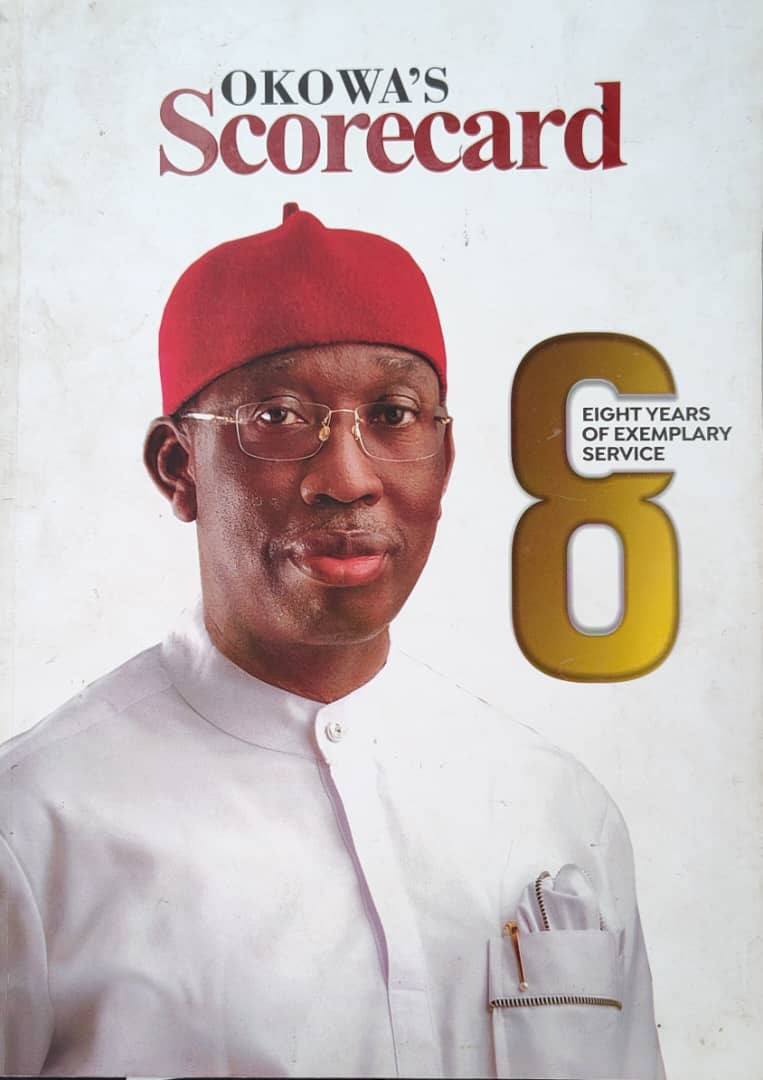
Throwback: Okowa’s Eight Years of Governance in Delta
By Comr. Friday Odabi
Former Delta State Governor, Ifeanyi Okow, presided over what supporters describe as eight years of focused governance, marked by economic reforms, infrastructure expansion and social investment programmes between 2015 and 2023.
Okowa assumed office on May 29, 2015, at a time Nigeria was grappling with a severe economic downturn.
Despite the challenges, including a significant inherited debt burden, his administration pursued a development-driven agenda anchored on fiscal discipline, plugging revenue leakages and reducing waste, while maintaining regular salary payments and implementing the new national minimum wage.
His first tenure (2015–2019) was guided by the SMART Agenda—Strategic Wealth Creation, Meaningful Peace Building, Agriculture and Industrialisation, Relevant Health and Educational Policies, and Transformed Environment through Urban Renewal.
Under this framework, the government launched empowerment and job-creation initiatives such as STEP, YAGEP, PPSP, GEST and RYSA, which reportedly generated over 1.6 million direct and indirect jobs.
The administration also prioritised peace-building across Delta’s diverse ethnic communities, ensuring equitable distribution of projects and government presence across the three senatorial districts and all local government areas.
Interventionist agencies, including DESOPADEC and the Small and Medium Enterprises Agency, were strengthened to drive development at the grassroots.
In infrastructure, the government delivered a range of projects, including the Prof. Chike Edozien Secretariat complex, the Stephen Keshi International Stadium, the Mariam Babangida Leisure Park, the Ogheye Floating Market, as well as major drainage systems in Warri and Asaba and the Koka Interchange.
During his second term (2019–2023), the administration focused on consolidating earlier gains under the “Stronger Delta” agenda. Efforts were directed at completing ongoing projects and laying a foundation for continuity.
This period saw the construction of over 2,000 kilometres of roads and about 1,400 kilometres of drainage infrastructure across the state.
Economic indicators also reflected growth, with the state’s Gross Domestic Product reportedly doubling by 2021, while the non-oil sector contributed 52.4 per cent, signalling progress in economic diversification.
Analysts note that documenting the full scope of the administration’s achievements may be challenging. However, a recently compiled publication titled “Okowa: Eight Years of Exemplary Service” provides a detailed account of the policies, projects and milestones that defined the Okowa era in Delta State.