
Omodara: The Pain in the Neck of Criminals, Pride of the Ododo Administration
…The Kogi Born Retired Navy Commander leads clearance of illegal Abobo trailer park as Governor Ododo intensifies crackdown on criminal hideouts
By Abu Micheal
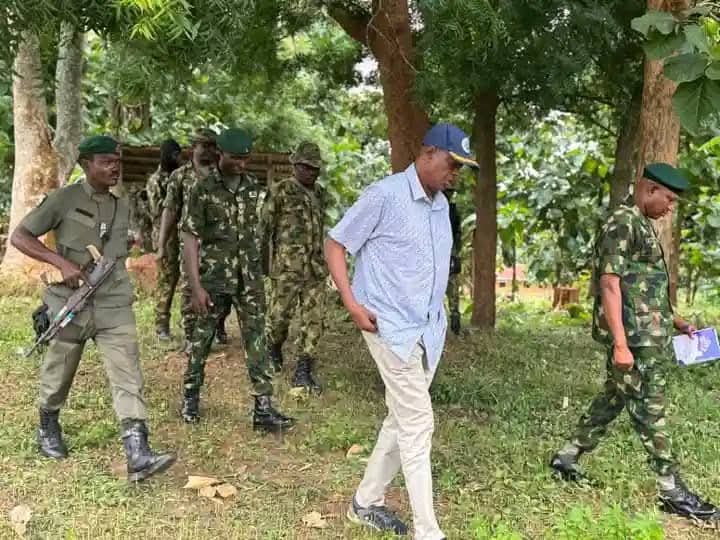
The Kogi State Government has commenced the clearance of the illegal trailer park at Abobo, a location long identified by security agencies as a haven for criminal elements operating within and around the state.
The operation, personally supervised by the State Security Adviser, Commander Jerry Omodara (Rtd), was carried out on the directive of Governor Ahmed Usman Ododo as part of the administration’s renewed determination to rid communities, highways, and motor parks of criminal activities.
The clearance of the Abobo trailer park is more than a routine security exercise; it is a statement of intent. It reflects the Ododo administration’s unwavering commitment to ensuring that no part of Kogi State serves as a sanctuary for criminals.
At the center of this effort is Commander Jerry Omodara, a retired naval officer whose name has increasingly become synonymous with Kogi’s evolving security architecture.
To criminals, Omodara is a formidable adversary whose operations continue to shrink their operational space. To many citizens, he is the no-nonsense crime fighter whose presence inspires confidence. To the government, he represents professionalism, discipline, and strategic coordination in the ongoing battle against insecurity.
The Abobo operation is only the latest in a series of security interventions under his watch. Security experts believe the exercise will significantly disrupt criminal networks that exploit such locations for planning kidnappings, robberies, and other violent crimes along major transit routes.
For Omodara, however, security is not merely about responding to crime after it occurs. His philosophy is rooted in prevention, intelligence gathering, and denying criminals the opportunity to establish safe havens.
What distinguishes him is his ability to combine military discipline with grassroots engagement. Drawing from years of experience in the Nigerian Navy, he has brought structure, strategic planning, and operational efficiency into Kogi’s security management framework.
Yet, beyond military expertise, he has demonstrated a deep understanding of local realities. From farmer-herder conflicts and communal disputes to highway kidnappings and disaster-related security challenges, Omodara has consistently adapted security responses to meet the peculiar needs of the state.
Rather than waiting for crises to erupt, he places strong emphasis on early warning mechanisms. Through sustained collaboration with traditional rulers, local government authorities, vigilante groups, hunters, youth leaders, and community stakeholders, he has strengthened intelligence gathering at the grassroots level.
His approach is straightforward: every community should serve as a source of actionable intelligence. This strategy has improved early detection of threats and significantly reduced response times during security emergencies.
One of the most remarkable aspects of his stewardship is his ability to foster collaboration among various security agencies. In a sector where rivalry and overlapping responsibilities often hinder effectiveness, Omodara has succeeded in creating a coordinated operational framework.
Under his leadership, intelligence sharing and joint operations among the Army, Police, Department of State Services (DSS), Nigeria Security and Civil Defence Corps (NSCDC), Navy, and local vigilante groups have become more streamlined and effective.
His professionalism and non-partisan disposition have also helped strengthen trust among security stakeholders, enabling faster and more coordinated responses to emerging threats across the state.
Whether it is a kidnapping incident along the Lokoja-Okene highway, rising tension in a rural community, or a developing security concern in Koton Karfe and other parts of the state, Omodara’s approach remains consistent, careful assessment, coordinated response, and decisive action.
In line with the Ododo administration’s modernization agenda, he has also championed the adoption of technology-driven security measures.
His support for surveillance systems, communication equipment, GIS mapping, intelligence-based patrol deployment, and data-driven security planning reflects a forward-looking approach to crime prevention.
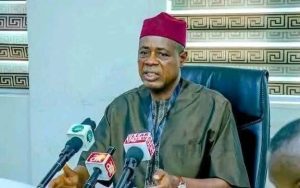
He has equally advocated for strengthening community-based security structures through the recruitment and empowerment of vigilante personnel while promoting dialogue and preventive engagement before disputes escalate into full-scale crises.
Security analysts maintain that any assessment of the relative stability being enjoyed in Kogi State today must acknowledge the strategic role played by Commander Omodara. Building on the foundation laid by former Governor Yahaya Bello and strengthened under Governor Ahmed Usman Ododo, the state’s security gains have been sustained through deliberate planning and effective coordination.
While security operatives may be the visible faces on the frontline, Omodara remains one of the key architects behind the scenes, ensuring that the right resources, personnel, and intelligence are deployed where they are most needed.
The successful clearance of the Abobo trailer park further reinforces the administration’s determination to dismantle criminal enclaves and protect lives and property across the state.
In the eyes of criminals, Commander Jerry Omodara remains a persistent obstacle. In the eyes of the Kogi State Government, he is a symbol of commitment and professionalism. For many citizens, he represents a reassuring presence in the fight against insecurity.
As Governor Ododo continues to prioritize peace, security, and sustainable development, Omodara’s blend of military professionalism, strategic foresight, community engagement, and operational efficiency continues to serve as a critical pillar of Kogi State’s security architecture.
Abu Micheal is a journalist, publisher, ANIPR, MNIM, Editorial Board Member, Guild of Interfaith Media Practitioners Nigeria, and MCIA.