
…Bureau, NDLEA Promote Responsible Choices Among Students
By Yahaya Idris in Asaba
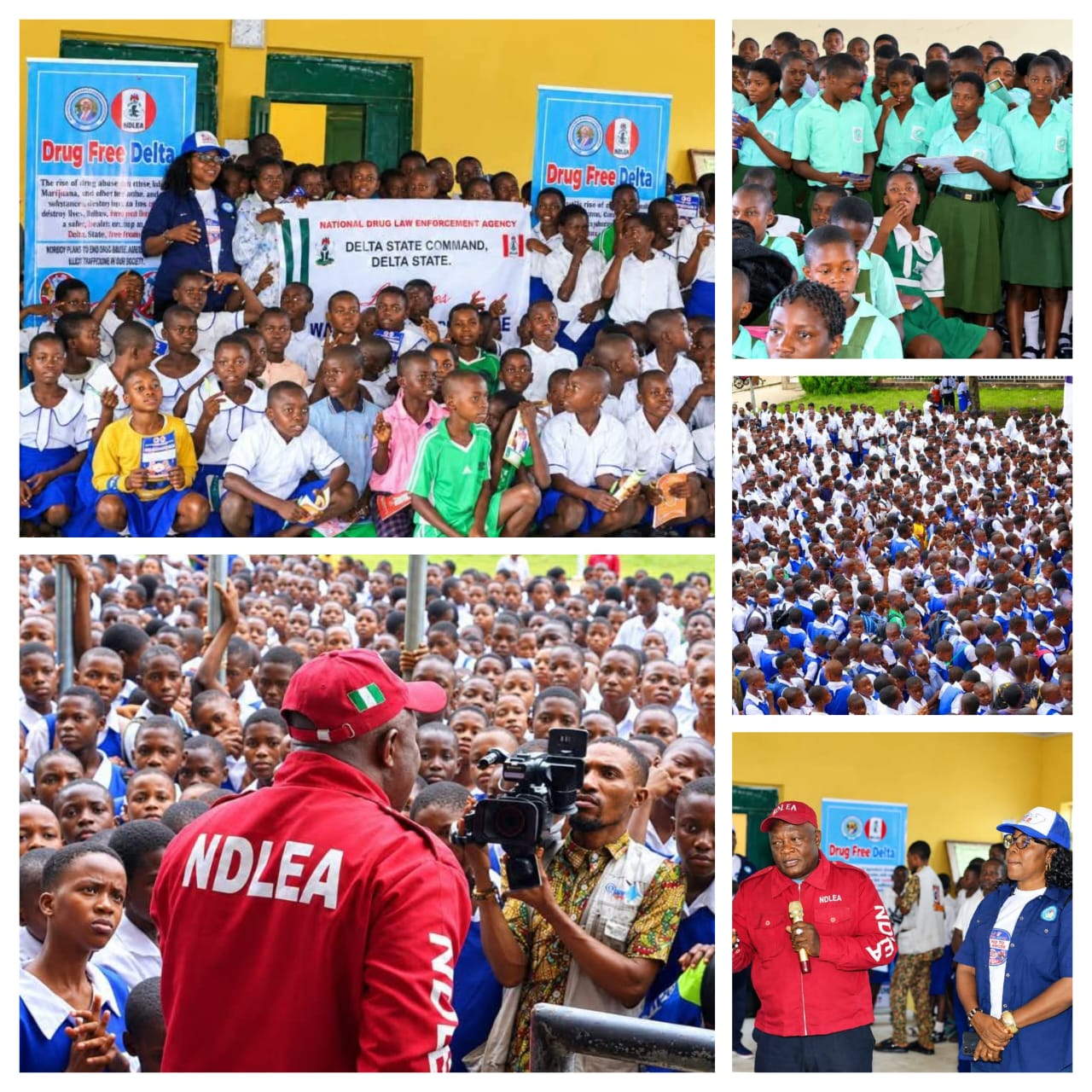
The Delta State Government has intensified its campaign against drug abuse among young people with a sensitisation programme targeting secondary school students across Delta South.
The second phase of the Drug-Free Delta Campaign is being coordinated by the Delta State Orientation and Communications Bureau in partnership with the National Drug Law Enforcement Agency (NDLEA).
The latest phase of the campaign took the sensitisation team to Aradhe Grammar School, Aradhe; Owelogbo Secondary School, Owelogbo; and Emore Grammar School, Oleh.
The campaign seeks to equip students with information about illicit drugs and encourage them to make responsible decisions capable of protecting their education, careers and future aspirations.
The Director-General of the Orientation and Communications Bureau, Dr. Fred Latimore Oghenesivbe, Esq., was represented during the engagements by the Director of Orientation, Mrs. Gertrude Onyekachukwu-Uteh.
Onyekachukwu-Uteh told the students that the campaign was part of the government’s commitment to protecting young people and strengthening human capital development.
She conveyed the message of Governor Sheriff Oborevwori, noting that education remains a major component of the administration’s MORE Agenda.
The Director urged the students to resist negative influences and take personal responsibility for decisions that could affect their future.
The NDLEA’s Deputy State Commander, Mr. Silas Omobhude, subsequently engaged the students in an interactive session on drug abuse.
He explained the effects of drugs on the human body and mind and stressed the importance of using medicines only for their intended purposes and under appropriate medical guidance.
Omobhude warned against the misuse of tramadol and other medicines while explaining the legal consequences associated with prohibited substances such as cannabis, cocaine and heroin.
He urged students never to allow themselves to be used to store, transport or distribute illicit drugs.
According to him, drug-related decisions can have consequences extending beyond the immediate period of use, affecting education, careers, relationships and personal aspirations.
The students actively participated in the programme by asking questions about drug abuse and the regulation of medicines.
The campaign team also used practical explanations to distinguish between regulated substances and substances prohibited by law.
Students were encouraged to remain vigilant at social gatherings and exercise caution when accepting drinks or other consumables from unfamiliar persons.
The sensitisation programme included a drama presentation by students, demonstrating the impact of drug abuse on individuals, families and communities.
A collective anti-drug chant followed the drama, reinforcing the campaign’s message.
The NDLEA also provided a toll-free reporting line for students, teachers and members of the school communities to report drug-related concerns.
Principals of the participating schools expressed appreciation for the programme and said continued collaboration between schools, parents, government agencies and students would strengthen drug-abuse prevention.
https://guardian.ng/news/borrowers-get-relief-as-cbn-cuts-rate-by-3-5-tests-fpi-resilience-buffers/
They also backed the establishment and strengthening of War Against Drug Abuse (WADA) Clubs in schools.
The Drug-Free Delta Campaign is expected to continue using school-based sensitisation and public awareness to encourage young people to make informed choices and protect their future.