
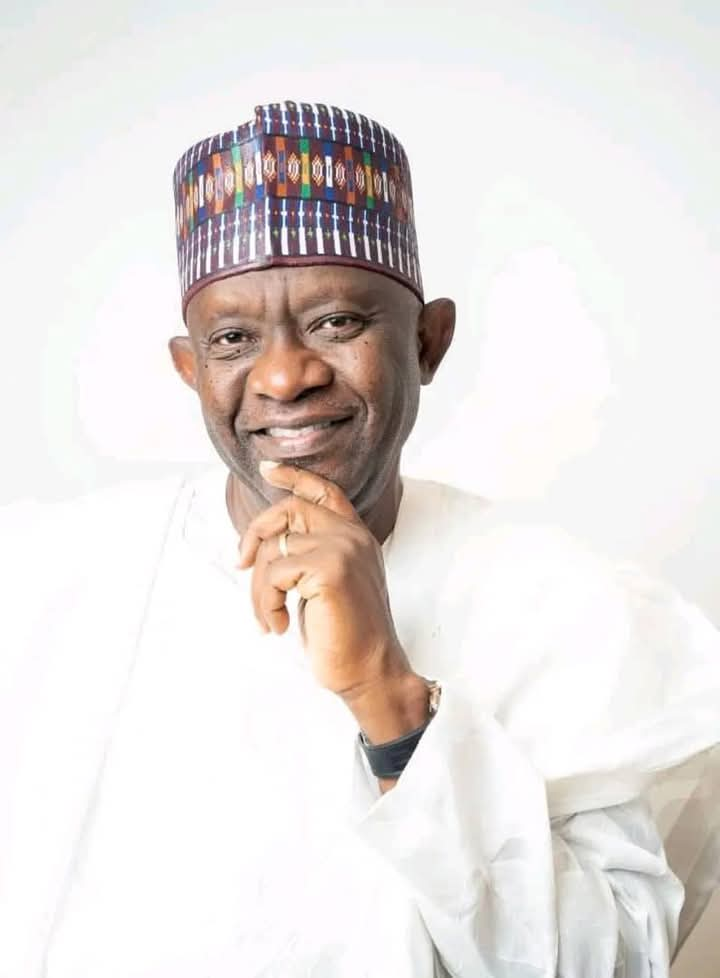
Yahaya Idris, media commentator fires back at Abdulsalam Mohammed aka Blink over petition against Senator Sunday Steve Karimi’s statewide scholarship initiative.
A political drama has unfolded in Kogi State following a petition by Abdulsalam Mohammed, popularly known as Blink, from Kogi Local Government Area, who has expressed anger over Senator Sunday Steve Karimi’s decision to extend his scholarship programmes beyond the boundaries of Kogi West Senatorial District.

In a petition titled “We, the Concerned Constituents of Kogi West,” Mohammed Blink expressed deep disappointment and outright condemnation of the senator’s action.
But in an ironic twist of political communication, what appears to have been designed as a petition against Karimi may have ended up functioning as an unsolicited publicity campaign for the same senator.
After reading the petition, one cannot help but wonder whether the real offence is that Karimi has failed his constituents or that his educational intervention has travelled beyond the geographical borders of his senatorial district.
Apparently, in the political mathematics of Blink, a scholarship becomes commendable only when its benefits remain within a particular constituency. Once educational assistance crosses the senatorial boundary, generosity suddenly becomes a subject of condemnation.
What an interesting interpretation of public service!
If the purpose of a scholarship is to support education, why should the geographical location of a beneficiary become more important than the educational opportunity being provided? And if a public officeholder has the capacity to assist students beyond his immediate constituency, should that automatically become a political offence?
These are the questions Blink’s petition has inadvertently placed before the public.
To be clear, Abdul Blink is entitled to his opinion. He possesses the same democratic right as every other citizen to criticise an elected representative, express dissatisfaction and participate in political debate. He is equally entitled to vote and be voted for, subject to the provisions of the law.
However, the freedom to criticise a politician does not prevent the public from critically examining the logic behind such criticism.
In my considered opinion, the petition does not necessarily diminish Senator Karimi’s political standing. Rather, it has drawn additional attention to his scholarship initiative and the debate surrounding the reach of his educational interventions.
Indeed, if a senator’s scholarship programme has become controversial simply because it extends beyond his senatorial district, perhaps the bigger question is whether political boundaries should also become boundaries to educational opportunity.
Karimi represents Kogi West in the National Assembly, and his primary responsibility to his constituents remains an important consideration. Nevertheless, whether his wider educational interventions are appropriate should be assessed against the programme’s objectives, funding arrangements, eligibility criteria and the interests of the people he represents, not merely the fact that beneficiaries may come from outside his district.
That is where a more substantive debate should begin.
For now, I would like to thank Abdulsalam Mohammed, aka Blink, for adding his voice to the growing conversation about Senator Sunday Steve Karimi’s scholarship programme.
Whether intentionally or otherwise, his petition has helped bring the senator’s educational intervention into the public spotlight. Political communication sometimes produces results its authors may not have anticipated, and this episode offers a fresh example.
Abdul Blink is free to continue his criticism, just as Karimi’s supporters are free to defend the senator’s record. Ultimately, the electorate will judge public officeholders by their performance, priorities and accountability.
My advice to Blink is simple: keep speaking, keep questioning and keep contributing to public debate. If the intention is to draw attention to Senator Karimi’s activities, the conversation has certainly succeeded in placing his scholarship programme before a wider audience.
In the final analysis, the strongest response to political criticism is not personal hostility but evidence, transparency and measurable results. Let the senator’s supporters provide the facts about the scholarship scheme, and let the public determine whether its reach represents a commendable intervention or a policy that requires further explanation.
Until then, the political irony remains: a petition intended to condemn a scholarship expansion may have succeeded in giving the programme even more publicity.
Yahaya Idris aka Oracle of New Media, is a Philosophy graduate of the Federal University Lokoja and a media commentator.