
By Abu Micheal
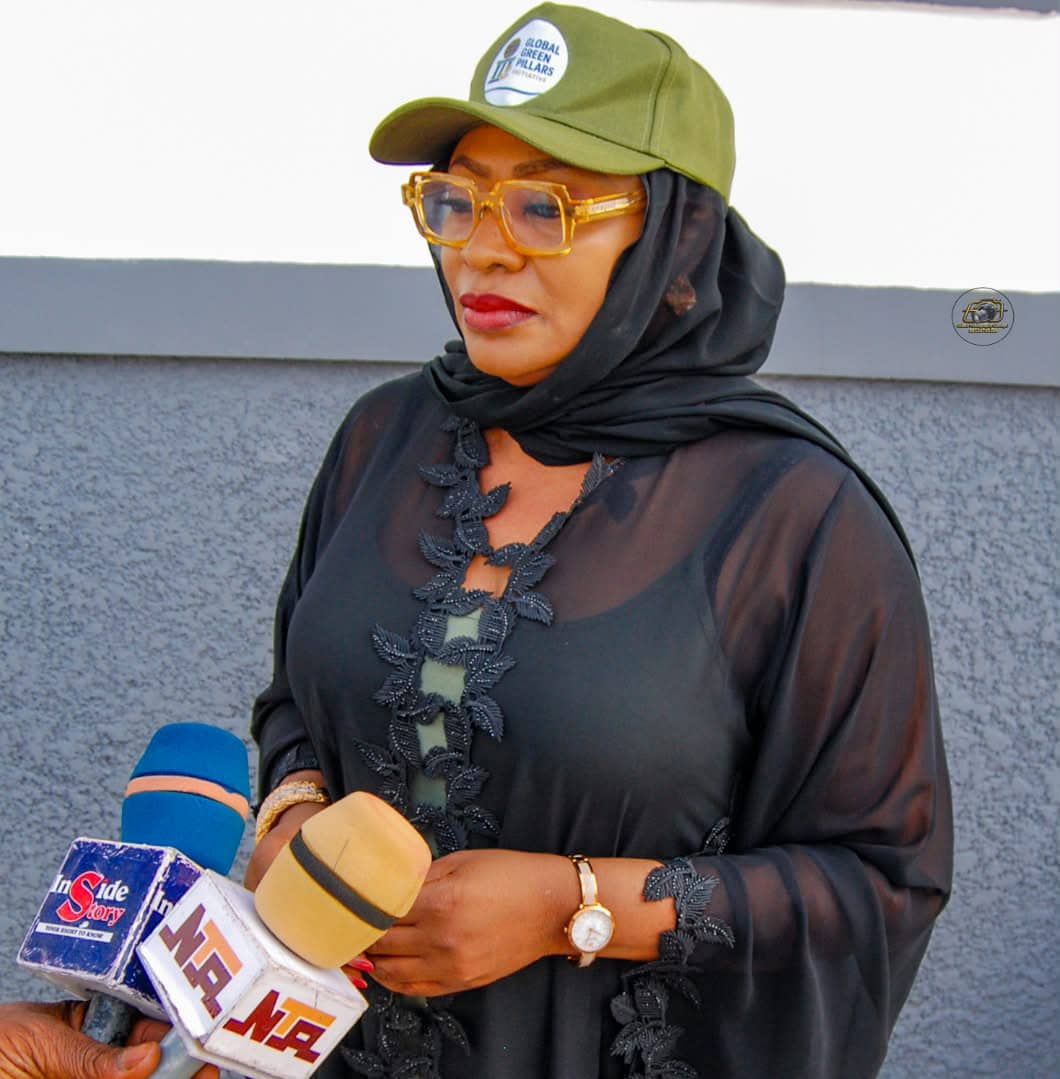
Kogi State is steadily gaining recognition for its environmental restoration efforts, with Barr. Ladi Ahmed Jatto, OON, playing a prominent role in driving programmes aimed at tackling ecological challenges, restoring degraded land and strengthening climate resilience.
With the policy backing of Governor Ahmed Usman Ododo and the foundation laid by his predecessor, former Governor Yahaya Bello, Jatto has helped position the Kogi State Agro-Climatic Resilience in Semi-Arid Landscapes (ACReSAL) Project as an important platform for environmental protection and sustainable development.
Her work reflects a growing recognition that environmental restoration is not merely about planting trees or controlling erosion. It is also about protecting communities, improving livelihoods, strengthening food security and preparing future generations for the realities of climate change.
From Environmental Challenges to Sustainable Solutions
Across Kogi State, erosion, flooding, land degradation and declining environmental quality have affected communities, infrastructure and agricultural activities.
For years, residents in several locations have struggled with the consequences of uncontrolled gully erosion and other environmental problems. Addressing these challenges requires sustained investment, technical expertise and effective coordination between government institutions and development partners.
Under Jatto’s leadership, the ACReSAL Project has pursued interventions designed to restore degraded landscapes, improve water management and promote climate-smart agricultural practices.
The project is part of a broader World Bank-supported initiative involving states across northern Nigeria and the Federal Capital Territory, with the objective of improving landscape management and strengthening resilience in vulnerable communities.
Its expanded financing framework, according to the project information provided, has increased from an initial $700 million to $1.2 billion following additional funding approval.
Jatto’s Leadership and Professional Background
Barr. Ladi Ahmed Jatto’s professional journey combines legal knowledge, public administration and development management.
An indigene of Okene in Kogi State, she was born in Bauchi and holds a law degree as well as an MBA in Human Resource Management from Ahmadu Bello University, Zaria.
Before her current assignment, she served as Special Adviser on Multilateral and Donor Agencies between 2019 and 2022 and was also associated with the Nigeria Erosion and Watershed Management Project (NEWMAP).
These experiences provided a foundation for her involvement in development partnerships, project coordination and environmental management.
Her contributions have attracted professional recognition, including an award associated with the World Bank Nigeria portfolio in FY2019 and the conferment of the national honour of Officer of the Order of the Niger (OON) in 2023.
Tackling Gully Erosion Across Kogi
One of the most significant aspects of the state’s environmental intervention is the effort to address major gully erosion sites.
In April 2024, contracts valued at approximately ₦29.93 billion were awarded for the rehabilitation of three major erosion sites.
The projects include:
– Etahi Gully: ₦10.66 billion.
– Omigbo Gully: ₦9.87 billion.
– Olubo-Ojo Gully: ₦9.40 billion.
The interventions are expected to help protect vulnerable communities, reduce the risks associated with erosion and safeguard infrastructure and economic activities.
The contract process reportedly attracted 21 bidding companies, while Mothercat and Levant were among the firms awarded the projects.
Beyond the financial figures, the significance of the interventions lies in their potential to protect lives, restore damaged landscapes and reduce the long-term economic consequences of environmental degradation.
Restoring Land and Improving Livelihoods
The project’s achievements extend beyond erosion control.
According to figures attributed to the Kogi ACReSAL Project, more than 11,000 hectares of degraded land had been restored by 2025, alongside improvements in water storage and agroforestry activities.
The reported interventions include approximately 3,000 hectares of agroforestry development and water-harvesting activities covering about 1,540 hectares.
These initiatives are particularly important to farming communities, where environmental degradation and unpredictable weather conditions can undermine agricultural productivity.
Through community-based interventions, the project has also reportedly committed about ₦3 billion in Community Revolving Funds to 90 communities, benefiting 4,201 people.
The programme is designed to support livelihood activities, encourage local economic participation and enable communities to become active partners in environmental protection.
Greenhouse farming, bell pepper production and cucumber cultivation are among the agricultural activities associated with the project’s livelihood and climate-smart farming interventions.
Equipment and Waste Management Initiatives
Effective environmental management requires more than policy statements. It also depends on the availability of equipment and practical resources.
In March 2026, the Kogi ACReSAL Project reportedly strengthened its operational capacity with the acquisition of equipment and materials, including a swamp buggy, 23 tractors, a low-bed truck, 20 tipping tricycles, 30 galvanised waste bins, 400 plastic waste bins, 200 rakes and 150 shovels.
The equipment is intended to support environmental restoration, waste management and related community interventions.
Such investments demonstrate the importance of providing project teams with the resources required to translate development plans into measurable activities.
Taking Environmental Awareness to Schools
Another notable dimension of the initiative is its focus on young people.
Through the Green Growth Project Initiative (GGPI), introduced in October 2026, environmental education is being promoted in schools and communities.
The programme includes the distribution of educational materials, reusable sanitary pads, economic tree planting and the establishment of Green Pillars Clubs and environmental ambassadors.
The initiative reportedly targets the distribution of 15,000 educational materials, alongside scholarship support in five local government areas.
By introducing environmental awareness at an early age, the programme seeks to encourage responsible attitudes towards waste management, tree planting, conservation and climate change.
The strategy recognises that sustainable environmental protection cannot be achieved through government intervention alone. It requires citizens, particularly young people, to understand their responsibilities and participate actively.
Governor Ododo’s Support and the Foundation of Continuity
The progress recorded by the project also reflects the importance of political commitment and institutional continuity.
Governor Ahmed Usman Ododo’s support has provided an enabling environment for the implementation of development programmes, including environmental interventions that require counterpart funding, policy direction and collaboration with development partners.
The foundation laid during the administration of former Governor Yahaya Bello also remains relevant to the state’s development trajectory.
Environmental projects of this scale require consistency beyond individual political administrations. Their success depends on sustained funding, effective monitoring, institutional discipline and the willingness of successive governments to preserve programmes that deliver public value.
In this regard, the relationship between policy leadership and professional project coordination has been central to Kogi’s environmental restoration efforts.
National Recognition and Institutional Credibility
The Kogi ACReSAL Project has also attracted recognition for aspects of its implementation.
Project information indicates that the programme received positive assessments in environmental safeguards, monitoring and evaluation, transparency and integrity.
A World Bank mission reportedly commended aspects of the project’s implementation during its 2024 engagement.
In 2026, the project also received recognition through the Bureau of Public Service Reforms (BPSR), including a Distinguished Public Service Award.
Other commendations have reportedly come from traditional institutions, the Igala Leadership Organisation, Federal University Lokoja and public officials, including the Kogi State Commissioner for Information and Communications, Kingsley Fanwo.
Such recognition highlights the importance of institutional performance, accountability and the ability to translate development objectives into practical outcomes.
The Bigger Picture: A Greener Future for Kogi
The story of Kogi’s environmental restoration is ultimately bigger than one individual or administration.
It is about communities seeking protection from erosion, farmers looking for more sustainable agricultural opportunities, young people learning to protect their environment and institutions working together to address challenges that affect present and future generations.
Jatto’s contribution, supported by the policy direction of Governors Ododo and Bello, illustrates how professional coordination and political commitment can work together in the pursuit of sustainable development.
However, the real measure of success will be the long-term durability of the restored landscapes, the protection of vulnerable communities, the transparency of project implementation and the continued improvement of livelihoods.
As Kogi advances its environmental agenda, the challenge will be to sustain the momentum, deepen community participation and ensure that every investment produces lasting public benefits.
The earth has music for those who listen. Barr. Ladi Ahmed Jatto’s environmental work reflects an effort to listen to the needs of the land and the people who depend on it. The lasting success of that effort will be measured by the greener, safer and more resilient communities it leaves behind.