
Controversy Deepens Over Okotete’s APC Claims as Agbarho Leaders Revisit 2014/2015 Records
A growing political controversy has trailed recent claims by Stella Okotete, regarding her role in the All Progressives Congress (APC) during the 2014/2015 election cycle, with leaders in Agbarho challenging the accuracy of her account and calling for a closer examination of past events.
Grassroots political actors in the community have disputed elements of her narrative, describing them as inconsistent with the realities and structure of the party at the time.
Chief Mathias Efe Olowu, a foundation leader of the APC in Agbarho, insisted that Okotete neither belonged to the party nor played any operational role during the period in question.
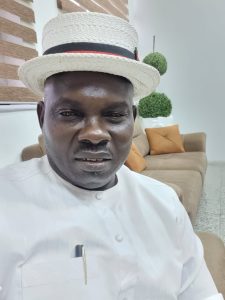
“As someone deeply involved in the APC structure in Agbarho at the time, I can confirm she was not in the APC and was not part of the party’s operational leadership or key stakeholder meetings during the 2014/2015 election cycle,” he said.
Olowu also cited a crucial pre-election meeting held at the residence of Harrison Abuge ahead of the 2015 presidential poll.
According to him, while some leaders who were absent participated via telephone, Okotete was neither physically present nor listed among core participants.
He further alleged that during a phone interaction, her position at the time was communicated as being unsupportive of the APC, a claim that has since intensified debate over the consistency of her current political stance with past events.
Additional accounts from the same political circle indicate that APC leaders and stakeholders faced significant challenges operating in Agbarho during the 2015 elections.
These reportedly included difficulty securing venues for meetings, disruptions to campaign logistics, and the relocation of election-related activities, including fund distribution, to private arrangements.
One source described the atmosphere at the time as “highly tense and politically hostile” to APC activities in the community.
The controversy has also reignited discussions about Okotete’s political trajectory, with some stakeholders arguing that her early rise in Abuja was facilitated by established political structures associated with Ovie Omo-Agege.
“You cannot rewrite the platform that introduced you into your political breakthrough,” a source within the political circle stated.
The unfolding developments have heightened calls for public clarification regarding Okotete’s exact role and political alignment during the 2014/2015 election cycle, as well as the consistency between her past participation and present-day claims.