
By Yahaya Idris, Abuja
When the Akwa Ibom State Government commissions 39 landmark projects in September, attention will naturally focus on newly completed roads, bridges and public facilities. The ceremonies will attract dignitaries, media coverage and public applause.
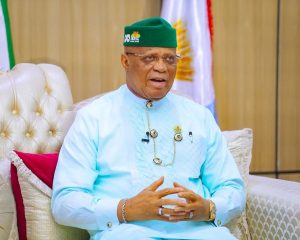
Yet, according to the Special Assistant to Governor Umo Eno on New Media, Venerable Richard Peters, the real story extends far beyond the projects scheduled for inauguration.
Rather than concentrating development within a few urban centres, Governor Umo Eno’s administration has embarked on an ambitious infrastructure programme deliberately spread across all 31 Local Government Areas, ensuring that every part of Akwa Ibom shares in the dividends of governance.
Peters in an interview with Journalists in Abuja describes the strategy as one driven by balanced development, economic inclusion and sustainable growth under the administration’s ARISE Agenda.
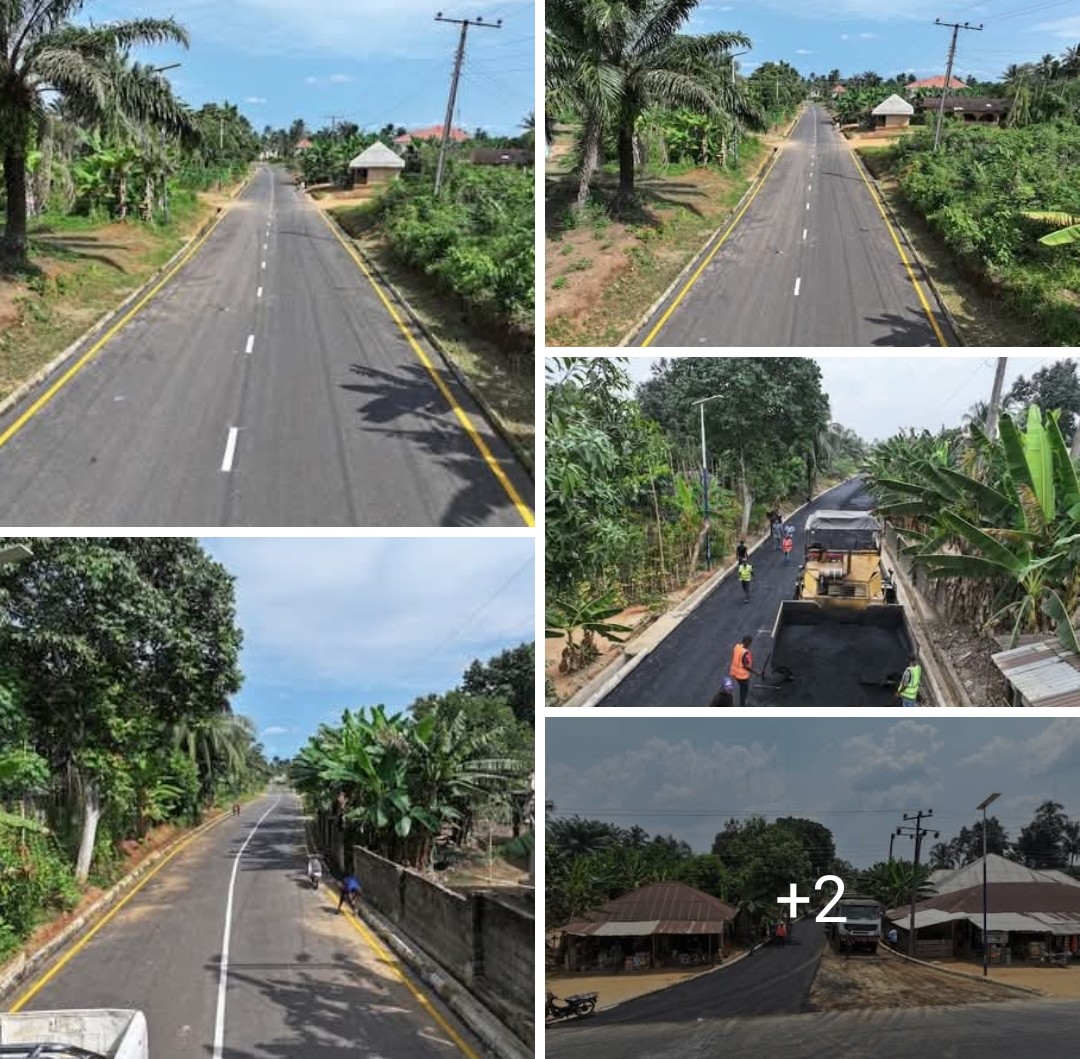
1,300 Kilometres of Roads and 40 Bridges Transform Communities
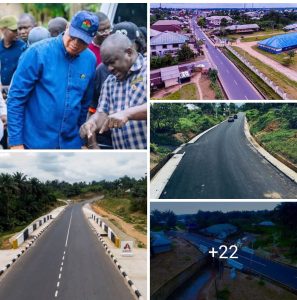
Within three years, the administration has initiated and completed over 1,300 kilometres of economically viable roads alongside 40 bridges, connecting rural communities with commercial centres and opening new economic corridors across the state’s three senatorial districts.
The projects, according to Peters, are not merely construction exercises but strategic investments aimed at improving transportation, reducing travel time, boosting agricultural activities and stimulating local commerce.
From Ikot Ekpene to Uyo, Eket, Oron and Ikot Abasi, virtually every federal constituency now hosts either completed or ongoing road projects that exceed the government’s benchmark of providing at least 10 kilometres of road infrastructure in every local government area.
Infrastructure Without Regional Bias
Perhaps the most remarkable aspect of Governor Umo Eno’s infrastructure policy is its geographical spread.
Across Ukanafun and Oruk Anam, multiple road projects now connect previously isolated communities.
In Ikot Ekpene, Essien Udim and Obot Akara, new bridges and strategic roads are improving transportation while supporting economic activities.
Communities within Abak, Etim Ekpo and Ika have also witnessed major road construction aimed at enhancing rural development.
In Ikono and Ini, the massive Ikot Anyan Ediene-Urua Naira-Nung Ukim Road with bridge, alongside other projects, has transformed accessibility.
The story continues across Uyo Federal Constituency, where Airport Road expansion, Ring Road III dualisation, estate roads and erosion control projects are redefining urban infrastructure.
Likewise, Itu, Ibiono Ibom, Etinan, Nsit Ibom, Nsit Ubium, Eket, ONNA, Esit Eket, Ibeno, Oron, Mbo, Okobo, Eastern Obolo, Mkpat Enin and Ikot Abasi have all benefited from extensive road construction and rehabilitation.
The cumulative effect is a statewide transportation network designed to stimulate commerce while improving the daily lives of residents.
Roads Driving Economic Growth
Infrastructure development under Governor Umo Eno extends beyond improving transportation. The road network is opening rural communities to markets, reducing transportation costs for farmers and attracting new investments.
Modern wet markets have been constructed alongside road infrastructure to strengthen local commerce.
The administration believes improved accessibility will further unlock agricultural production, tourism opportunities and industrial growth.
According to Peters, infrastructure remains one of the strongest foundations for sustainable economic development.
Housing and Public Utilities Expand Across Akwa Ibom
Beyond roads and bridges, Governor Umo Eno’s administration has delivered over 1,048 housing units through several initiatives, including:
Compassionate Homes
Medical Village
Aviation Village
Judiciary Village
Legislative Village
The government is equally investing in stable electricity supply, particularly for underserved rural communities, while implementing solar-powered community water projects across the state’s 368 political wards.
Healthcare and Education Receive Equal Attention
Richard Peters noted that infrastructure development under Governor Umo Eno is not limited to asphalt and concrete.
Every one of Akwa Ibom’s 31 Local Government Areas has either received or is benefiting from:
Model Primary Healthcare Centres
Model Primary Schools
Youth Development Centres
Community-based social infrastructure
The administration believes improved roads must be complemented by better healthcare, education and youth empowerment.
Modern Transportation Takes Shape
The state government is also investing heavily in urban transportation.
A modern bus terminal is under construction while 50 Compressed Natural Gas (CNG) buses are expected to strengthen public transport services.
The buses are expected to operate efficiently on the expanding road network, providing affordable and environmentally friendly transportation for residents.
Balanced Development Across 368 Wards
One of the administration’s most ambitious achievements is ensuring that development reaches every ward.
Across all 368 political wards, Compassionate Homes are providing shelter for vulnerable citizens.
Solar-powered water schemes have also been approved to improve access to clean drinking water.
The government’s philosophy, Peters explained, is to ensure that development is not restricted to cities but reaches every community regardless of location.
ARISE Agenda Driving Sustainable Development
Governor Umo Eno’s infrastructure strategy forms a central pillar of the ARISE Agenda, which prioritises:
Road construction
Rural development
Housing
Healthcare
Education
Water supply
Transportation
Economic diversification
Social welfare
The administration believes integrated infrastructure provides the foundation for long-term prosperity.
Richard Peters: Development Is Deliberate
According to Richard Peters, the administration’s infrastructure projects reflect deliberate planning rather than isolated interventions.
He maintained that every completed road, bridge, school, healthcare centre and housing project demonstrates Governor Umo Eno’s commitment to inclusive governance.
“The objective is simple: no community should be left behind,” Peters stated.
The Bigger Story Beyond 39 Projects
While the projects scheduled for commissioning in September are expected to showcase the administration’s achievements, Peters insists they represent only a fraction of the government’s ongoing transformation agenda.
The larger narrative, he argued, is the creation of an interconnected Akwa Ibom where roads link communities, bridges expand economic opportunities, schools educate future generations and healthcare facilities improve the quality of life.
For many observers, the administration’s greatest achievement may not be the number of kilometres constructed, but the deliberate effort to ensure that every local government area has a visible share in the state’s development.
As the ARISE Agenda enters its next phase, Governor Umo Eno’s infrastructure revolution continues to reshape Akwa Ibom—one road, one bridge and one community at a time.