
By Maxwell Guma, Lafia
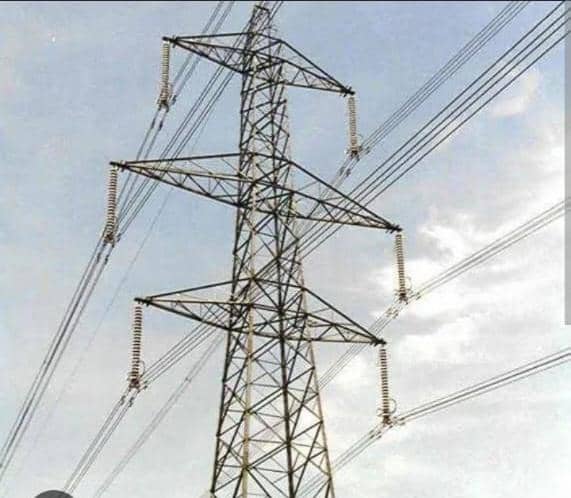
Residents, students and business owners in Keffi and Akwanga, Nasarawa State, are facing mounting hardship following the collapse of three electricity transmission towers along the Karu–Keffi–Akwanga 132kV transmission line corridor.
The incident, which occurred on Wednesday, October 7, 2026, has triggered a prolonged power outage, disrupting commercial activities, increasing the cost of charging electronic devices and making academic preparations increasingly difficult for students ahead of examinations.
The Transmission Company of Nigeria (TCN) attributed the incident to adverse weather conditions involving rainfall and strong winds, which affected critical transmission infrastructure supplying electricity to the affected communities.
According to the company, the transmission line tripped on over-current relay protection at about 4:06 p.m. before subsequent investigations confirmed the collapse of towers T78, T79 and T80.
The damage rendered the outgoing 33kV feeders at the Keffi and Akwanga transmission substations unavailable, leaving electricity consumers in the affected areas grappling with the consequences of the disruption.
Technical Implications of the Tower Collapse
Explaining the technical implications of the incident, Mr. Paul Danjuma, a former staff member of the defunct National Electric Power Authority (NEPA), said the 132kV transmission line supplies electricity to transmission substations, where power is subsequently distributed through lower-voltage feeders.
He explained that the collapse of the towers necessitated the isolation of the affected transmission line for safety reasons, resulting in the interruption of electricity supply to customers connected to the affected substations.
TCN said its engineers were assessing the extent of the damage and identifying the materials required to commence restoration work.
The company apologised to affected customers and assured them that updates would be provided as efforts to restore electricity progressed.
However, the prolonged outage has continued to impose economic and social difficulties on residents, particularly those whose daily activities depend heavily on electricity.
Residents Groan as Charging Costs Rise
At Agwan Lambu, residents have expressed concern over the rising cost of charging mobile phones and power banks, as the blackout forces many to depend on the few available charging centres.
A resident, Jibril Abubakar, said the situation had increased pressure on charging facilities, with customers struggling to find available spaces for their electronic devices.
According to him, the cost of charging power banks has risen from ₦300 to ₦500, while charges for mobile phones have also increased.
“Sometimes, even when you have the money, you still cannot find space to charge your gadgets. Everywhere is filled up,” Abubakar lamented.
He appealed to the relevant authorities to expedite restoration efforts, noting that residents were finding it increasingly difficult to cope with the prolonged interruption.
Beyond the financial burden, the growing congestion at charging centres has also raised concerns about the safety of personal belongings and electronic devices.
On October 12, 2026, social media influencer and lawyer, Barrister Aisha Abubakar Ramalan, claimed in a Facebook post that more than 10 students had lost their mobile phones at a charging centre amid the congestion.
“Today, more than 10 students lost their phones in a charging centre,” she wrote.
The circumstances surrounding the reported losses could not be independently verified as of the time of filing this report.
Traders Count Losses as Sales Decline
Small business owners are also bearing the brunt of the electricity disruption, with traders whose businesses depend on refrigeration and other electrical appliances reporting declining sales.
At Agwan Lambu Market, a cold-drink seller, Mr. Chima Oganiru Onubiyi, said the lack of electricity had affected his ability to keep drinks chilled, resulting in reduced customer patronage.
He disclosed that he previously sold at least 15 bags of sachet water daily but now struggled to sell even five bags.
The development highlights the vulnerability of small-scale businesses to prolonged power outages, particularly those operating without alternative sources of electricity.
For traders, the disruption goes beyond inconvenience, as declining sales threaten daily income and the ability to sustain their businesses.
Blackout Disrupts Students’ Examination Preparations
Students in Keffi have equally expressed concern over the impact of the prolonged blackout on their academic activities, particularly as examinations approach.
Adachukwu Eze, a student residing in a hostel in Keffi, said the absence of electricity had made night-time reading difficult.
She explained that students often depended on electricity supply on campus to study at night, adding that the disruption had become a major distraction at a critical period of their academic calendar.
Eze appealed to the authorities to hasten restoration efforts, stressing that students needed a conducive environment to prepare adequately for their examinations.
The situation has renewed concerns about the wider consequences of unreliable electricity supply on education, small businesses and the everyday activities of residents.
Residents Await Restoration of Electricity
The collapse of the three transmission towers has demonstrated how damage to critical electricity infrastructure can disrupt several aspects of community life.
For residents, the outage has increased the cost of charging electronic devices. For traders, it has reduced sales and disrupted business operations, while students are struggling to maintain their study routines amid the prolonged blackout.
As affected communities await the restoration of electricity, residents are calling on TCN and other relevant authorities to accelerate repair work and restore reliable power supply to Keffi, Akwanga and surrounding communities.
Until the damaged infrastructure is repaired and electricity supply restored, households, businesses and students will continue to face the consequences of the disruption.