
By Our Reporter
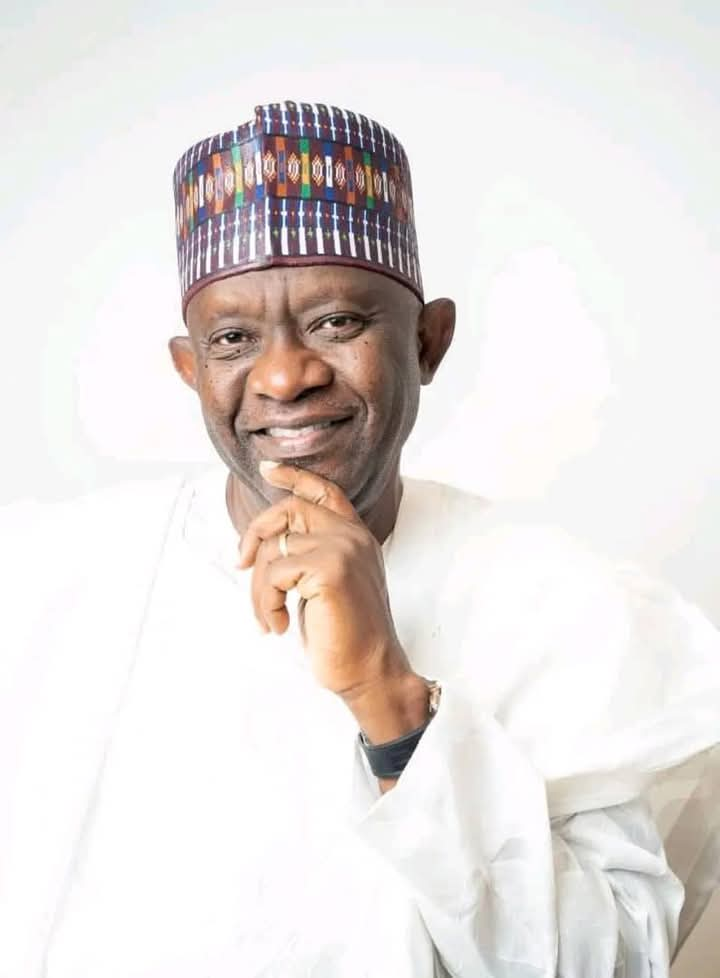
Senator Sunday Steve Karimi has emerged as a prominent figure in the representation of Kogi West Senatorial District, with a record of interventions spanning security, infrastructure, education, healthcare, electricity, water supply, women’s empowerment and legislative advocacy.
Since the return of democratic governance in 1999, Kogi West has witnessed several representatives at the National Assembly. However, supporters of Karimi argue that the scale and diversity of his interventions have established a new benchmark for effective representation, one they believe will remain a reference point in the district’s political history.
What distinguishes his approach, they contend, is not merely the attraction of federal projects but the combination of legislative advocacy, constituency development and reported personal financial contributions to critical community needs.
Security: Over N750 Million in Personal Investment
One of the most significant claims associated with Karimi’s representation is his reported investment of more than N750 million of personal resources in security infrastructure to support efforts against kidnapping, banditry and killings in parts of Kogi West.
At a time when insecurity threatened communities around the Kogi-Kwara border, Yagba West, Egbe and Odo-Eri, the senator reportedly supported the construction and furnishing of military Forward Operating Bases in Egbe and Odo-Eri, which were handed over to the Nigerian Army.
The interventions were intended to strengthen security operations, improve response capacity and restore confidence among residents, particularly farmers whose livelihoods had been affected by insecurity.
Supporters say these investments demonstrate a willingness to go beyond conventional legislative responsibilities in addressing the security challenges confronting constituents.
The impact of the facilities, including any measurable reduction in response times and the extent to which farming activities have recovered, remains an important area for security agencies and relevant authorities to document publicly.
Roads and Bridges: Renewed Attention to Long-Abandoned Projects
Road infrastructure has also featured prominently in the senator’s constituency advocacy.
The Kabba-Egbe-Ilorin road, which had reportedly suffered prolonged abandonment, became a major focus of intervention. According to figures presented by his supporters, Karimi attracted N2 billion for emergency repairs and secured a further N6 billion towards efforts to return the contractor to the project after approximately 11 years of abandonment.
Another notable intervention is the reconstruction of the Pakuta Bridge, which links Aiyegunle-Gbede with communities around Kiri Kingdom and Kupa in Kogi Local Government Area. The bridge serves as an important connection for residents, traders and farmers moving agricultural produce between communities.
Karimi is also credited by his supporters with using personal funds for palliative repairs on sections of the Kabba-Ilorin, Bunu-Iluke-Budon and Kabba-Egbe roads when their conditions became difficult for motorists.
For farming communities, the importance of such interventions extends beyond transportation. Better road access can reduce the cost of moving produce, improve market access and strengthen rural economic activities.
Water Supply: Boreholes Across the Seven Local Government Areas
Access to potable water remains a critical development concern in several communities across Kogi West.
Figures associated with Karimi’s constituency projects indicate that 85 solar-powered boreholes were provided, with at least one designated for each ward across the district’s seven local government areas. His supporters also cite the facilitation of 75 additional boreholes and the rehabilitation of more than 140 non-functional water schemes inherited from previous administrations.
At a town hall meeting in Lokoja in August 2026, the senator reportedly announced plans for another 22 solar-powered motorised boreholes and five industrial boreholes to address persistent water shortages in parts of the area.
If fully implemented and sustained, these projects could reduce the burden on households, improve sanitation and support small businesses that depend on reliable water supplies.
The emphasis on solar-powered systems also offers the potential to reduce dependence on conventional electricity, although long-term maintenance and community management remain essential to their effectiveness.
Electricity and Solar Streetlights: Supporting Communities and Businesses
Electricity infrastructure has formed another component of the senator’s reported constituency interventions.
More than 32 transformers, including 500KVA and 300KVA units, have been listed among projects serving communities and locations such as Sarki Noma, Mount Patti, Obajana, Felele, Kabba, Iyara, Ponyan, Egbe, Isanlu, Mopa and Offege-Baptist.
The senator’s supporters also cite the installation of more than 500 solar-powered streetlights across communities in the district, including locations in Yagba West, Yagba East, Kabba-Bunu, Ijumu and Kogi Local Government Area.
Reliable electricity can support commercial activities, while streetlighting can improve visibility and make public spaces more accessible at night.
For residents, the ultimate measure of these interventions will be the functionality of the installations, the number of communities benefiting and the sustainability of the facilities.
Education: N700 Million in Bursary Support and Institutional Development
Education is among the strongest pillars of Karimi’s reported constituency interventions.
According to figures released by his supporters, N100 million was provided for 1,000 students in 2024, followed by N300 million for 3,000 students in 2025. The 2025 beneficiaries reportedly included 1,390 students from Kogi West, 1,000 from Kogi East and 610 from Kogi Central.
In August 2026, another N300 million bursary programme was announced, bringing the reported value of the three editions to N700 million.
The inclusion of students from all three senatorial districts makes the programme notable beyond Karimi’s immediate constituency, although the final disbursement figures for the 2026 edition will be important in determining the full number of beneficiaries.
Other education-related interventions attributed to the senator include the distribution of 275 laptops and the establishment of a Computer-Based Test centre in Egbe, reportedly equipped with a 43.5KVA generator, library fencing, security wiring, water facilities and internet connectivity.
Classroom projects at St. Barnabas, Odo-Ape, and Iluke have also featured among the interventions, alongside the reported renovation of Government Science Secondary School, Koton-Karfe, valued at more than N1 billion.
In addition, the senator is credited with providing N10 million each to support Anglican Nursery School, Iyara; Ayetoro Day School; and Ekinrin-Adde Day School, as well as N20 million for Kabba Day School.
Taken together, these interventions reflect an emphasis on reducing educational barriers and improving the learning environment. Their long-term value will depend on proper utilisation, maintenance and measurable improvements in student access and learning outcomes.
Women’s Empowerment: N100 Million for Cooperative Businesses
Karimi’s supporters also point to a women’s empowerment programme designed around cooperative financing rather than one-off cash distributions.
Under the reported initiative, 50 women’s cooperatives received N2 million each after business training, amounting to N100 million in revolving business capital.
The model is intended to enable participating groups to expand their businesses, generate income and potentially extend opportunities to other women through the revolving of funds.
Other empowerment initiatives reportedly include the distribution of tricycles, grinding machines, sewing machines, fertilisers, sprayers, seedlings and other agricultural inputs across the district.
These programmes target different segments of the local economy, from petty trading and small-scale manufacturing to farming and transportation.
The real test of the initiative will be the survival of the supported businesses, repayment or revolving performance where applicable, and the number of additional livelihoods created.
Federal Employment: Opening Doors for Constituents
Employment facilitation is another area highlighted by the senator’s supporters.
Karimi has been credited with facilitating federal employment opportunities for constituents in institutions and agencies including the National Assembly, National Institute for Legislative and Democratic Studies, Federal Inland Revenue Service, Revenue Mobilisation Allocation and Fiscal Commission, Federal Civil Service Commission, National Inland Waterways Authority, Federal Fire Service and the Nigeria Police Force.
For families struggling with unemployment, access to formal employment can make a substantial difference by providing income stability and opening opportunities for professional development.
However, transparent information on the number of beneficiaries and their respective agencies would provide a clearer picture of the programme’s reach.
Legislative Performance: Bills, Motions and Committee Responsibilities
Beyond constituency projects, Karimi’s supporters argue that his legislative activities have strengthened his profile at the National Assembly.
He chairs the Senate Committee on Services and serves on committees covering Finance, Appropriations, Petroleum Upstream and Banking.
Among the bills attributed to him are the Central Bank of Nigeria Amendment Bill, which seeks to restrict partisan political participation by the CBN Governor and Deputy Governors and address the domestic use of foreign currency; the Dishonoured Cheques Repeal and Re-enactment Bill; the ICPC Amendment Bill; and the Electoral Act Amendment Bill.
He has also been associated with legislative proposals for the establishment of the Federal University of Agriculture in Kabba and the Federal Medical University in Egbe.
The proposed Federal University of Agriculture, Kabba, has been described by his supporters as having completed its legislative stages and awaiting presidential assent. The latest official status of the bill and the proposed institution remains important to establishing the project’s next steps.
Other legislative initiatives attributed to him include constitutional alteration proposals concerning state police and local government autonomy, as well as bills relating to a National E-Gaming Commission, National Sports Development Fund, Federal Highways Amendment, delegated legislation and National Assembly financial autonomy.
The significance of these initiatives lies in their potential to influence governance, institutional accountability, infrastructure development and the distribution of public authority.
Senate Motions on Refineries, Oil Theft and National Issues
Karimi has also been credited with moving a motion that triggered a Senate investigation into the reported N11.35 trillion spent on the turnaround maintenance of Nigeria’s refineries between 2010 and 2024.
Other motions associated with his legislative activities reportedly addressed oil theft, the naira redesign policy, subsidy palliatives, downstream petroleum pricing, market exploitation and national unity.
He also co-sponsored a motion concerning peace during elections in Edo and Ondo states and justice for Inspector Akor Onu.
Supporters describe him as a lawmaker who prepares thoroughly for debates, relies on data and consistently raises issues affecting his constituency.
For Kogi West, the relevance of these activities lies in the extent to which national debates and legislative decisions translate into tangible benefits for residents.
The 2027 Question: Experience, Continuity and Greater Influence
As political activities ahead of the 2027 general elections gather momentum, Karimi’s record is likely to remain a major subject of discussion among constituents and political stakeholders.
His supporters maintain that returning him to the Senate would offer Kogi West continuity, institutional experience and an opportunity to build on projects already initiated.
They argue that a ranking senator with committee leadership responsibilities may have greater opportunities to influence legislative priorities, negotiate for constituency projects and advance the interests of the district within the National Assembly.
However, seniority alone does not automatically guarantee principal offices, additional projects or the completion of ongoing initiatives. Such outcomes depend on party decisions, legislative arrangements, government priorities and the senator’s continued effectiveness.
Karimi has also aligned his development messaging with President Bola Ahmed Tinubu’s Renewed Hope Agenda, presenting his constituency interventions as part of a broader effort to connect federal policy with grassroots development.
A Record That Invites Comparison
From Kabba to Lokoja, Egbe to Koton-Karfe, and communities around Ogidi and Kupa, the case being made by Karimi’s supporters is that representation should be judged by more than speeches, political promises or the number of motions sponsored.
They point instead to roads and bridges, security infrastructure, boreholes, electricity projects, educational support, women’s cooperatives, employment opportunities and legislative proposals as evidence of a broad approach to constituency service.
The strongest assessment of this record will ultimately rest on independently verifiable project figures, completed and functioning facilities, confirmed bursary disbursements, documented employment outcomes and the legislative status of sponsored bills.
Nevertheless, the argument advanced by his supporters is clear: Karimi has sought to combine constituency development with national legislative engagement, setting a standard against which future representatives of Kogi West may be measured.
As the 2027 elections approach, the debate will be whether that record justifies another term and whether continuity can deliver more lasting benefits to the district.
For his supporters, the answer is straightforward: they believe Senator Sunday Steve Karimi has established a benchmark for quality representation and deserves the opportunity to build on it.
The ultimate verdict, however, rests with the people of Kogi West.