
A Roof Over Every Worker’s Head: The Significance of Oborevwori’s Housing Initiative in Delta State
By Fred Latimore Oghenesivbe, Esq.
For millions of Nigerian workers, owning a home remains one of life’s greatest aspirations. Yet, for many civil servants, that dream often appears distant and unattainable, overwhelmed by rising property prices, soaring rents, and limited access to affordable mortgage financing. In Delta State, however, a new chapter is unfolding, one that offers renewed hope to workers and their families.
Housing is more than brick and mortar. It is security, dignity, stability, and peace of mind. A decent home provides the foundation upon which families thrive, children are nurtured, and communities flourish. It is therefore no surprise that governments around the world regard housing as a critical component of social welfare and economic development.
From the return of democratic governance in 1999 to May 29, 2023, successive administrations in Delta State implemented various housing-related initiatives, including public housing estates, land allocation schemes, mortgage support programmes, and housing loans for civil servants. While these efforts contributed to the state’s physical development, they were often unable to keep pace with the growing housing needs of workers due to rapid urbanization, rising construction costs, population growth, and increasing rental pressures.
As a result, thousands of civil servants continued to spend a substantial portion of their earnings on rent, often renewing tenancy agreements with anxiety and uncertainty. For many families, home ownership remained a lifelong ambition rather than an achievable reality.
Since assuming office on May 29, 2023, Governor Rt. Hon. Sheriff Oborevwori has demonstrated a clear understanding of the relationship between workers’ welfare and sustainable development. Guided by the administration’s MORE Agenda, he has consistently emphasized that government policies must translate into tangible improvements in the lives of ordinary people.
It is against this backdrop that the administration’s housing initiatives deserve special attention. Oborevwori’s current approach reflects a deliberate and comprehensive strategy aimed at expanding access to affordable housing, strengthening mortgage opportunities, and reducing barriers to home ownership. More importantly, it demonstrates a leadership style anchored on listening to the needs of workers and responding with practical solutions.
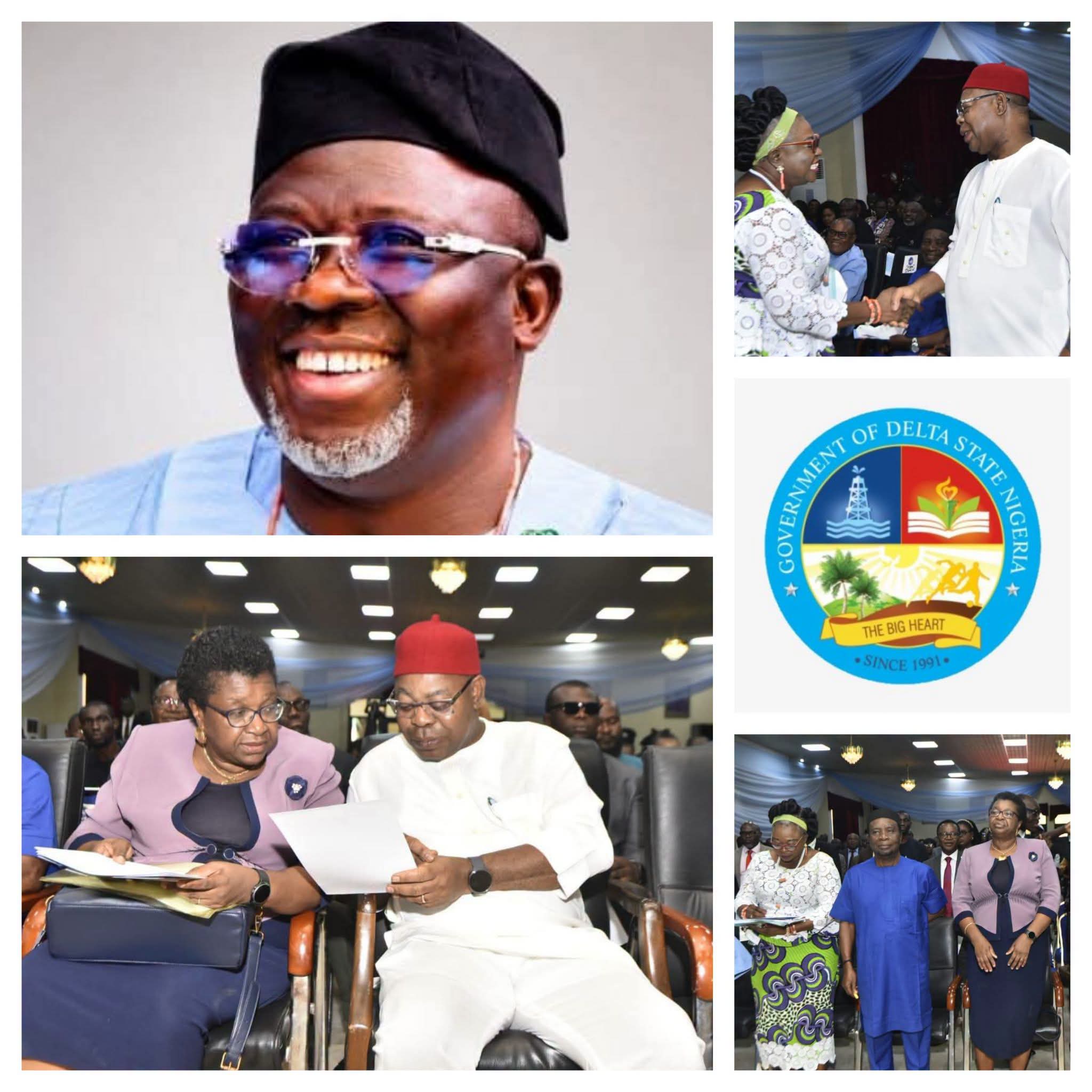
The latest and perhaps most significant expression of that commitment came during the 2026 International Public/Civil Service Week celebration in Asaba, where Governor Oborevwori announced plans to establish a Workers’ Housing Scheme specifically designed to provide affordable housing for serving and retired civil servants.
The announcement was widely welcomed across the public service because it directly addressed one of the most persistent concerns of workers, the challenge of securing decent and affordable accommodation.
Represented by his deputy, Sir Monday Onyeme, the governor disclosed that the initiative was in response to longstanding demands by labour unions and workers’ associations for a sustainable housing solution. He further revealed that the state government was already engaging the Ministry of Housing, the Delta State Mortgage Trust Bank, and private sector partners to develop a phased and transparent housing scheme tailored to the needs of workers.
According to the governor, the proposed scheme will prioritize serving officers and retirees, with flexible and salary-friendly payment arrangements designed to make home ownership more accessible.
His words captured the essence of the initiative: “Housing is dignity, and dignity is part of results. Having spent your careers building Delta State, our workers deserve decent shelter for their families. That statement reflects more than government policy; it reflects empathy, compassion, and a genuine appreciation of the sacrifices made daily by public servants.
The housing initiative also builds on existing efforts by the administration to strengthen workers’ welfare. Governor Oborevwori has disclosed plans to further enhance housing and vehicle loan schemes while revitalizing the Workers’ Owner-Occupier Housing Scheme through strategic partnerships with reputable real estate developers. These measures are expected to create multiple pathways to home ownership for workers across different income levels.
One of the administration’s earlier milestones in this regard was its partnership with the Federal Mortgage Bank of Nigeria to establish a dedicated workers’ housing estate in Ibusa, Oshimili North Local Government Area. By allocating more than 10 hectares of land and waiving statutory fees associated with the project, the governor demonstrated that his commitment to workers’ welfare extends beyond rhetoric.
For many civil servants, such decisions represent more than government interventions; they represent hope. A young officer approaching retirement without a personal home can now see a pathway to ownership. A middle-level worker struggling with annual rent increases can now look forward to greater financial stability. A family seeking security and permanence can now aspire to live under a roof they truly call their own.
These are the human realities behind housing policy. Governor Oborevwori’s intervention also aligns with broader efforts to expand affordable housing opportunities through collaboration with federal housing programmes, mortgage institutions, and private sector investors. The development of additional housing units across the state, coupled with renewed support for housing finance, reflects a government that understands the importance of creating opportunities rather than merely making promises.
Leadership is ultimately measured not by speeches but by impact. In just over three years, Governor Oborevwori has steadily built a reputation as a leader who keeps his promises. His administration has consistently demonstrated sensitivity to the welfare of workers through regular payment of salaries and pensions, improved conditions of service, capacity-building programmes, infrastructure development, and policies designed to enhance the quality of life of Deltans.
Speaking during the Public Service Week celebration, the governor described civil servants as the backbone of governance and the driving force behind the successful implementation of the MORE Agenda. He acknowledged their professionalism, dedication, and commitment to service delivery, describing them as the critical link between government policies and the people.
That recognition matters. Workers perform best when they feel valued, respected, and supported. The governor’s emphasis on accountability, transparency, institutional reforms, digital transformation, and improved service delivery demonstrates a holistic approach to governance that places people at the centre of development.
Housing occupies a unique place within that framework because it directly affects family welfare, financial stability, and social wellbeing. A civil servant who owns a home is less burdened by rental uncertainty. Such a worker is likely to be more productive, more committed, and more motivated to contribute meaningfully to public service. Home ownership also creates opportunities for wealth creation and intergenerational security, enabling families to build assets that can be passed on to future generations.
Beyond the welfare benefits, the housing initiative is expected to stimulate economic activity across multiple sectors. Construction projects generate employment for artisans, engineers, architects, surveyors, transport operators, and suppliers of building materials. The multiplier effect extends throughout the economy, creating jobs, generating income, and supporting livelihoods.
The significance of Governor Oborevwori’s housing vision therefore extends far beyond the walls of individual houses. It represents an investment in people, families, communities, and the future of Delta State.
Critics may argue that no government can completely eliminate housing challenges. That observation is true. However, governance is not about solving every problem overnight; it is about taking bold and practical steps that move society in the right direction.
On that score, the Oborevwori administration deserves commendation. By prioritizing affordable housing, supporting mortgage accessibility, strengthening workers’ welfare programmes, partnering with relevant institutions, and creating pathways to home ownership, the governor is helping to transform a long-held aspiration into a realistic possibility for thousands of workers.
This is what promise-keeping leadership looks like. It is leadership that understands that behind every policy statistic is a human story. Behind every housing unit is a family seeking security. Behind every welfare initiative is a worker striving for a better life.
As Delta State continues its journey of growth and development, the Workers’ Housing Scheme stands as a powerful reminder that governance works best when it places people at the centre of decision-making.
For thousands of civil servants across the state, the message is clear and reassuring: government has not forgotten them. For many families, the dream of home ownership ia now within reach.
Indeed, a roof over every worker’s head is not merely a housing policy. It is a statement of compassion, a commitment to dignity, and a promise of a brighter future for all Deltans.
***
Fred Latimore Oghenesivbe, Esq, is the Director-General, Delta State Bureau for Orientation & Communications, Governor’s Office Asaba. He’s a member of the International Communication Aasociation (ICA).