
By Fred Latimore Oghenesivbe, Esq.
History often poses uncomfortable questions. How does a nation once sustained by the solidarity and sacrifices of fellow Africans become a place where those same Africans are attacked, assaulted and driven from their homes? How does a people liberated through the collective conscience of the continent allow xenophobia to erode the very ideals that helped secure their freedom? These are difficult questions that South Africa must confront as renewed attacks on foreign nationals, especially Nigerians, continue to stain its democratic credentials.
Nigeria’s place in the struggle against apartheid is neither incidental nor insignificant. Long before South Africa attained majority rule, Nigeria stood at the forefront of the liberation movement, committing enormous diplomatic, economic and moral resources to the anti-apartheid cause.
Nigeria funded liberation movements, awarded scholarships to South African students, championed sanctions against the apartheid regime and mobilised international support for freedom and justice. Those sacrifices were inspired by Pan-African solidarity, the enduring conviction that the freedom of one African nation is the collective responsibility of all.
Against that historical backdrop, the recurring xenophobic attacks against Nigerians in South Africa are especially painful. Lives have been lost, businesses destroyed and countless families displaced simply because they are foreigners. Such violence is not only an assault on innocent people; it also represents a betrayal of the ideals of African unity that inspired the liberation struggle.
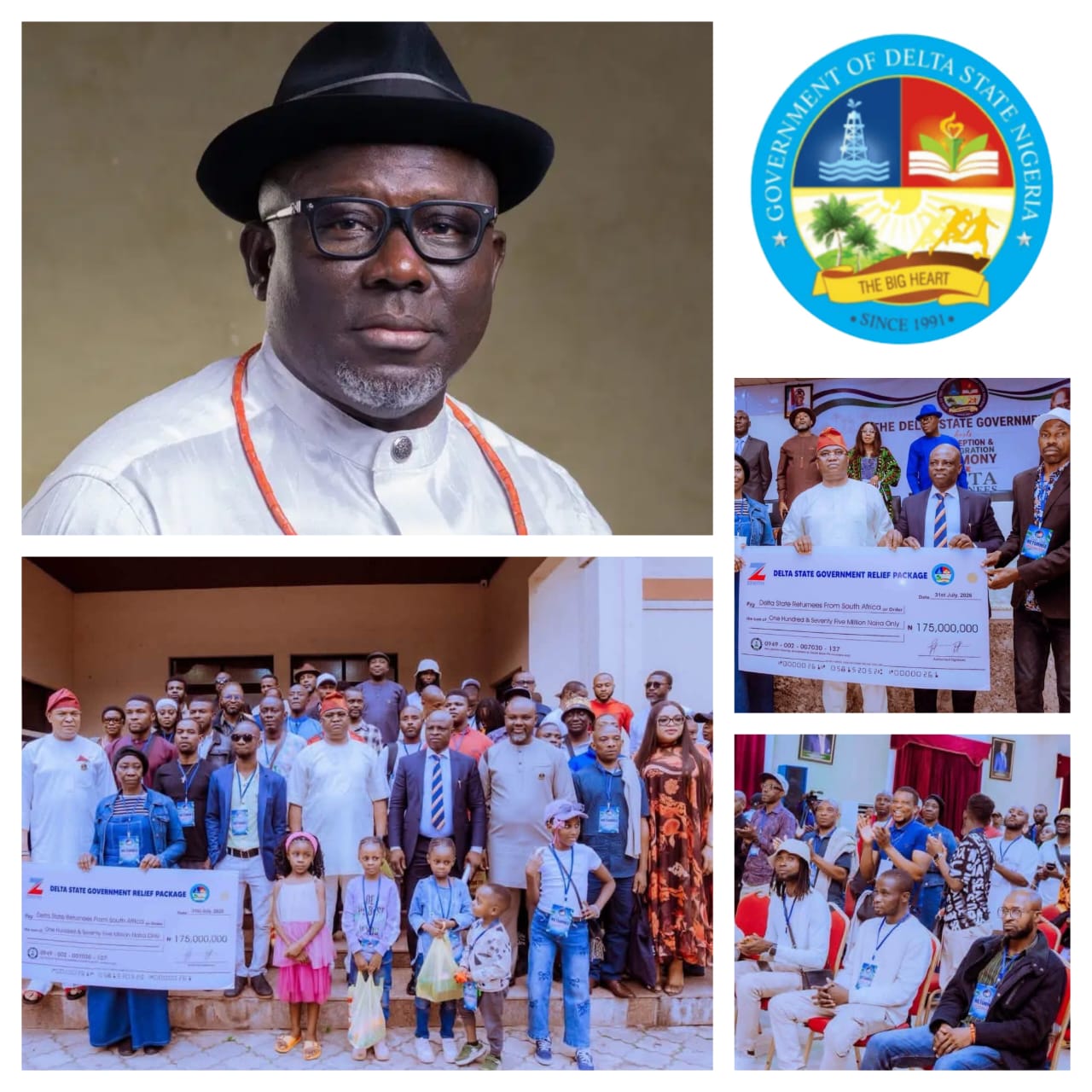
While diplomatic efforts must continue to ensure the safety of Nigerians abroad, governments also have a duty to stand by citizens who return home traumatised by such experiences. That responsibility has been embraced with compassion and decisiveness by Delta State Governor, Rt. Hon. Sheriff Oborevwori.
Rather than offering sympathy alone, Governor Oborevwori approved a comprehensive support package for Deltans evacuated from South Africa. Beyond the ₦2 million grant for each affected family, individual returnees will receive a monthly welfare stipend of ₦200,000, while each affected family will receive ₦300,000 monthly, effective from August 2026 until the end of the governor’s first tenure on May 29, 2027. He also directed that the victims receive free medical screening, trauma counselling and psychosocial support to aid their recovery and reintegration.
These measures demonstrate an understanding that rebuilding lives requires more than financial assistance. It demands dignity, hope and the reassurance that government will not abandon its people in moments of distress.
The governor’s response reflects the fundamental purpose of leadership: to protect the welfare of citizens wherever they may be. His recognition of President Bola Ahmed Tinubu’s role in facilitating the safe evacuation of the affected Nigerians also underscores the value of cooperation between the federal and state governments in responding to humanitarian emergencies.
As the returnees begin the difficult journey of rebuilding their lives, they can draw strength from knowing that their state has welcomed them home with practical support rather than empty promises.
The events in South Africa should also serve as a sober reminder that the continent’s future cannot be built on xenophobia. The same spirit of solidarity that helped defeat apartheid must now be rekindled to confront intolerance and violence against fellow Africans. South Africa, in particular, owes it to its history to ensure that every African within its borders is treated with dignity and protected under the law.
For Delta State, however, this painful episode has underscored the value of compassionate governance. Governor Sheriff Oborevwori has shown that true leadership is measured not only by infrastructure and economic policies but also by the willingness to stand with citizens at their most vulnerable.
Nigeria’s role in ending apartheid remains one of the proudest chapters in Africa’s modern history. Governor Oborevwori’s humane response to Deltans displaced by xenophobic violence offers another enduring lesson: while history remembers nations for the causes they champion, people remember leaders for the compassion they show when it matters most.
***
Fred Latimore Oghenesivbe, Esq, is the Director-General of the Delta State Bureau for Orientation and Communications, Governor’s Office Asaba. He’s a full member of the Nigerian Institute of International Affairs (NIIA).