
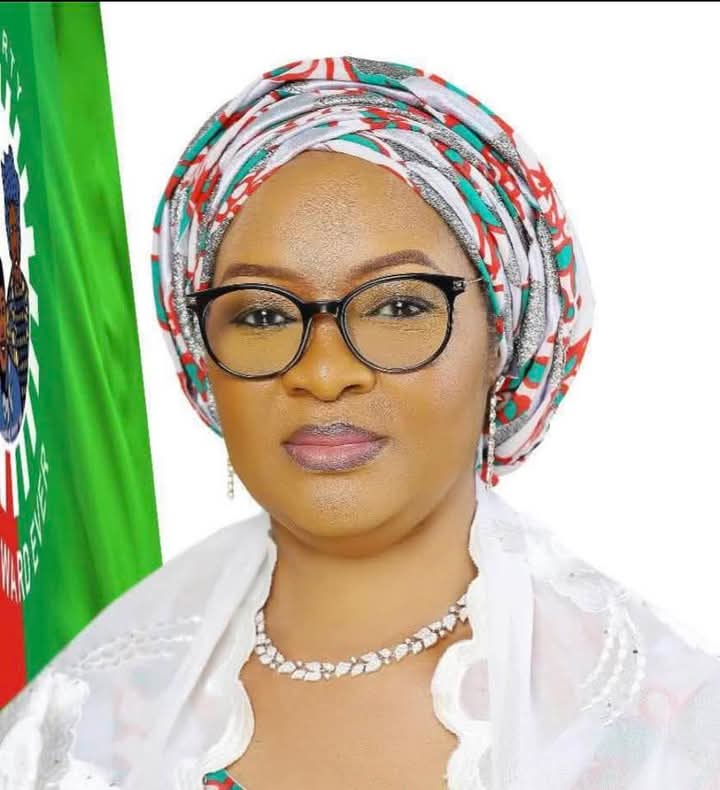
Labour Party chairman urges 2027 politicians to embrace non-violent politics
The National Chairman of the Labour Party, Senator Nenadi Usman, has said Nigeria’s democracy remains intact today because of the sacrifices made by former President Goodluck Jonathan, particularly his decision to concede defeat in the 2015 presidential election.
Usman made the remarks on Tuesday in Bauchi while speaking with journalists on the sidelines of the 2026 Goodluck Jonathan Foundation Democracy Dialogue, an annual lecture organised by the Goodluck Jonathan Foundation.
The Labour Party chairman urged Nigerian politicians, particularly those seeking elective offices in the 2027 general elections, to emulate what she described as Jonathan’s non-violent and selfless approach to politics.
According to her, Nigeria’s democracy survived predictions of a possible collapse in 2015 because Jonathan placed the interest of the country above his personal political ambition.
She recalled that Jonathan conceded defeat to then-candidate Muhammadu Buhari before the final results had been fully tallied, describing the decision as an unprecedented act of political statesmanship in Nigeria.
Usman said the former President had consistently maintained from the beginning of his presidency that neither his election nor his continued stay in office was worth the blood of any Nigerian.
She noted that when the principle was eventually put to the test during the 2015 presidential election, Jonathan demonstrated that his words were not merely political rhetoric.
“Nigeria’s democracy has survived till this day because Jonathan made sacrifices in the past,” Usman said.
She urged politicians preparing for the 2027 elections to play according to democratic rules and avoid inflammatory rhetoric capable of threatening national peace and stability.
The Labour Party chairman also referenced American investor Warren Buffett’s popular saying that someone is sitting in the shade today because someone planted a tree a long time ago.
Usman said the lesson was particularly relevant to Nigeria’s political class, asking whether politicians seeking the presidency in 2027 would be willing to make sacrifices for the country in the same manner as Jonathan did in 2015.
LP ready for 2027
Speaking on the Labour Party’s preparedness for the next general elections, Usman described the party as the “most structured political party” in Nigeria ahead of 2027.
She argued that the Labour Party’s relationship with the Nigeria Labour Congress (NLC) and the Trade Union Congress (TUC), which she described as constitutional members of the party, gives it a strong nationwide organisational base.
According to her, no opposition political party is better positioned to challenge the ruling All Progressives Congress (APC) than the Labour Party.
She therefore called on political parties and groups interested in forming a coalition ahead of the 2027 elections to collapse their structures into the Labour Party.
Usman maintained that the Labour Party has a realistic presence across Nigeria’s polling units, making it, in her assessment, the most viable platform for opposition forces seeking to defeat the APC in the next general election.
Jonathan Foundation dialogue
The 2026 Goodluck Jonathan Foundation Democracy Dialogue was held in Bauchi State under the theme: “Beyond Elections: Can Political Parties and the Judiciary Save African Democracy?”
The event attracted political leaders, former government officials, traditional rulers and other stakeholders from Nigeria and beyond.
Among those who attended were former President Olusegun Obasanjo; former President Goodluck Jonathan; former Vice President Namadi Sambo; Bauchi State Governor Bala Mohammed; former Senate President Anyim Pius Anyim; former Plateau State Governor Jonah David Jang; Labour Party National Chairman Senator Nenadi Usman; former Anambra State Governor Peter Obi; APC Deputy National Chairman, South, Dr Ben Nwoye; and the Emir of Bauchi, HRM Dr Rilwanu Suleiman Adamu, CFR.
The annual dialogue focused on the future of democracy in Africa and the role of political parties and the judiciary in strengthening democratic institutions beyond periodic elections.