
By Fred Latimore Oghenesivbe, Esq.
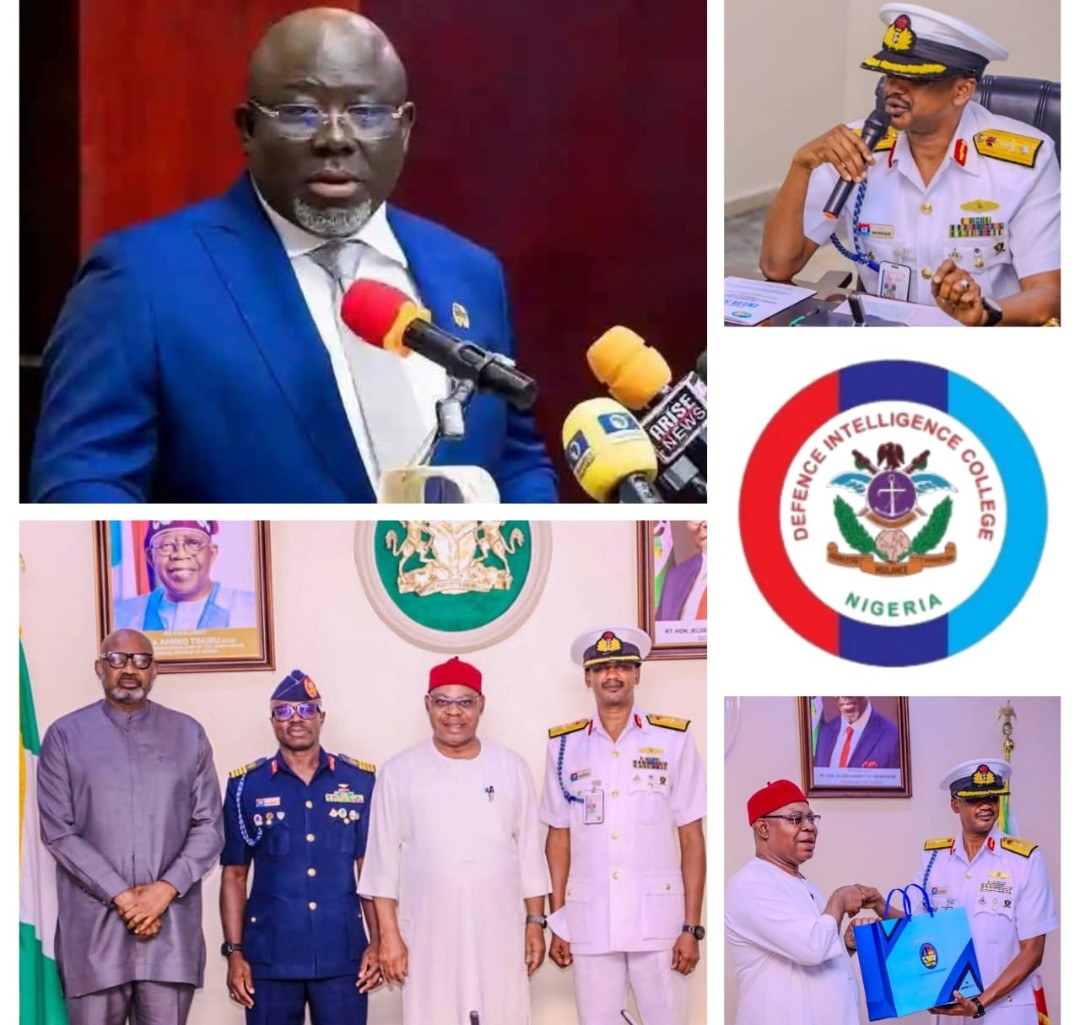
The visit of participants in the Advanced Intelligence Officers’ Course 16/2026 of the Defence Intelligence College, Karu, Abuja, to Delta State could not have come at a more appropriate time. Their study tour, themed “Strengthening National Resilience Through Integrated Intelligence, Multi-Agency Coordination and Regional Security Cooperation,” goes to the heart of Nigeria’s continuing effort to build a more coordinated, responsive and intelligence-driven security architecture.
The tour provides an opportunity not only to examine the work being undertaken by the Federal Government, the Armed Forces and sister security agencies, but also to identify areas where greater coordination can further strengthen the national security system.
President Bola Ahmed Tinubu deserves recognition for making national security a central pillar of the Renewed Hope Agenda and for providing political direction and support to the Armed Forces and other security institutions. Since 2023, the Federal Government has pursued a broad security strategy involving military operations, intelligence coordination, technological enhancement, regional cooperation and other interventions. Operational gains have been recorded against terrorist and criminal networks, including arrests, the rescue of kidnapped persons and the surrender of insurgents and bandits. These developments reflect the commitment of the President and Commander-in-Chief, as well as the professionalism, courage and sacrifice of Nigeria’s Armed Forces and other security personnel.
The Defence Headquarters has played a central role in coordinating the joint operational response across the country’s various theatres. Through the Service Chiefs and operational commands, the Nigerian Army, Nigerian Navy and Nigerian Air Force continue to work against terrorism, banditry, oil theft, maritime threats and other forms of criminality. The Ministry of Defence remains equally important through policy direction, operational support, engagement with commanders and attention to the welfare and capabilities of the Armed Forces.
General Christopher Gwabin Musa (rtd.), Honourable Minister of Defence, deserves recognition for the leadership he has brought to the Ministry at an important period in Nigeria’s security evolution. His military experience and engagement with troops, commanders, state governments and other security stakeholders have contributed to the broader effort to strengthen coordination within Nigeria’s defence architecture. His emphasis on operational effectiveness, troop welfare, inter-agency collaboration and capability development complements the strategic direction of President Tinubu and the work of Defence Headquarters. The Honourable Minister of State for Defence, Dr Bello Mohammed Matawalle, the Service Chiefs and field commanders likewise continue to contribute to this collective national effort.
It is against this backdrop that the Defence Intelligence College study tour to Delta should be understood. It is not simply an assessment of what Nigeria is doing wrong; it is also an opportunity to examine what is working and how existing systems can be strengthened. Modern security threats are constantly changing, and even successful security institutions must continuously learn, adapt and improve. The task, therefore, is to consolidate existing gains through stronger intelligence integration, closer cooperation among sister security agencies and deeper engagement with state governments, traditional institutions, communities and other stakeholders.
Governor Sheriff Oborevwori, represented by his Deputy, Sir Monday Onyeme, articulated this approach when he welcomed the intelligence officers to Delta. He called for a decisive shift from reactive security management to preventive, intelligence-led and collaborative security governance, stressing that intelligence must translate into timely decisions, effective action and measurable security outcomes. The significance of this position lies in its emphasis on converting intelligence capabilities into preventive action. It complements the broader national objective of making security responses more anticipatory, coordinated and effective.
Delta State was a fitting choice for the study tour because of its strategic position in Nigeria’s economic and security landscape. The state is an important oil and gas centre, maritime gateway, agricultural area and transportation corridor. Its waterways, offshore operations, energy infrastructure and movement of crude oil and finished products give it a security profile with implications for the wider Niger Delta and the national economy. Team Leader of the study tour, Commodore Usman Bugaje, explained that the choice of Delta was informed by these economic realities as well as the range of security agencies operating in the state. The participants therefore have an opportunity to examine national security in an environment where economic security, maritime security, community safety, infrastructure protection and inter-agency coordination converge.
The Oborevwori administration has similarly recognised that this complex security environment requires cooperation rather than institutional isolation. Through initiatives including Operation Delta Sweep and other security-coordination mechanisms, the state has sought to strengthen early warning, joint response and cooperation with federal security agencies. This approach was further demonstrated at the Delta State Security Summit held in June 2026 under the theme “Security: A Collective Responsibility.” The summit brought together security agencies and a broad range of stakeholders to discuss cooperation against terrorism and other forms of criminality, with Secretary to the State Government, Dr Kingsley Emu, among those who emphasised the importance of collective participation and coordination.
The broader lesson is that intelligence gathering cannot be confined to formal security institutions. A traditional ruler, transport operator, fisherman, community leader or resident may observe developments that, when properly reported, assessed and connected with other information, can provide valuable early warning. This is why cooperation among sister security agencies remains indispensable.
Nigeria’s security architecture brings together institutions with different statutory mandates and specialised capabilities. The Armed Forces provide military power and operational reach; the Police provide law-enforcement capacity; the Department of State Services contributes intelligence; the Nigeria Security and Civil Defence Corps supports critical infrastructure protection and civil-security responsibilities; while other agencies bring additional expertise. The objective should not be to diminish the identity or responsibilities of these institutions, but to ensure that their respective strengths complement one another. When information, expertise and operational capabilities are responsibly combined, the national response becomes stronger, faster and more effective.
Nigeria has already demonstrated the value of this approach through national counter-terrorism coordination mechanisms, joint operations and intelligence-fusion arrangements. These initiatives provide foundations upon which the next phase of national security cooperation can be built. Continuous professional training, stronger analytical capacity, improved technology and secure information-sharing systems will be necessary to deepen those gains.
This is one of the potential benefits of the Defence Intelligence College’s engagement with Delta. The officers are not merely visiting a state; they are examining a practical security environment in which national, state and community interests intersect with strategic economic assets. Their interaction with the Governor’s office, the Deputy Governor, the Secretary to the State Government, security agencies, traditional institutions and other stakeholders provides an opportunity to appreciate realities that cannot always be captured in classroom instruction. Their engagement with Dr Emu is particularly relevant because it extends the conversation from political leadership to administrative coordination and community-level security, offering a broader understanding of how intelligence, policy, operations and grassroots participation can work together.
There is also an emerging opportunity in Delta’s proposed Data and Investment Intelligence Hub. Properly developed, such a platform could support evidence-based decision-making in economic planning, investment promotion and security management. In an increasingly interconnected economy, economic and security intelligence are becoming inseparable. An oil facility is simultaneously an economic asset and a security asset; a port is an investment destination and a potential vulnerability; while a transportation corridor facilitates commerce but can also be exploited by criminal networks. Better data can therefore support both development and security by giving government a stronger basis for planning, investment and preventive intervention.
The Defence Intelligence College study tour should consequently be viewed as part of a wider national journey towards greater resilience. Its value will ultimately be measured not by the number of meetings held, but by the quality of lessons exchanged and the practical improvements that follow. Participants can return to their institutions with a deeper appreciation of the Niger Delta’s security-economic nexus, the value of multi-agency coordination, the role of traditional institutions and communities, and the importance of constructive cooperation between federal and state authorities.
There is reason to be encouraged by this direction. The Federal Government under President Tinubu has demonstrated political commitment; Defence Headquarters continues to coordinate joint operations; the Ministry of Defence provides policy and administrative support; the Minister of Defence and Minister of State for Defence remain engaged with the military establishment; Service Chiefs and personnel of the Armed Forces continue to serve in challenging operational environments; and state governments such as Delta are working with the national security architecture.
These efforts deserve recognition and sustained institutional support. The security of Nigeria is too important to be reduced to institutional competition or partisan narratives. It is a national responsibility requiring the combined efforts of government, security institutions, traditional authorities, organised stakeholders and citizens.
The appropriate response to the evolving security environment is therefore purposeful collaboration. Every operational success creates an opportunity to consolidate; every improvement in intelligence coordination creates greater capacity to prevent threats; every community that chooses vigilance and cooperation strengthens the security system; and every state government that works constructively with federal security institutions contributes to national resilience. The objective is not to replace what is working, but to strengthen it, close emerging gaps and ensure that the various components of the national security architecture operate as complementary parts of one national effort.
The message from Delta is ultimately one of confidence: Nigeria has the institutions, personnel, experience and collective capacity to strengthen its security architecture. What is required is continued cooperation, professionalism and constant improvement. Governor Oborevwori’s call for preventive, intelligence-led and collaborative security governance, together with the emphasis on collective responsibility at the Delta Security Summit, points in the same direction. It reinforces the broader objective of building a safer Nigeria in which security serves not only as protection against threats but also as an enabler of economic growth, investment, development and national unity.
The answer to Nigeria’s evolving security challenges, therefore, is not found in any single institution. It lies in the combined strength of the intelligence community, Armed Forces, Police and sister security agencies, governments at all levels, traditional institutions, organised stakeholders and citizens. When these capabilities are brought together with purpose, professionalism and patriotism, Nigeria becomes better positioned not merely to respond to threats but to anticipate and prevent them.
The Defence Intelligence College’s engagement with Delta State is a welcome expression of that national commitment, and an opportunity to strengthen the collective effort to secure Nigeria and create the stable environment required for sustainable development.
***
Fred Latimore Oghenesivbe, Esq, is the Director-General of the Delta State Bureau for Orientation and Communications, Governor’s Office Asaba. He’s a member of the Association of Communication Scholars and Professionals of Nigeria (ACSPN).