
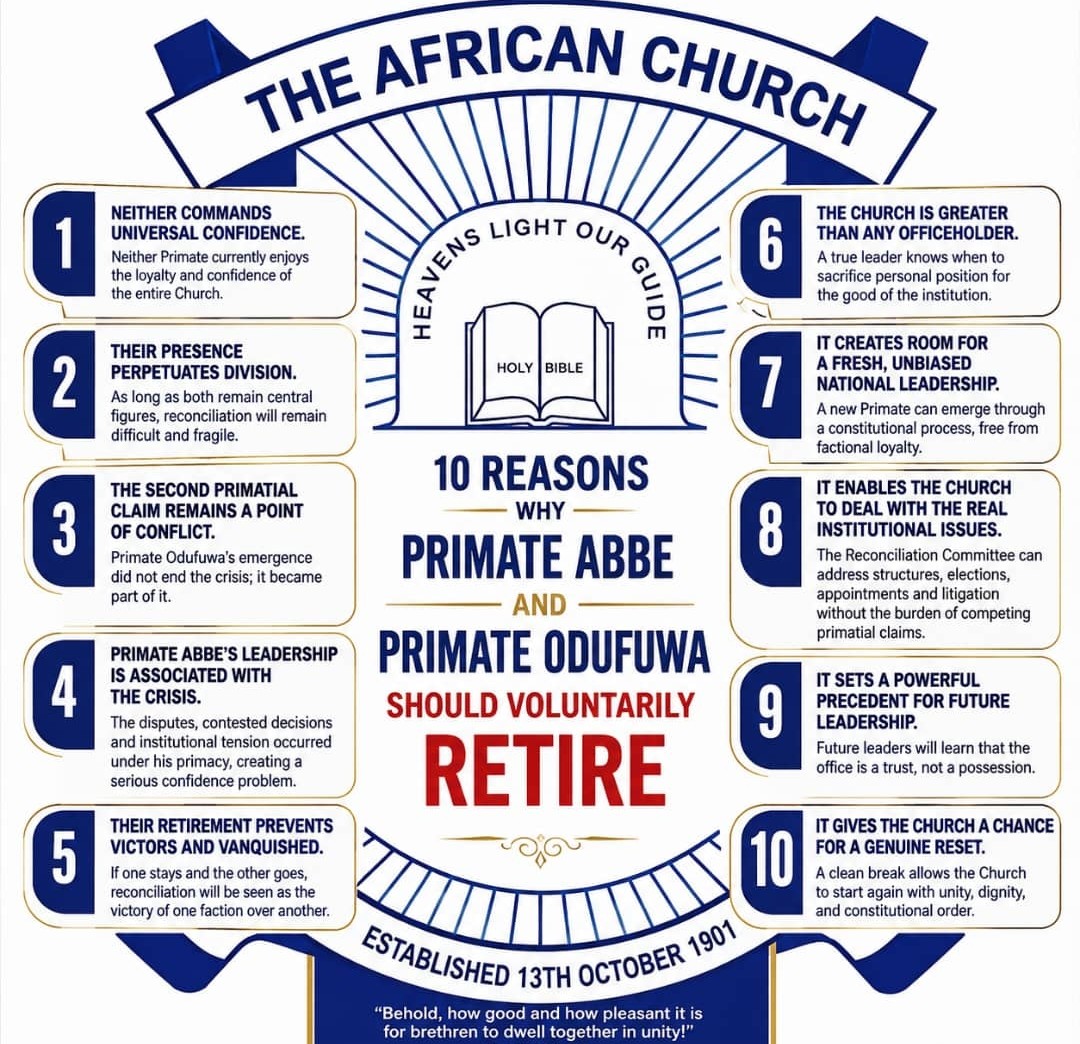
The prolonged leadership crisis in The African Church has entered another delicate phase, with growing calls for a leadership transition involving Primate Julius Olayinka Osayande Abbe and Primate Afolabi Odufuwa.
The proposal has emerged amid reports that Primate Abbe is insisting on completing his tenure, a position that has reportedly generated opposition from sections of the Uyo Province.
Those advocating a transition argue that the Church may need both leaders to voluntarily step aside in order to create the conditions for genuine reconciliation.
A Sacrifice for Unity
Supporters of the proposal insist that voluntary retirement should not be interpreted as punishment.
They argue that neither Primate should be branded a winner or loser in the prolonged dispute.
Instead, both leaders could voluntarily relinquish their positions, retain their dignity and legitimate benefits, and allow the Church to begin a new constitutional process.
According to this argument, removing the two personalities from the centre of the dispute could help the Church move towards healing.
Abbe’s Full-Tenure Position
The proposal faces a major obstacle, however, because Primate Abbe is reportedly insisting on completing his tenure.
Those supporting his position argue that a tenure granted under the Church’s constitutional arrangements should not be terminated simply because sections of the membership are dissatisfied with the leadership.
They maintain that due process must be followed where allegations of constitutional violations or misconduct arise.
This has created a difficult question for the reconciliation process: should institutional peace take precedence over the continuation of an individual tenure, or should constitutional tenure remain protected unless properly terminated?
Beyond Personalities
The debate has increasingly moved beyond individual personalities.
The Church’s crisis has involved competing claims of authority, disputed decisions, legal actions, contested elections and disagreements over constitutional interpretation.
As a result, some members believe the institution must now focus on rebuilding its structures rather than determining which faction is right.
They want a transparent process that can produce leadership recognised across the various constituencies of the Church
The Constitution Holds the Key
Despite the competing positions, the Church’s constitutional framework remains central to the debate.
Those defending the existing tenure say the Constitution must not be weakened by factional pressure.
Those advocating voluntary retirement equally argue that the Constitution does not prevent a leader from making a personal sacrifice for peace.
The reconciliation process therefore faces the delicate task of balancing constitutional rights with the broader need to restore institutional confidence.
https://punchng.com/uefa-set-to-drop-fifa-boycott-threat-over-world-cup-stake-plan/
For many ordinary members, the preferred outcome is straightforward: one recognised leadership structure, clear constitutional procedures and an end to the pressure to take sides.
Whether the current leadership can make the necessary sacrifices may determine the future direction of The African Church.