
By Emmanuel Angur, Lafia
Former Inspector-General of Police and Walin Lafia, Mohammed Abubakar Adamu, CFR, has called for stronger collaboration between government and citizens, saying government cannot provide everything for everybody.
Adamu made the call while speaking on the need for individuals, philanthropists, community leaders and other stakeholders to contribute to the development of Nasarawa State.
The former police chief said contributions by individuals should not be viewed as competition with government but as complementary efforts aimed at improving the lives of citizens.
https://globaltimesnigeria.com/2026/08/14/joseph-kaura-defection-sdp-karu-apc-internal-democracy/
“We know the government is trying its best to provide for the people of Nasarawa, but we know that they will never be able to do for everybody. So let them not think that we are competing with them. No. We are only contributing our own quota.”
Adamu’s position highlights the importance of shared responsibility in addressing the development needs of communities, particularly in areas where government resources may not be sufficient to meet every need.
He maintained that development should not be regarded exclusively as the responsibility of government, stressing that citizens with the capacity to assist should be encouraged to support their communities.
Adamu’s Agricultural Empowerment Programme Reaches Nasarawa North
The former IGP’s call came as his agricultural empowerment programme continued across the three Local Government Areas that make up Nasarawa North Senatorial District — Akwanga, Wamba and Nasarawa Eggon.
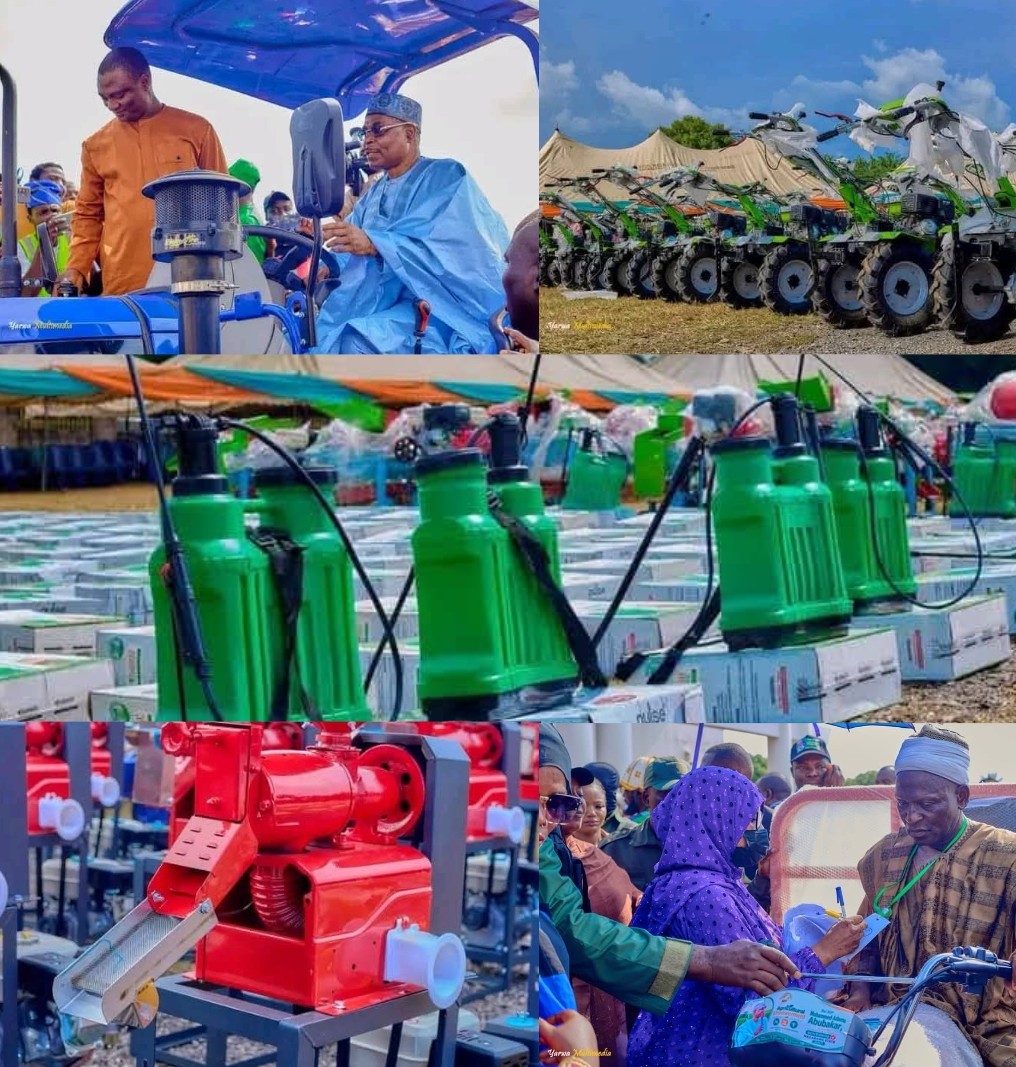
On Monday, September 7, 2026, Adamu, the SDP governorship candidate in the 2027 Nasarawa State election, alongside his wife, Hajiya Rukayya Abubakar Adamu, known as Kwalliyar Lafia, continued the distribution of agricultural support items to farmers across the three local government areas.
The programme, described as part of Adamu’s seven-point agenda, involved the distribution of agricultural inputs and equipment valued at multi-millions of naira, with more than 2,800 beneficiaries receiving support.
https://punchng.com/fake-products-doctors-warn-as-manufacturers-count-losses/
The intervention is aimed at supporting farmers, expanding cultivation, reducing dependence on manual labour and increasing food production across the communities.
Items distributed to farmers included three tractors, 35 tricycles, 35 tilling machines, 36 rice milling machines, 35 corn threshers, 35 solar water pumps and 200 spraying tanks.
Other agricultural inputs distributed included 320 units of chemicals, 70 wheelbarrows, 70 pairs of rain boots, 70 cutlasses, 70 big hoes, 70 shovels and 1,200 bags of fertiliser.
The scale of the intervention, according to the organisers, reflects an emphasis on agriculture as a tool for economic empowerment, food security and job creation.
‘Development Is Not Political Competition’
Adamu stressed that individuals and private organisations that contribute to community development should not be seen as attempting to compete with government.
He said the priority should instead be ensuring that citizens benefit from interventions capable of improving their livelihoods.
Such interventions, he noted, could complement government programmes in areas including agriculture, education, healthcare, youth empowerment, infrastructure and humanitarian assistance.
The former police chief’s position has also renewed discussions about the role of citizens and private stakeholders in supporting development across Nasarawa State.
As political activities ahead of the 2027 governorship election continue to attract public attention, Adamu’s message places emphasis on leadership as a vehicle for service and collective development.
His agricultural empowerment programme also puts agriculture at the centre of his proposed development agenda, particularly given the importance of farming to rural communities across Nasarawa State.
A New Nasarawa Is Possible
The former IGP has continued to promote his seven-point agenda, with agriculture and empowerment forming part of his broader message of creating sustainable opportunities for residents.
The initiative across Akwanga, Wamba and Nasarawa Eggon is expected to provide farmers with equipment and inputs capable of improving productivity while reducing some of the challenges associated with traditional farming.
Adamu’s message remains that government has its responsibilities, but citizens who possess the capacity to assist also have a role to play.
Rather than focusing on who receives credit for development interventions, he advocated an approach where government, individuals, traditional institutions, businesses, community organisations and other stakeholders work together for the benefit of the people.
Ultimately, the development of Nasarawa State, he suggested, requires collective action.
“When everyone contributes their quota, the people become the ultimate beneficiaries.”