
By Yahaya Idris, Asaba
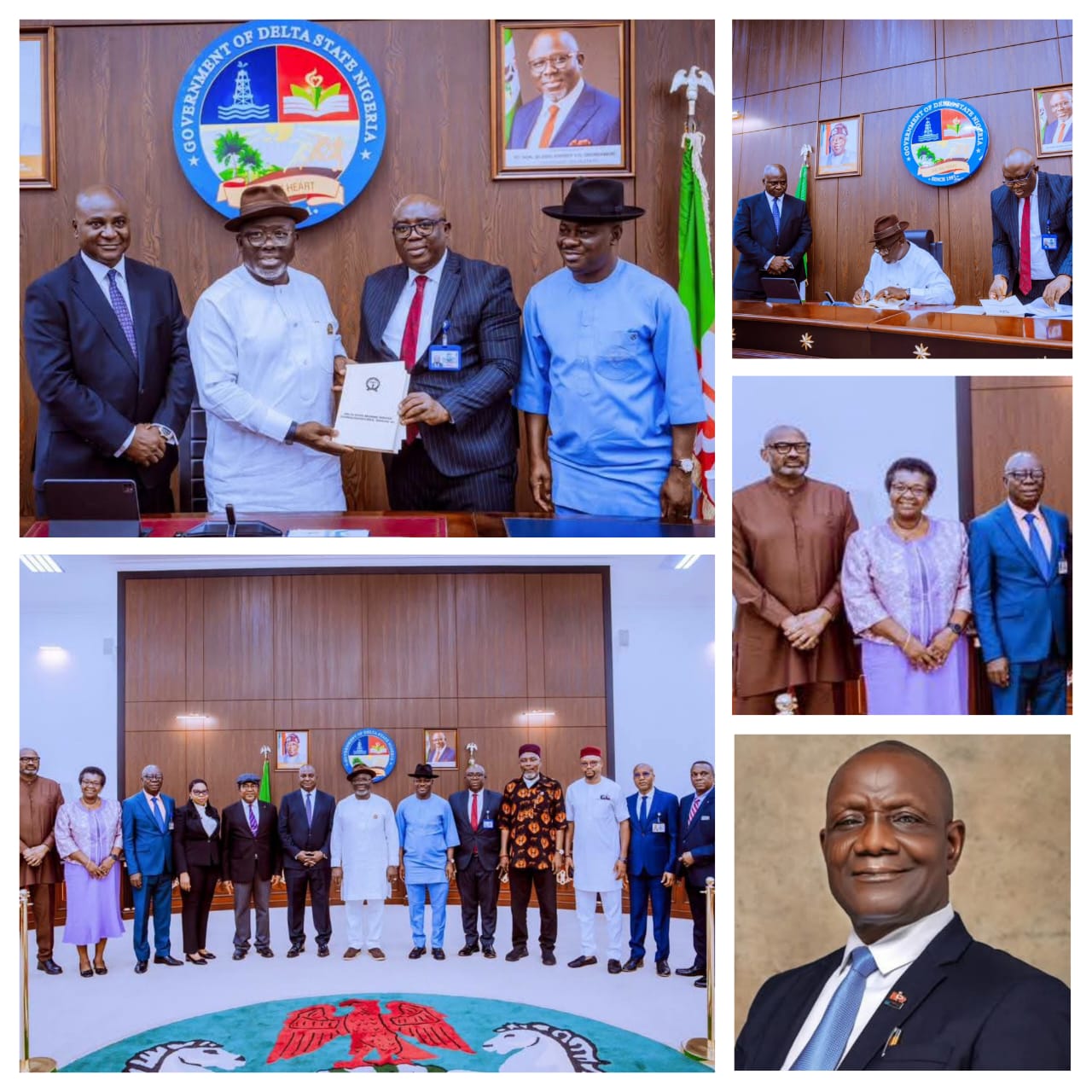
Delta State Governor, Rt. Hon. Sheriff Oborevwori, has signed five bills into law to improve workers’ welfare, strengthen judicial institutions, protect public and private properties, and reform revenue administration across the state.
The laws, according to the Director-General of the Delta State Bureau for Orientation and Communications, Dr Fred Latimore Oghenesivbe, Esq., represent significant steps towards strengthening good governance and advancing the administration’s MORE Agenda.
Oghenesivbe commended Oborevwori for assenting to the bills and praised the Speaker of the Delta State House of Assembly, Rt. Hon. Emomotimi Guwor, and members of the legislature for their contributions to the lawmaking process.
He said effective collaboration between the executive and legislative arms of government remained essential to translating policy priorities into practical measures that improve the lives of citizens.
The five laws include the Thirteenth Month Salary Law, 2026; amendments increasing the number of High Court judges from 46 to 50 and Customary Court of Appeal judges from nine to 12; the Public and Private Properties Protection Amendment Law; and the Delta State Revenue Service (Consolidated) Law, 2026.
13th-Month Salary Law to Improve Workers’ Welfare
According to Oghenesivbe, the Thirteenth Month Salary Law, 2026, represents a major intervention in workers’ welfare by providing an additional month’s salary for eligible public servants.
He explained that the policy recognises the contributions of government employees and is expected to improve household welfare, boost workers’ morale and encourage greater dedication to public service.
Beyond its impact on workers, he said the initiative could stimulate economic activities across Delta State as the additional disposable income circulates through local markets and businesses.
He noted that traders, artisans, transport operators and other service providers could benefit from increased consumer spending, creating a broader economic impact across communities.
More Judges to Strengthen Justice Delivery
The Director-General also described the amendments increasing the number of High Court judges from 46 to 50 and Customary Court of Appeal judges from nine to 12 as important measures for strengthening the state’s judicial system.
He said expanding the number of judicial officers could improve the courts’ capacity to handle cases and support more efficient justice delivery.
According to him, an effective judiciary is essential to protecting citizens’ rights, resolving disputes and sustaining public confidence in the rule of law.
He added that a credible and accessible judicial system would also provide greater reassurance to businesses and investors who depend on impartial institutions to protect their lawful interests and resolve commercial disputes.
Property Protection Law to Safeguard Assets
On the Public and Private Properties Protection Amendment Law, Oghenesivbe said the legislation would strengthen safeguards against unlawful occupation and destruction of property.
He explained that protecting property rights was vital to preserving citizens’ assets, safeguarding public infrastructure and securing business investments.
The Director-General noted that effective enforcement of the law could promote respect for lawful ownership and possession, support peaceful coexistence and strengthen the security objectives of the Oborevwori administration.
He added that a safer environment for property owners and investors would contribute to economic stability and encourage greater confidence in the state’s business climate.
Revenue Law Targets Multiple Taxation
Oghenesivbe further described the Delta State Revenue Service (Consolidated) Law, 2026, as a significant reform aimed at harmonising revenue administration and addressing the challenges associated with multiple taxation.
According to him, improved coordination and simplified tax administration could create a more predictable business environment for entrepreneurs, traders and investors operating in the state.
He said an efficient and transparent revenue system would also strengthen the government’s capacity to mobilise resources for infrastructure, public services and other development priorities.
The reform, he added, should promote a fairer relationship between the government and taxpayers while supporting sustainable revenue generation.
Laws Align With Oborevwori’s MORE Agenda
The Director-General said the five laws reflected the core pillars of the MORE Agenda: Meaningful Development, Opportunities for all, Realistic Reforms, and Enhanced Peace and Security.
He explained that the measures collectively link workers’ welfare with stronger public institutions, improved justice delivery, investment protection and more efficient public administration.
“The signing of these laws demonstrates the importance of purposeful legislation and constructive cooperation between the executive and legislative arms of government. Governor Oborevwori and Speaker Guwor deserve commendation for their respective roles in advancing measures that address important aspects of the lives and livelihoods of Deltans,” Oghenesivbe said.
He expressed confidence that effective implementation of the laws would further strengthen public institutions and advance the state government’s development objectives.
Oghenesivbe added that the legislation reaffirmed the Oborevwori administration’s commitment to people-centred governance, institutional reforms and sustainable development across Delta State.