
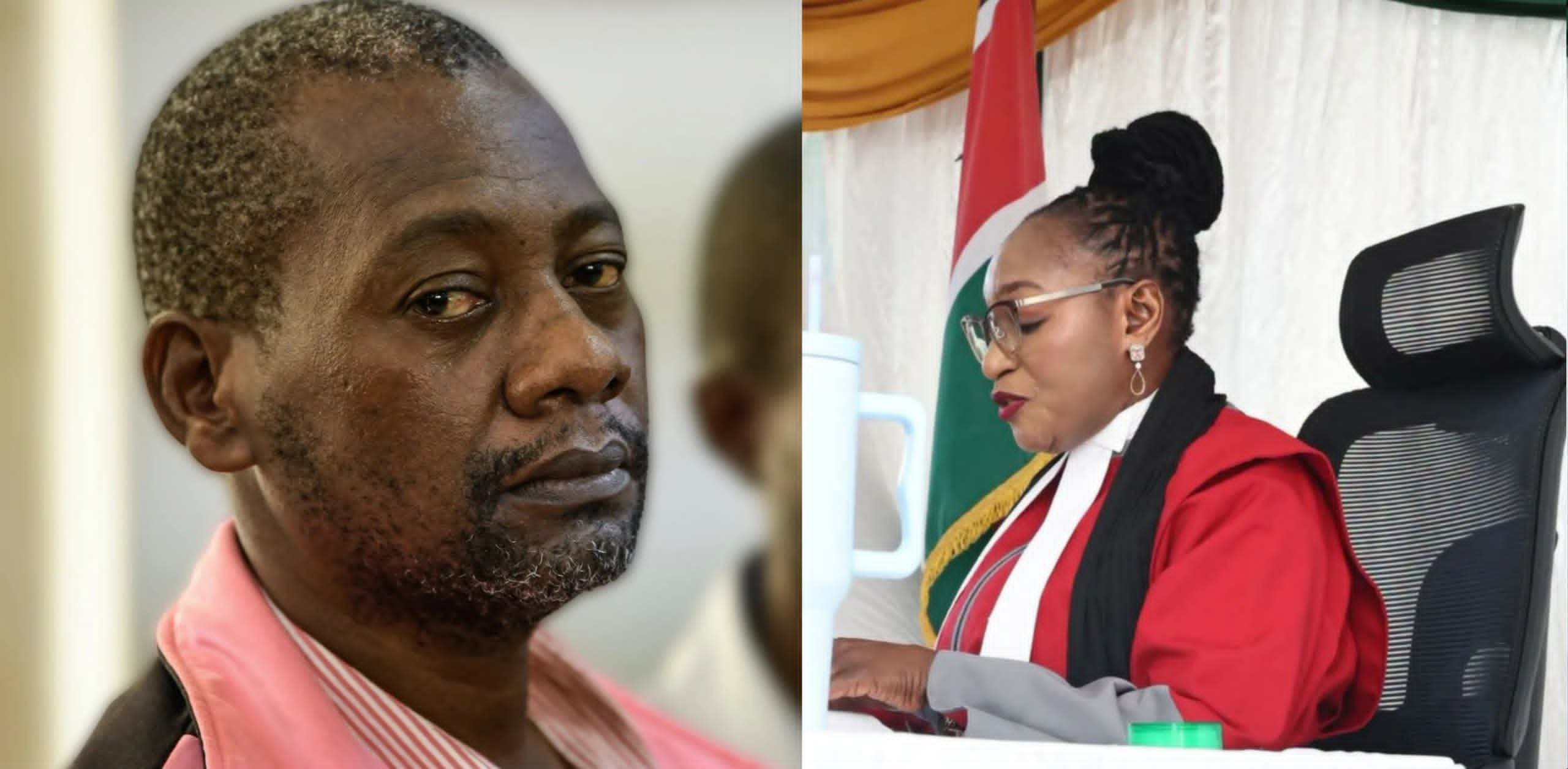
Court convicts preacher and 28 co-accused over deaths of 190 children and one adult as Kenya confronts questions about religious extremism, child protection and institutional failures
By Yahaya Idris
A Kenyan court has convicted self-proclaimed preacher Paul Nthenge Mackenzie and 28 co-accused of murdering 191 people, including 190 children, in a mass-starvation case that exposed the deadly consequences of religious extremism and triggered nationwide calls for stronger oversight of religious organisations.
The verdict was delivered on Monday, October 19, 2026, at the Mombasa Law Courts, bringing a major development in the prosecution of the Shakahola Forest massacre, one of Kenya’s most disturbing cases of mass death in recent years.
The court found that the prosecution had proved its case against all 29 defendants on the murder charges. Mackenzie was accused of directing followers of his Good News International Church to undertake extreme fasting, including withholding food from their children, under the belief that death would enable them to meet Jesus before the end of the world.
The conviction followed an extensive investigation into deaths at a remote compound in Shakahola Forest, in Kenya’s coastal Kilifi County. Authorities have recovered more than 400 bodies from the wider investigation, although the murder charges decided in this trial concerned 191 victims.
The case has drawn international attention to the exploitation of religious belief, the vulnerability of children in isolated communities and questions over why earlier encounters with law enforcement did not prevent the tragedy.
The Shakahola Massacre: How the Investigation Began
The case came to national and international attention in April 2023, after reports of missing people and concerns about followers living in the Shakahola area prompted a police investigation.
What authorities subsequently uncovered was a network of shallow graves and the remains of men, women and children on land associated with Mackenzie’s religious movement.
https://globaltimesnigeria.com/2026/10/19/isimbabi-six-permanent-jobs-toto-gadabuke/
As the investigation expanded, forensic teams exhumed hundreds of bodies. Many victims were believed to have died from starvation, while post-mortem examinations and prosecutorial evidence also pointed to other forms of violence in some cases.
The discovery transformed what had initially appeared to be a missing-persons investigation into a major criminal inquiry involving alleged organised coercion, religious indoctrination and mass deaths.
Investigators examined the activities of Mackenzie and his associates, the conditions under which followers lived, the teachings they received and the circumstances surrounding the deaths.
The scale of the discoveries raised urgent questions about how a large group of people could have been subjected to such extreme practices without earlier intervention stopping the loss of life.
Allegations of Forced Fasting and Children Being Denied Food
At the centre of the prosecution’s case was the allegation that Mackenzie promoted an apocalyptic religious doctrine that encouraged followers to starve themselves and their children in preparation for the end of the world.
Prosecutors argued that the fasting was not simply a voluntary spiritual exercise but part of a coercive system in which followers were persuaded or pressured to reject food and other basic necessities.
According to the prosecution, children were particularly vulnerable because they depended on adults for food, protection and access to medical assistance.
The alleged practice of withholding food from children became one of the most disturbing aspects of the case.
Children who could not independently leave the community or obtain nourishment were exposed to conditions that could lead to severe malnutrition and death.
Prosecutors also described what they characterised as a structured hierarchy in which children were expected to die first, followed by other categories of followers.
The court’s guilty verdict represents a major legal finding against Mackenzie and the other convicted defendants in relation to the 191 deaths covered by the charges.
However, the wider investigation has involved additional deaths and separate criminal proceedings, which must be distinguished from the specific murder case decided on Monday.
Who Is Paul Mackenzie?
Paul Nthenge Mackenzie is a self-proclaimed preacher who established the Good News International Church in 2003.
Before becoming widely known through the Shakahola investigation, he had attracted followers through religious preaching, including teachings centred on the end times and the rejection of certain aspects of modern life.
His movement reportedly discouraged practices such as formal education and the use of modern medicine. Investigators and witnesses examined how such teachings influenced the decisions of followers and their willingness to submit to extreme fasting.
Mackenzie’s history with law enforcement has also become a major issue in the aftermath of the massacre.
He was arrested in 2017 in connection with allegations involving radicalisation but was acquitted. He was arrested again in 2019 in a case connected to the deaths of two children and was released on bail.
His continued activities before the 2023 discoveries have fuelled public criticism of the response by authorities and renewed debate over whether earlier interventions could have prevented further deaths.
The case has therefore extended beyond the conduct of one religious leader to questions about the monitoring of potentially dangerous groups and the enforcement of laws intended to protect children.
What the Court Decided
In delivering the verdict, the court accepted the prosecution’s case against the 29 defendants on the 191 murder counts.
The ruling rejected the defence position that the case was insufficiently established. Mackenzie and his co-accused had denied the murder charges.
The verdict is significant because it establishes criminal responsibility in the deaths covered by the trial, rather than leaving the matter at the level of public allegations or investigative suspicions.
The defendants are expected to proceed to the sentencing stage. Reports published on October 19 indicate that sentencing is scheduled for November 6, 2026, following further court proceedings.
Mackenzie also faces separate legal proceedings involving other alleged offences, including terrorism-related allegations and additional deaths. Those cases should not be treated as resolved by the verdict in the 191-count murder trial.
More Than 400 Bodies: The Wider Scale of the Tragedy
Although the trial concerned 191 murder victims, the wider Shakahola investigation has uncovered a substantially larger number of bodies.
Reports by international news organisations have cited a death toll of approximately 429 in connection with the wider investigation. Some victims have yet to be identified, and authorities have continued examining evidence connected to the deaths.
The difference between the 191 murder counts and the higher number of bodies recovered is important. The verdict delivered on October 19 does not mean that every death discovered in Shakahola has been individually adjudicated in that trial.
In January 2026, Mackenzie was also reported to have faced charges relating to 52 additional bodies found in the nearby Kwa Binzaro area.
These developments underline the continuing nature of the investigation and the need to establish the identity of victims, determine the circumstances of individual deaths and ensure that separate allegations are handled through the appropriate legal process.
For families who lost relatives, the identification of victims and the recovery of remains have been essential parts of the search for answers.
https://www.youtube.com/live/ZepCx9-s3Ps?si=wmEEJu_RHNMKVBra
Families of Victims Seek Justice
The conviction has brought a significant moment in the pursuit of accountability for relatives whose family members disappeared into the religious movement.
Among those affected is Francis Wanje, 62, who told the Agence France-Presse news agency that he lost eight family members, including his daughter and two grandchildren, in the Shakahola tragedy.
His loss illustrates the scale of the destruction experienced by families whose relatives became involved in the movement.
For survivors and bereaved relatives, the case has involved more than establishing criminal responsibility. It has also meant confronting the loss of children, parents, siblings and extended family members, alongside uncertainty over the fate and identification of some victims.
The prosecution and the court proceedings have offered a formal process for examining the evidence and determining responsibility for the deaths included in the charges.
Nevertheless, a conviction cannot reverse the loss suffered by affected families, and the wider investigation remains important to establishing the full circumstances of the tragedy.
Government Under Pressure Over Earlier Warnings
The Shakahola massacre has prompted serious questions about the effectiveness of Kenya’s response to potentially dangerous religious movements.
Mackenzie’s earlier arrests have become central to criticism of how authorities handled warning signs before the mass graves were discovered.
Kenyan President William Ruto has acknowledged failures by the government in preventing the tragedy. Human rights advocates and other critics have also called for stronger oversight and better coordination between law enforcement, child-protection agencies and relevant public institutions.
The case presents a difficult policy challenge: how can governments protect citizens from coercion and abuse while safeguarding freedom of religion and preventing the arbitrary targeting of legitimate religious communities?
Any regulatory response must distinguish lawful religious practice from conduct involving violence, exploitation, unlawful confinement, child abuse or the deliberate denial of basic necessities.
The central issue is not whether people should be allowed to hold unconventional religious beliefs. It is whether authorities can identify and intervene when those beliefs are allegedly used to facilitate serious crimes or expose vulnerable people to life-threatening harm.
Religious Freedom and the Protection of Children
The Shakahola case has intensified debate about the limits of religious authority when the welfare of children is at stake.
Children cannot always make independent decisions about where they live, what they eat or whether they receive medical attention. Their dependence on adults places a special responsibility on caregivers and creates a compelling public interest in preventing abuse and neglect.
Where religious teachings are used to justify practices that endanger children, authorities face an obligation to investigate credible allegations and enforce applicable laws.
At the same time, broad restrictions on religious activity could undermine fundamental freedoms if they are not based on evidence, due process and clearly defined legal standards.
The challenge for Kenya and other countries is to build safeguards that allow peaceful religious expression while ensuring that claims of spiritual authority cannot be used as a shield against criminal accountability.
Lessons for Africa and Religious Institutions
The Shakahola tragedy offers important lessons for African countries, where religious organisations play significant roles in community life, social support and personal belief.
Religious leaders can exercise considerable influence over followers, particularly in communities where poverty, insecurity, illness or social isolation make promises of salvation and miraculous intervention especially powerful.
That influence makes transparency, accountability and the protection of vulnerable people essential.
Religious institutions can help reduce the risk of abuse by establishing clear safeguarding policies, providing mechanisms for reporting misconduct and ensuring that children are not denied food, education, medical assistance or protection from violence.
Governments, meanwhile, need credible systems for responding to reports of abuse, investigating suspected criminal conduct and coordinating information among relevant agencies.
The Kenyan case also demonstrates the importance of acting on credible warnings before a crisis reaches catastrophic proportions. Earlier arrests, complaints and investigations must be assessed carefully to determine whether institutional weaknesses contributed to the scale of the eventual disaster.
A Conviction, but Questions Remain
The conviction of Paul Mackenzie and 28 co-accused over the deaths of 191 people marks a major milestone in the Shakahola case.
It is also a reminder of the consequences that can follow when vulnerable people are subjected to extreme control and when religious authority is allegedly used to justify life-threatening practices.
The wider investigation, the identification of victims, separate criminal proceedings and scrutiny of the authorities’ earlier response remain important parts of the search for accountability.
For Kenya, the task ahead extends beyond punishment. It includes strengthening child-protection systems, responding more effectively to credible warnings, ensuring that religious institutions operate within the law and protecting the rights of people who may be vulnerable to coercion.
The central lesson is clear: freedom of belief must not become a justification for the abuse or abandonment of children, and no claim of spiritual authority places anyone above the law.