
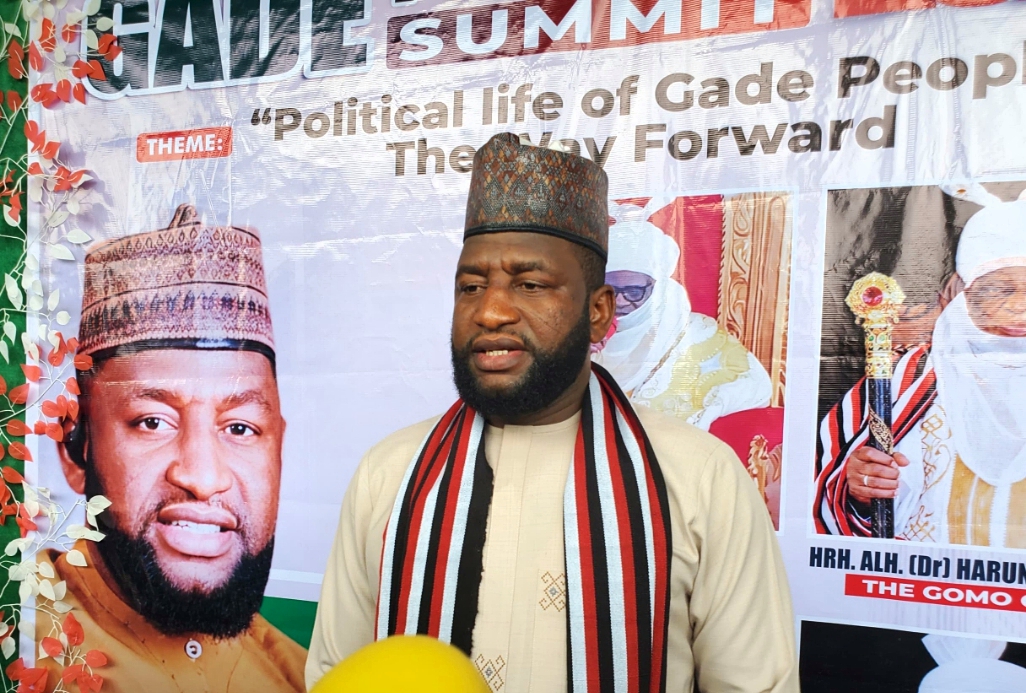
Gade Nation Rallies for Greater Political Representation at Keffi Summit
By Roseline Okafor, Nasarawa
Stakeholders from the Gade ethnic nationality, including traditional rulers, political actors, and community leaders, have renewed calls for greater political inclusion and representation, as they convened a high-level summit in Keffi.
The gathering, held at the Assembly Hall of Nasarawa State University, brought together sons and daughters of the Gade Nation to deliberate on strategies for repositioning the group within the state and national political landscape.
Tagged “Political Life of Gade People: The Way Forward,” the summit featured presentations on development priorities, political participation, and the imperative of peaceful coexistence among the Gade people.
Convener of the summit, Ambassador Yakubu Musa, Presidential Liaison Officer to Bola Ahmed Tinubu, said the initiative was designed to reawaken the political consciousness of the Gade Nation and chart a new course for its future.
According to him, the summit seeks to harness the numerical strength and resource potential of the Gade people to enhance their influence in governance and decision-making processes.
Representing the President-General of the Gade Development and Cultural Association (GADECA), Barrister Ibrahim Dikko Haske, the association’s vice president underscored the need for sustained political education and awareness, noting that informed participation remains critical to securing a stronger voice in public affairs.
Speakers at the event, including traditional and political leaders, emphasized the importance of inclusive politics, with particular focus on the active involvement of youths and women as key drivers of development.
Deliberations also highlighted the need for unity and coordinated engagement among Gade communities to ensure their interests are adequately represented at all levels of government.
Participants agreed that the summit marks a significant step toward reclaiming the political relevance of the Gade Nation, describing it as a catalyst for sustained advocacy and collective action.
They further noted that the initiative could serve as a template for other minority groups seeking greater inclusion within Nigeria’s diverse socio-political framework.