
Engr. Sule’s Seventh Year in Office: Defying Odds, Building Legacies, Securing Political Succession
By Francis Nansak, Lafia
At first glance, he appears calm, quiet, and unassuming, yet Governor Abdullahi Sule has consistently defied expectations. Seven years into office, the Nasarawa State governor has carved a reputation as a deliberate and focused leader whose management of public resources has impacted lives and transformed critical infrastructure across the state.
When he was sworn in on May 29, 2019, the task before him was daunting. Nasarawa State faced growing insecurity, rising ethnic tensions, a struggling economy, and an impoverished civil service.
Expectations were mixed, and many doubted whether the soft-spoken technocrat possessed the political strength required to navigate the state through such turbulent times.
However, within his first 100 days in office, signs of relief began to emerge. Citizens gradually regained hope as the administration introduced measures aimed at restoring confidence in governance and stabilizing public institutions.
Then came the outbreak of the COVID-19 pandemic, a global crisis that shook governments and economies worldwide. Like many administrations, the Sule government faced enormous pressure as the pandemic threatened both lives and livelihoods. Yet, drawing from his corporate background and international experience in industrial management, the governor responded with discipline, accountability, and strategic coordination.
Despite the devastating effects of the pandemic, which consumed a significant portion of the administration’s first term, the government maintained focus on its ambitious development blueprint encapsulated in the Nasarawa Economic Development Strategy (NEDS).
The vision became the administration’s driving force for policy innovation, infrastructural renewal, and economic expansion.
From the onset, revenue generation, security stabilization, and the unification of the state’s diverse ethnic and religious communities were placed at the heart of the administration’s agenda.
Through sustained engagement with traditional rulers, youth organizations, women groups, and critical stakeholders, the government gradually fostered a stronger sense of inclusion and stability.
By the end of the administration’s first four years, the vision for governance had become clearer. The promise to industrialize Nasarawa State began to take shape as one of the defining legacies of Governor Sule’s leadership.
The state’s untapped mineral deposits and vast agricultural potential started attracting investors and industrial players. Key sectors such as education and healthcare also witnessed notable improvements.
Civil servants began receiving salaries regularly, while pensioners, once accustomed to prolonged delays, experienced greater consistency in pension payments.
The burden of unemployment, particularly among graduates who had waited years for opportunities in the civil service, also eased considerably.
Openings within the workforce, coupled with deliberate efforts to create an investor-friendly environment, encouraged private businesses and industries to establish operations in the state.
Nasarawa State has since evolved from being viewed merely as a subsistence farming state into a growing agro-industrial hub.
This transformation is reflected in the presence of major agro-allied companies such as Flour Mills of Nigeria, Dangote Sugar Refinery, and Olam Rice, all of which have expanded economic activities and employment opportunities within the state.
More recently, the state government’s rice farm initiative at Ajangwa further demonstrated the administration’s commitment to food security and agricultural development, as harvested rice was sold to citizens at subsidized rates.
Politically, the administration’s emphasis on infrastructure development, social intervention programmes, and grassroots engagement has strengthened the ruling All Progressives Congress (APC) in the state. Roads, public facilities, and strategic development projects executed across various communities have not only improved living conditions but also reshaped the political landscape.
Stakeholders elieve the administration’s calculated approach weakened the influence of opposition parties while strengthening public confidence in the APC. The ruling party, for the first time in the state’s history, delivered overwhelming support for a sitting APC president during national elections.
Now in the seventh year of his administration, with barely 12 months before leaving Government House on Shendam Road, Governor Sule faced perhaps one of the most politically sensitive moments of his tenure: the succession question.
Amid intense political pressure and competing interests over who should succeed him, the governor maintained his characteristically calm disposition. Rather than allowing political uncertainty to deepen divisions, he anchored the succession debate on the long-standing zoning arrangement within the state.
Through consultations with political leaders, former governors, stakeholders, and party elders, Governor Sule argued that preserving the state’s peace and stability required adherence to the established rotational understanding among the senatorial zones.
Historically, Nasarawa West produced the state’s first civilian governor in the Fourth Republic, while Nasarawa South governed for 12 consecutive years.
The governorship later shifted to Nasarawa North with the emergence of Abdullahi Sule in 2019. By that arrangement, many believed power should naturally return to the Western Senatorial District in 2027.
The position, however, generated opposition from some influential political figures, including former governor Senator Umaru Tanko Al-Makura, who reportedly resisted the zoning arrangement despite previously supporting it during his administration, an arrangement that paved the way for Sule’s emergence.
Nevertheless, Governor Sule remained resolute. He insisted that respecting the zoning principle was critical to sustaining unity, fairness, and political balance in the state.
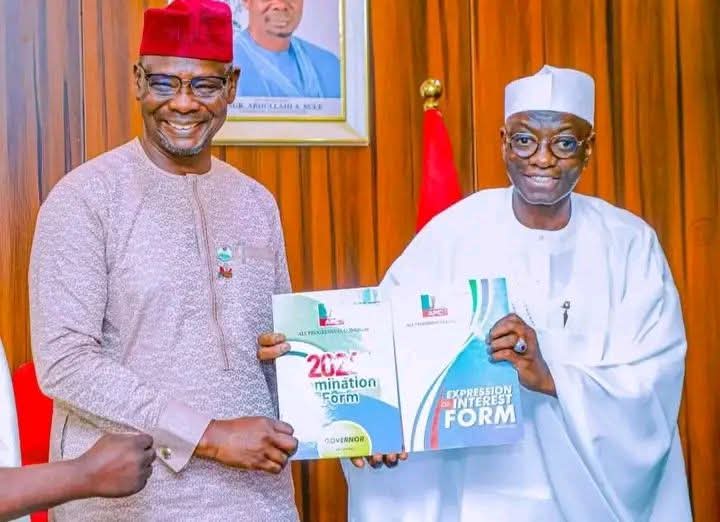
The resistance eventually gave way to victory for the governor’s camp as the APC governorship primaries produced Senator Ahmed Aliyu Wadada, representing Nasarawa West in the National Assembly, as the party’s candidate for the 2027 governorship election.
For many political observers, the emergence of Wadada represents more than a political victory for Governor Sule; it symbolizes the consolidation of a succession plan carefully managed amid intense political undercurrents.
As the administration’s seventh anniversary approaches on May 29, 2026, many now regard Governor Sule’s political journey as one marked by resilience, strategic leadership, and quiet determination.
What was once dismissed by critics as a weak technocratic administration has evolved into a government credited with infrastructural growth, industrial expansion, political stability, and economic reforms.
It is for this reason that some political watchers have described the administration’s trajectory as “accomplishment amid silent struggles.”
Supporters of Senator Ahmed Aliyu Wadada have also expressed optimism that, if elected governor in 2027, he would consolidate on the achievements of the Sule administration and accelerate development across the state.
That confidence appears to have reassured the outgoing governor, who recently declared during a thank-you visit by Senator Wadada that he would not interfere in the affairs of his successor’s administration.
“I will only interfere where you are doing the wrong thing,” Governor Sule remarked.