
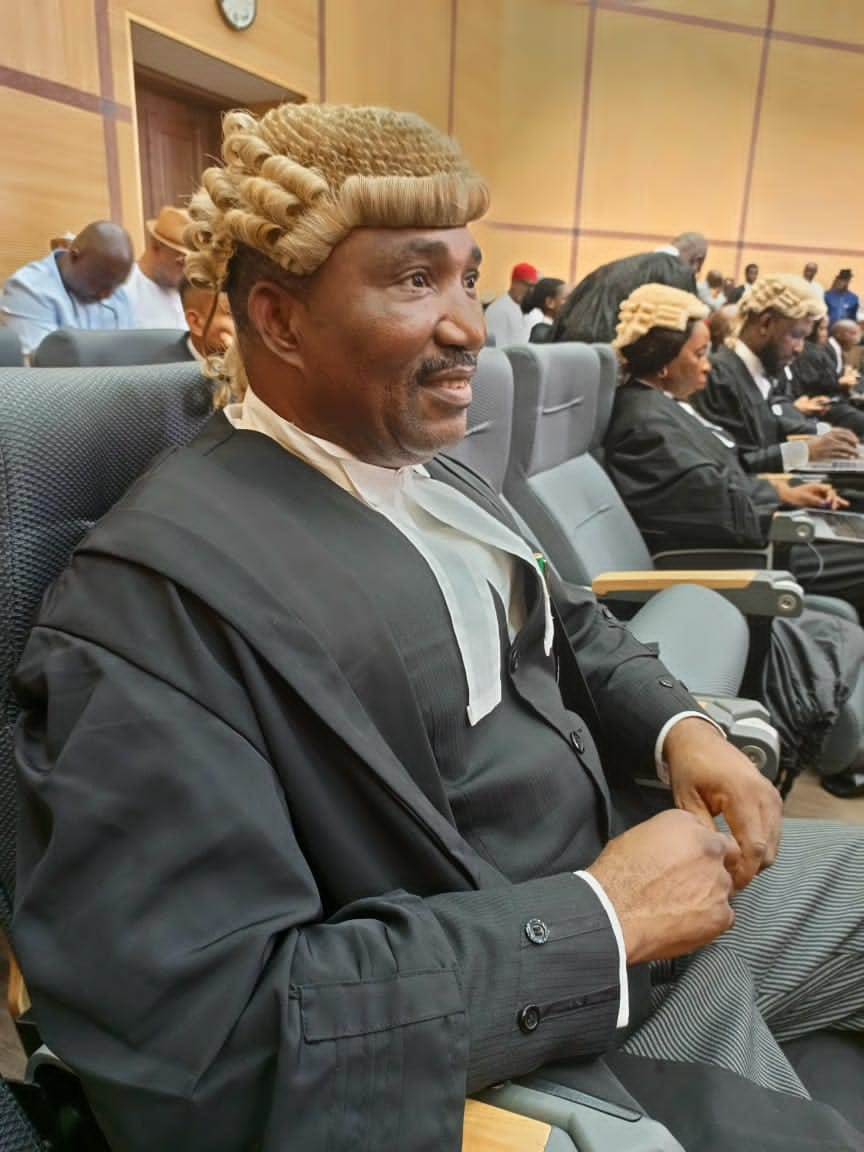
Barr. Muhammed Tanko Musa Osuku: The Legal Mind Reforming Kogi’s Civil Service
By Abu Micheal
In public administration, effective leadership is often measured not by rhetoric but by results. For Barr. Muhammed Tanko Musa Osuku, Chairman of the Kogi State Civil Service Commission, leadership has become synonymous with discipline, integrity, and institutional reform.
A seasoned legal practitioner, Barr. Osuku represents a rare blend of law, administration, and public service. Beneath his calm and unassuming demeanor lies a steadfast commitment to due process, professionalism, and the strengthening of public institutions. At a time when many public service systems struggle with bureaucracy, favoritism, and inefficiency, he has emerged as a reform-minded leader determined to restore confidence in the civil service.
Since assuming office as Chairman of the Kogi State Civil Service Commission, Barr. Osuku has introduced a culture anchored on transparency, merit, and accountability. His legal background has proven invaluable in navigating the complex responsibilities of managing the state’s workforce while ensuring strict compliance with established rules and regulations.
Colleagues and stakeholders describe him as meticulous, fair-minded, and principled. Known for his attention to detail, he is said to scrutinize documents thoroughly before making decisions, a trait that has helped restore credibility to recruitment, promotion, and disciplinary processes across government ministries, departments, and agencies.
Under his leadership, the commission has witnessed a remarkable transformation. Processes that once suffered from delays and administrative bottlenecks have become more efficient and responsive. Files move faster, decisions are reached within reasonable timelines, and civil servants increasingly see evidence that the system can work fairly when guided by competent leadership.
One of the defining features of Barr. Osuku’s administration is his unwavering commitment to meritocracy. He has consistently maintained that appointments and promotions should be based on competence, performance, and qualification rather than personal connections or political influence. This position has earned him widespread respect among career civil servants who have long advocated for a system that rewards diligence and professionalism.
Integrity remains the cornerstone of his leadership philosophy. He has demonstrated zero tolerance for favoritism, irregular appointments, and manipulation of administrative processes. Every decision, he insists, must be justifiable both legally and ethically. His commitment to institutional integrity has strengthened public confidence in the commission and reinforced the credibility of its decisions.
Barr. Osuku’s administrative style combines firmness with fairness. He is known for questioning anomalies, insisting on compliance with procedures, and ensuring that due process is followed at every stage. Through this approach, the commission has evolved from a perceived bureaucratic obstacle into a model of order and efficiency within the state’s public service structure.
Despite operating within a politically sensitive environment, he has consistently resisted attempts to politicize the civil service. He has maintained that recruitment, transfers, postings, and promotions must serve the public interest and remain insulated from undue interference. While this stance may have displeased some vested interests, it has earned him the trust and admiration of countless public servants who now see the commission as a protector of fairness and professionalism.
The constitutional responsibilities of the Civil Service Commission are significant. Established under the provisions of the 1999 Constitution, the commission oversees appointments, promotions, transfers, and disciplinary matters affecting officers on Grade Level 07 and above. Under Barr. Osuku’s stewardship, these responsibilities have been carried out with diligence and strict adherence to public service regulations.
A strong advocate of workers’ rights, he believes discipline should never come at the expense of fairness. He has consistently emphasized the importance of due process and fair hearing in disciplinary proceedings, ensuring that officers are treated with dignity while maintaining the integrity of the service. This balanced approach has helped reduce tensions and strengthen confidence among civil servants and labor unions alike.
Beyond administrative reforms, Barr. Osuku is also championing the modernization of the state’s workforce. Recognizing the demands of a rapidly evolving public sector, he has encouraged regular staff training, digital literacy, ICT compliance, and professional development. For him, capacity building is not an occasional exercise but a continuous investment in the future of governance.
His commitment to modernization extends to records management and personnel administration. Through improved documentation practices, staff database updates, and the digitization of records, the commission has enhanced efficiency while reducing opportunities for abuse. Accurate personnel records have also strengthened efforts to eliminate irregularities and improve workforce planning.
Another hallmark of his leadership is stakeholder engagement. Barr. Osuku maintains constructive relationships with labor leaders, heads of ministries and agencies, and retired public servants. His consultative approach promotes dialogue, reduces conflict, and fosters greater trust in the commission’s activities.
He also enjoys a productive working relationship with the administration of Governor Ahmed Usman Ododo, whose vision for a responsive and professional civil service aligns with the commission’s reform agenda. Together, their efforts have helped ensure that human resource policies support the broader developmental goals of the state.
Mentorship is another area where Barr. Osuku’s influence is widely felt. Young lawyers, administrators, and public servants frequently speak of his guidance and his insistence on grounding decisions in law and ethics. His habit of asking, “What does the law say?” before taking action has become a defining characteristic of his leadership style and a valuable lesson for emerging professionals.
Though he rarely seeks public attention, his impact is evident throughout the Kogi State civil service. Improved efficiency, stronger institutional processes, enhanced staff morale, and growing confidence in the fairness of administrative decisions all bear testimony to his stewardship.
An effective public administrator, Barr. Osuku demonstrates daily that leadership is about protecting institutions, empowering people, and preparing for the future. By enforcing regulations without fear or favor, safeguarding the dignity of workers, and promoting ethical governance, he has helped lay the foundation for a more competent and accountable civil service.
His tenure has been marked by quiet reforms rather than dramatic headlines. Yet those reforms are yielding lasting results. Through integrity, professionalism, and unwavering respect for due process, he has strengthened the commission’s role as an impartial institution responsible for guiding the development of the state’s workforce.
In Barr. Muhammed Tanko Musa Osuku, Kogi State has found a leader whose influence extends beyond administrative duties. He is a lawyer who respects the rule of law, a public servant who values institutions, and an administrator committed to fairness and excellence.
As he continues to lead the Kogi State Civil Service Commission, expectations remain high for a civil service that is efficient, ethical, and fully committed to serving the people. With his disciplined leadership, legal expertise, and unwavering commitment to reform, Barr. Osuku has established himself as one of the most dependable custodians of public service in Kogi State.
His enduring legacy may well be that he restored order without confrontation, strengthened institutions without compromise, and reaffirmed the principle that merit—not influence—should be the foundation of public service.
Abu Micheal
Journalist, Publisher, ANIPR, MNIM
Editorial Board Member, Guild of Interfaith Media Practitioners Nigeria (GIMP-N)