
Warri Delineation Peace Accord: Oborevwori’s Timely Intervention and the Power of Dialogue
By Fred Latimore Oghenesivbe, Esq.
Governor Sheriff Oborevwori’s intervention in the tensions arising from the ward and polling unit delineation exercise in Warri Federal Constituency once again highlights the importance of proactive leadership in conflict prevention and peacebuilding. At a time when emotions were running high and ethnic sentiments threatened to dominate public discourse, the governor acted decisively to foster dialogue, promote understanding and preserve the peace and stability for which Delta State is widely known.
The controversy surrounding the delineation exercise is rooted in longstanding issues of political representation, demographic realities and electoral boundaries among the three major ethnic nationalities in the Warri axis; the Ijaw, Itsekiri and Urhobo peoples. Over the years, these issues have remained closely intertwined with questions of identity, historical settlement patterns, access to political opportunities and community recognition.
The current exercise by the Independent National Electoral Commission (INEC) arose from a Supreme Court judgment delivered in December 2022, directing the electoral body to undertake a fresh delineation of wards and polling units in Warri North, Warri South and Warri South-West Local Government Areas. Following the judgment, INEC conducted consultations, field assessments and stakeholder engagements before releasing its report. Predictably, the outcome generated varying interpretations and reactions, reflecting the sensitivity of representation within the oil-rich Warri Federal Constituency.
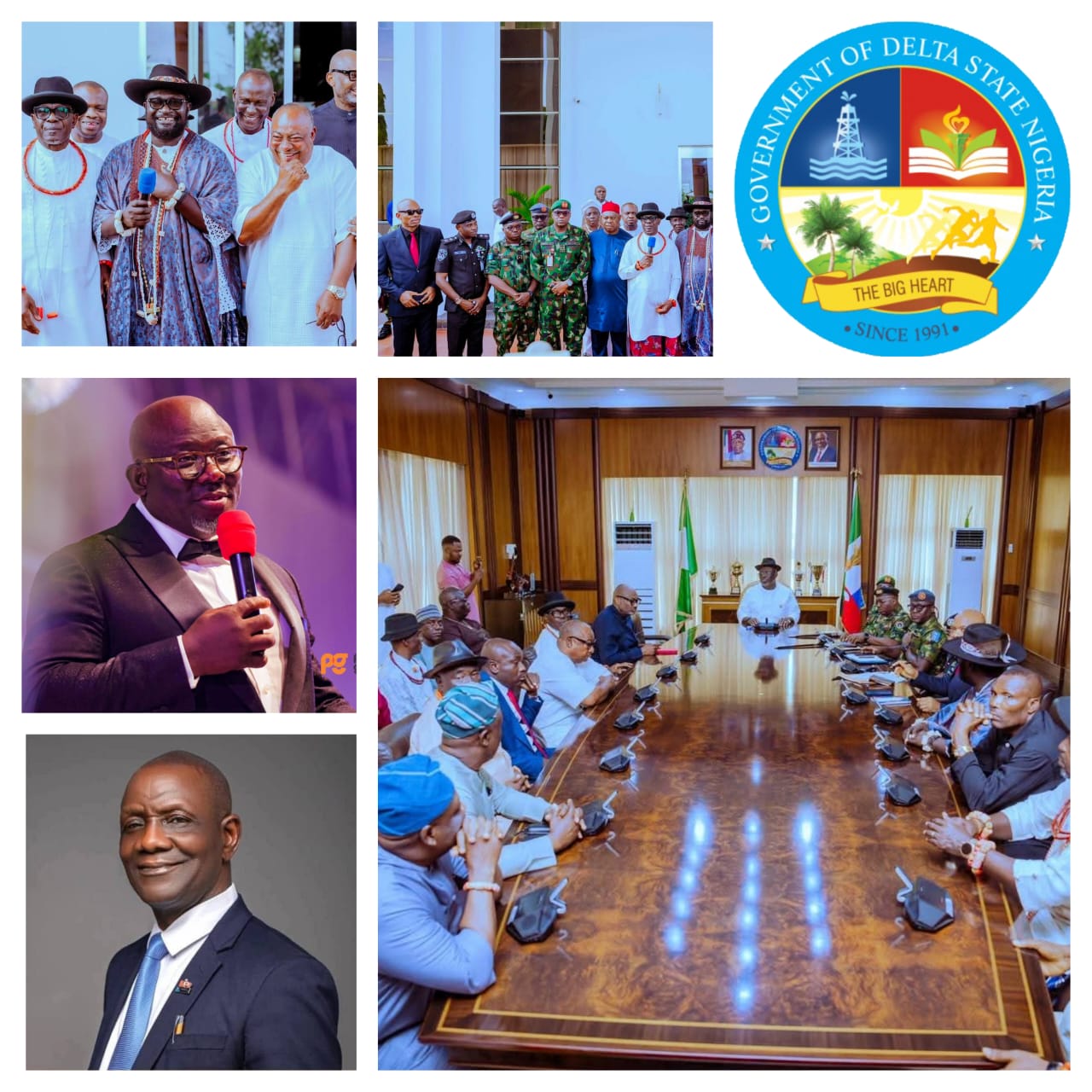
It was against this backdrop that Governor Oborevwori convened a high-level peace meeting at Government House, Asaba, on Monday June 8, bringing together leaders of the Ijaw, Itsekiri and Urhobo ethnic nationalities, senior government officials and heads of security agencies.
The meeting represented a timely and strategic effort to prevent tensions from escalating while creating a platform for constructive engagement among stakeholders. It also reaffirmed the state’s commitment to ensuring that differing views on the delineation exercise are expressed peacefully and within the framework of the law.
The presence of key security and government officials underscored the seriousness of the initiative. Among those in attendance were the Commander of the 63 Brigade, Nigerian Army, Brigadier General Folu Shonibare; the Commissioner of Police, Delta State Command, CP Yemi John Oyeniyi; heads of other security agencies; and the Secretary to the State Government, Dr Kingsley Emu. Their participation conveyed a clear message that government and security institutions remain united in their determination to safeguard peace and maintain public order across the state.
One of the most significant outcomes of the meeting was the public commitment by leaders of the three ethnic nationalities to promote peace, exercise restraint and continue engagement through lawful and constructive channels. They also pledged to discourage actions capable of undermining public order and to communicate the message of peace to their respective communities.
These commitments are particularly important because peace remains the foundation upon which social stability, economic growth and sustainable development are built. In a region as strategic as Warri, preserving harmony among communities is essential not only for local development but also for investor confidence and the broader economic interests of Delta State.
Governor Oborevwori’s handling of the situation reflects a leadership approach anchored on consultation, inclusiveness and consensus-building. Throughout his public service career, he has consistently demonstrated a preference for engagement and dialogue in addressing complex issues, especially those involving diverse interests and stakeholders.
This approach aligns closely with one of the core pillars of the MORE Agenda; Enhanced Peace and Security. The administration recognises that meaningful development can only thrive in an atmosphere of peace and stability. Infrastructure development, economic expansion, quality healthcare, educational advancement and private-sector investment all depend on a secure and harmonious environment.
The governor’s intervention in the Warri delineation matter therefore goes beyond addressing an immediate challenge. It reflects a broader commitment to sustaining the peaceful environment that has contributed significantly to Delta State’s progress in recent years. His declaration that “Warri is one family” captured the spirit of unity and shared destiny that remains essential to the future of the constituency and the state as a whole.
The peace meeting also highlighted an important reality in democratic governance. While legal and institutional processes are indispensable, their successful implementation often requires continuous stakeholder engagement and responsible leadership. Institutions may make decisions, but building understanding and sustaining public confidence frequently depend on dialogue and effective communication.
The immediate beneficiaries of the peace accord are the people of Warri Federal Constituency. More broadly, the initiative has helped to strengthen inter-ethnic trust, reduce tensions and reinforce the stability that continues to distinguish Delta State as one of Nigeria’s most peaceful states.
As the delineation process continues through constitutional and administrative channels, all stakeholders must remain committed to lawful engagement, mutual respect and peaceful coexistence. Complex constitutional issues are best resolved through dialogue, patience and adherence to democratic principles rather than through threats, inflammatory rhetoric or acts capable of undermining public peace.
The Warri delineation exercise has once again demonstrated the importance of responsible leadership in managing sensitive and complex issues. By bringing together leaders of the Ijaw, Itsekiri and Urhobo ethnic nationalities at a critical moment, Governor Sheriff Oborevwori reaffirmed his administration’s commitment to preserving peace, strengthening unity and advancing the collective interests of all Deltans.
As Delta State continues its development journey under the MORE Agenda, the lessons from Warri underscore the enduring value of dialogue, inclusion and collective responsibility.
In choosing engagement over division and understanding over confrontation, the state has once again shown that even the most delicate challenges can be addressed through peaceful and constructive means.
***
Fred Latimore Oghenesivbe, Esq., is a full member of the Nigerian Institute of International Affairs (NIIA), and the Director General, Delta State Bureau for Orientation and Communications, Governor’s Office Asaba.