
Delta’s No. 2 Governance Ranking Reflects Oborevwori’s Preparedness, Fiscal Discipline — Ifeajika
Delta State Governor, Rt. Hon. Sheriff Oborevwori, has been commended for his prudent financial management, grassroots-driven development agenda, and effective project execution following the state’s emergence as the second-best governed state in Nigeria in the 2025 Governance Performance Index released by the Commonwealth Institute of Advanced and Professional Studies.
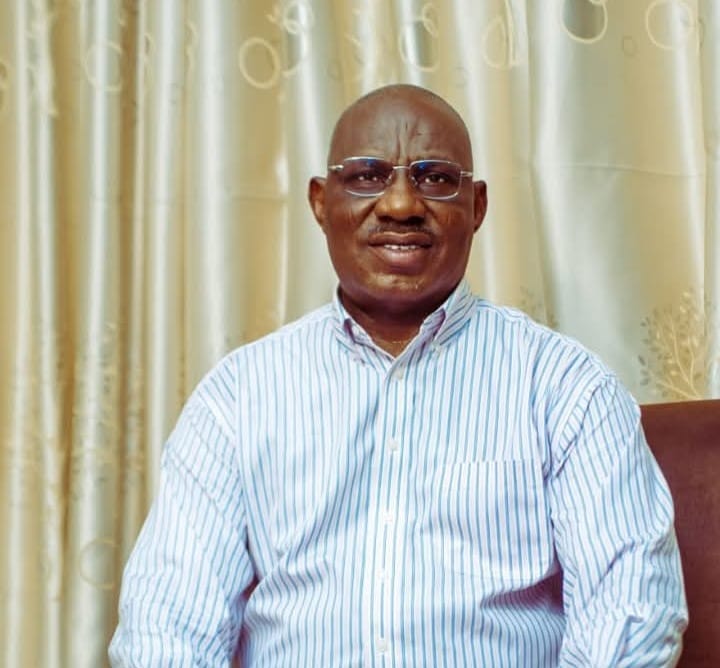
Speaking during an interview on Niger Delta Today on ADBN Television, the Executive Assistant to the Governor on Public Enlightenment (Projects and Policies), Mr. Olisa Ifeajika, described the ranking as a testament to Governor Oborevwori’s preparedness for leadership and unwavering commitment to delivering meaningful development across Delta State.
According to Ifeajika, the governor’s strong performance in office has not come as a surprise to many Deltans who closely followed his political trajectory, particularly his tenure as Speaker of the Delta State House of Assembly.
He described Oborevwori as a “prepared leader” who assumed office with a clear vision of governance and a deep understanding of the needs of the people, unlike politicians who only emerge during election periods.
“Governor Sheriff Oborevwori was prepared for the task of governing Delta State. His leadership style is not accidental; it is the product of years of experience in public service and a profound understanding of the state’s developmental needs,” Ifeajika stated.
The governor’s aide recalled that Oborevwori served as Speaker of the Delta State House of Assembly for six years—the longest-serving Speaker in the state’s history—and earned widespread acclaim for his prudent management of public resources.
He noted that the governor’s reputation for fiscal discipline was further reinforced when he reportedly returned over N500 million in unspent funds to the state treasury at the end of his tenure as Speaker.
According to Ifeajika, the same culture of accountability and responsible resource management now defines the Oborevwori administration.
He emphasized that every government project undergoes rigorous needs assessment to ensure value for money and maximum impact on communities.
“Every kobo spent by the government must deliver value. The governor insists that public funds be utilized for meaningful development. Projects are not awarded arbitrarily; they are based on the genuine needs of communities,” he said.
Highlighting the administration’s commitment to equitable development, Ifeajika disclosed that Governor Oborevwori introduced a deliberate policy of allocating dedicated funds for infrastructure projects across all 25 local government areas of the state.
He explained that the administration earmarked N1 billion for projects in each local government area in its 2023 budget, increased the allocation to N2 billion the following year, and further raised it to N4 billion in the current fiscal year.
According to him, the initiative is designed to ensure balanced development across the state rather than concentrating projects in a few select locations.
“There is a deliberate effort to touch every local government area almost simultaneously. Funds are already provided in the budget, and government only identifies the most pressing needs of the people before executing projects,” he explained.
Ifeajika further noted that Governor Oborevwori personally monitors projects through regular inspection tours across the state to ensure contractors adhere to specifications and deliver quality work within stipulated timelines.
Addressing suggestions that the recent governance ranking may have been influenced by lobbying, Ifeajika dismissed such claims, insisting that the recognition was earned through verifiable achievements and measurable governance outcomes.
He pointed out that the governor has received several awards and recognitions from both public and private organizations over the past two years, describing the latest ranking as yet another independent validation of the administration’s performance.
“This cannot be dismissed as a fluke or something that was lobbied for. It reflects the reality on the ground in Delta State. The governor’s achievements are visible and have been acknowledged by various organizations,” he asserted.
Ifeajika also revealed that the administration has strengthened transparency and accountability in project execution by encouraging whistleblowing and public participation in monitoring government projects.
Expressing confidence in the administration’s performance, he maintained that residents across the state would readily attest to the positive impact of government policies and projects in their communities.
Delta State was ranked second in the 2025 Governance Performance Index with a score of 70 percent, trailing Kaduna State, which scored 73 percent, and outperforming the remaining 34 states of the federation.
The assessment evaluated governance outcomes, public service delivery, infrastructure development, and the effectiveness of public administration across Nigeria’s 36 states.