
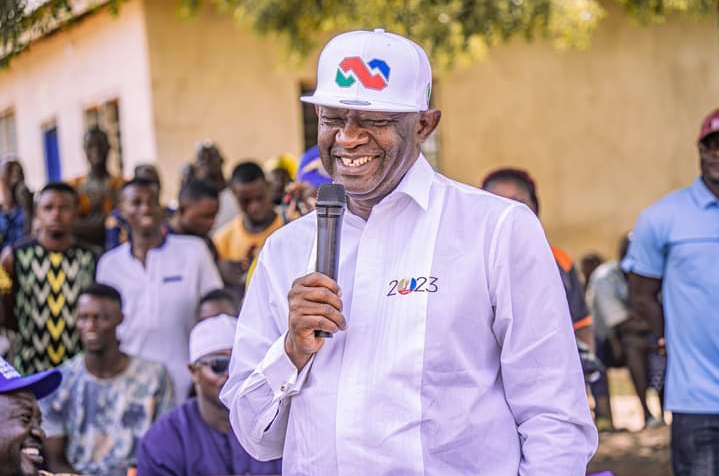
HOW SUNDAY KARIMI’S GRASSROOTS APPEAL IS REDEFINING REPRESENTATION IN KOGI WEST
Across villages, markets, and campuses in Kogi West, one name resonates whenever conversations turn to impactful leadership, Senator Sunday Karimi, who represents Kogi West Senatorial District in the National Assembly, the lawmaker has built what pundits describe as a rare form of organic followership, loyalty earned not through rhetoric or campaign slogans, but through tangible projects, visible interventions, and direct engagement with the people.
From roads and bridges to classrooms and economic empowerment initiatives, Senator Karimi’s representation has steadily reshaped public expectations of legislative service.
His influence was evident in his overwhelming victory at the recent APC Kogi West Senatorial District primaries, a development many analysts see as public endorsement of his performance in office.
The senator believes the renewed mandate presents another opportunity to consolidate on his achievements and correct perceived shortcomings from his first term.
It is this deep-rooted grassroots connection that has made Senator Karimi a household name. By his own admission, service sometimes comes with difficult decisions.
“In the course of service, you may step on toes,” he said. “But I appeal to the people to look beyond any perceived missteps. Lessons have been learnt. I will remain a servant representative, delivering service on all fronts.”
For over a decade, the Kabba–Ilorin Road remained an abandoned promise, symbolizing failed infrastructure commitments in the district. Under Senator Karimi’s sustained intervention, however, the road has returned to life.
By deploying personal resources, facilitating strategic partnerships with relevant agencies, including the Federal Ministry of Works, and ensuring contractors returned to site, the long-neglected project regained momentum.
The impact is already being felt. Improved movement along the corridor has eased transportation of agricultural produce and reconnected communities previously isolated by poor road conditions.
That intervention is not isolated. The once-dangerous Pakuta Bridge, notorious as a death trap for commuters and farmers, has been reconstructed. Several rural roads across the district have also received attention, reducing travel time and opening economic opportunities for traders who previously suffered losses due to poor access routes.
If infrastructure moves people, education shapes generations — and Senator Karimi has invested heavily in that future.
This academic session alone, more than 4,000 students in tertiary institutions across Kogi State benefited from his bursary scheme, with over ₦400 million committed to tuition support.
At Titcom College, Egbe, he facilitated the construction of a state-of-the-art Computer-Based Test (CBT) centre valued at over ₦350 million, ending years of hardship for students who had to travel long distances to write examinations across the Okun-speaking axis. Similar CBT centres are nearing completion in Lokoja, Mopa, and Yagba East.
Perhaps his flagship education intervention is the complete reconstruction of Government Science Secondary School (GSSS), Koton — one of Kogi State’s most iconic public schools. With over ₦1.3 billion invested, the institution has undergone a remarkable transformation.
Today, parents and teachers describe the school as a benchmark for public education in the state, boasting modern classrooms, hostels, laboratories, and digital learning facilities.
Senator Karimi’s strongest political base appears to be among women and young people.
Through cooperative support schemes, hundreds of women in Kogi West have received grants and vocational support to expand small businesses in sectors ranging from food processing to tailoring and retail trade. Farmers and artisans have equally benefited from equipment distribution and micro-grants.
In Lokoja and across the district, traders, welders, carpenters, and farming groups have all received targeted support aimed at boosting productivity and livelihoods.
For many observers, such direct engagement with market women and rural producers is uncommon for a senator. For Karimi, however, it has become a defining feature of his leadership style.
Recognizing that development cannot thrive without security, the senator also facilitated the construction of a ₦750 million military Forward Operating Base to strengthen security operations against banditry and kidnapping along Kogi West’s borders.
Traditional rulers and local government officials have credited the facility with improving response time by security agencies and boosting public confidence in vulnerable communities.
Veteran politicians of Kogi politics argue that it is difficult to identify another first-term representative in the current democratic dispensation with a comparable spread of interventions.
From education to infrastructure, security to economic empowerment, Karimi’s projects span all seven local government areas of Kogi West.
His message to party stakeholders remains one of unity and collective responsibility.
“All hands must be on deck,” he has repeatedly told APC members and leaders.
With Kogi West widely regarded as a stronghold of the All Progressives Congress (APC), Karimi maintains that the district must continue to deliver strong electoral support for the party.
He argues that under the administration of President Bola Ahmed Tinubu, Kogi West has witnessed increased federal appointments and infrastructure attention, gains he believes must be consolidated through party cohesion and grassroots mobilization.
This explains his consistent appeal to party faithful to reject divisive tendencies.
Walk through campuses across Kogi West and one recurring phenomenon stands out: youths who proudly identify as Karimi’s “vanguard.”
Their admiration extends beyond bursaries and CBT centres. Many cite his accessibility as a major reason for their loyalty. Unlike the stereotypical distant lawmaker, Karimi is known for taking calls, attending community engagements, and responding personally to constituents’ concerns.
That accessibility, combined with youth-focused interventions, has created a support base that many say requires little formal political machinery to mobilize.
“He is deeply rooted in the hearts of rural dwellers,” a community leader in Yagba East observed. “Even with opposition candidates in the race, his re-election appears almost certain.”
As attention gradually shifts to the next political cycle, Senator Karimi continues to preach unity among APC members.
He has urged party stakeholders to set aside internal disagreements and work collectively to ensure President Tinubu secures overwhelming support in Kogi State.
“Kogi West has always been APC. We must not take that for granted,” he said. “If we stand together, we secure more appointments, more projects, and greater respect at the national level.”
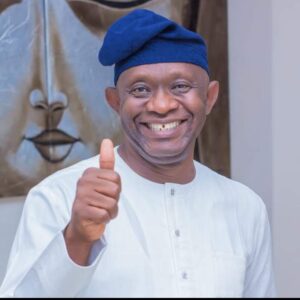
Senator Sunday Karimi representing Kogi West Senatorial District at the Senate
Senator Karimi does not claim perfection. He openly acknowledges that leadership can sometimes create friction. Yet, he leans on his record of performance and enduring relationship with the people.
“Since the return of democracy, it is difficult to match this level of representation in one term,” he said. “If I have offended anyone in the process of fighting for our people, I ask for forgiveness. I remain your servant, and I will continue to deliver.”
For many residents of Kogi West, that humility, combined with visible results, explains why he is widely referred to as The People’s Senator.
In an era when Nigerian politics is often criticized for the widening gap between leaders and citizens, Senator Sunday Karimi’s grassroots appeal presents a contrasting model of leadership: show up, deliver results, and remain close to the people.
As the Kabba–Ilorin Road prepares for fresh asphalt and students in Egbe, Koton, Mopa, and Lokoja access modern CBT facilities, the message from the grassroots is increasingly clear: Kogi West has found a representative who understands that true political power ultimately resides with the people.