
Delta 2026 Investment Summit: Why the World Is Turning Its Attention to Nigeria’s Emerging Economic Frontier
By Fred Latimore Oghenesivbe, Esq.
Director-General, Delta State Bureau for Communications
The Delta State Economic and Investment Summit 2026 is being convened because Delta State has reached a point where her strengths, potentials, and opportunities can no longer remain hidden from the world. With vast natural resources, strategic location, abundant gas reserves, and growing investor confidence, Delta State is positioning itself as a destination for global capital, industrial expansion, and sustainable economic growth. These potentials form the foundation of the summit’s theme: “Harnessing Our Strengths, Unlocking Our Potentials.”
The state’s economic strengths are both extensive and diverse. Beyond its position as one of Nigeria’s leading oil-producing states, Delta boasts significant natural gas reserves, fertile agricultural land, abundant freshwater resources, thriving fisheries, rich forests, solid mineral deposits and access to vital maritime routes. Its strategic location in the heart of the Niger Delta, coupled with a growing infrastructure network and a dynamic workforce, gives it a competitive advantage across sectors ranging from energy and manufacturing to agriculture, logistics, tourism and the blue economy.
Beneath the fertile soils of Delta State, across its vast gas fields, winding waterways, industrial corridors and expansive coastline lies an economic potential capable of reshaping the future of one of Nigeria’s most strategically positioned states. Rich in natural resources and endowed with a vibrant entrepreneurial population, Delta possesses many of the ingredients required for rapid economic transformation.
Over the past three years, the administration of Governor Sheriff Oborevwori has pursued an ambitious development agenda anchored on the M.O.R.E Agenda. The philosophy behind the agenda is simple but profound: to create the conditions necessary for economic growth, social stability, infrastructure expansion, private-sector confidence, and shared prosperity. The expected outcomes include capital inflows, job creation, improved infrastructure, economic growth, and a stronger investment climate.
Across the state, the implementation of the M.O.R.E Agenda has translated into an aggressive infrastructure drive, governance reforms, improved public service delivery, strengthened security architecture and deliberate efforts to make Delta more competitive in an increasingly interconnected economy. The administration has consistently emphasised the importance of creating an environment where businesses can thrive, investors can operate with confidence, and economic opportunities can be expanded across sectors.
The agenda itself identifies private-sector growth, public-private partnerships, industrialisation, gas-based development, and investment attraction as critical pillars for long-term prosperity.
The results are attracting national attention. Delta State recently emerged as Nigeria’s second-best governed state in the 2025 Commonwealth Institute of Advanced and Professional Studies Governance Performance Index, ranking ahead of 34 states and earning recognition for its performance in governance, infrastructure development, public service delivery and overall management of state affairs. Yet for a state widely regarded as one of Nigeria’s economic powerhouses, governance reforms and infrastructure investments represent only one phase of the journey. The next phase is investment.
That reality explains why the Delta State Economic and Investment Summit, scheduled for August 3–5, 2026, may prove to be one of the most consequential economic gatherings ever hosted by a sub-national government in Nigeria. The summit is not merely another conference on economic development; it is the strategic bridge between government-led development and private-sector-driven prosperity. Having invested heavily in roads, bridges, urban renewal, connectivity, institutional reforms and peace-building initiatives, the Oborevwori administration is now seeking to leverage those gains to attract large-scale domestic and foreign investments capable of accelerating industrialisation, job creation and economic diversification.
Delta is approaching investors not from a position of promise alone but from a position of strength. As one of Nigeria’s richest states and a major contributor to the national economy, Delta possesses enormous reserves of oil and gas, extensive arable land, vast freshwater resources, rich maritime assets, thriving commercial centres and one of the most dynamic private-sector environments in the South-South region.
The state occupies a strategic location within the Niger Delta and serves as a gateway to domestic and international markets. Its vast gas reserves, among the most significant in the country, provide a competitive advantage for industrialisation and manufacturing, while its agricultural potential offers opportunities across the entire value chain, from production and processing to exports and agro-industrial development. The M.O.R.E Agenda specifically identifies gas-based industrial parks, agro-industrial expansion, manufacturing growth, investor-friendly reforms, and public-private partnerships as key drivers of the state’s future economy.
This is why the timing of the summit is particularly significant. Around the world, investors are searching for emerging destinations that combine resources, stability, infrastructure, and political commitment. Delta State believes it now possesses that combination. More importantly, it is prepared to compete aggressively for global capital.
Stakeholders are optimistic that the summit will attract investors, development finance institutions, multinational corporations, diplomats, and business leaders from around the world and several African countries. Discussions will focus on energy, gas development, manufacturing, agriculture, logistics, technology, tourism, infrastructure, maritime services, and the blue economy. However, the ultimate objective extends beyond discussions. Expectations are high that the summit will facilitate strategic partnerships, memoranda of understanding, public-private partnership arrangements, and investment commitments capable of unlocking new industrial projects and expanding economic opportunities across the state.
Potential investors are expected to be presented with a range of incentives designed to enhance the ease of doing business in Delta State. These include structured public-private partnership opportunities, streamlined investment facilitation processes, access to strategic project locations, land acquisition support, Certificates of Occupancy for qualifying investments, and carefully designed fiscal incentives aimed at encouraging long-term capital commitments. The underlying objective is clear: to create an environment where investors can deploy capital with confidence while generating sustainable value for both businesses and host communities.
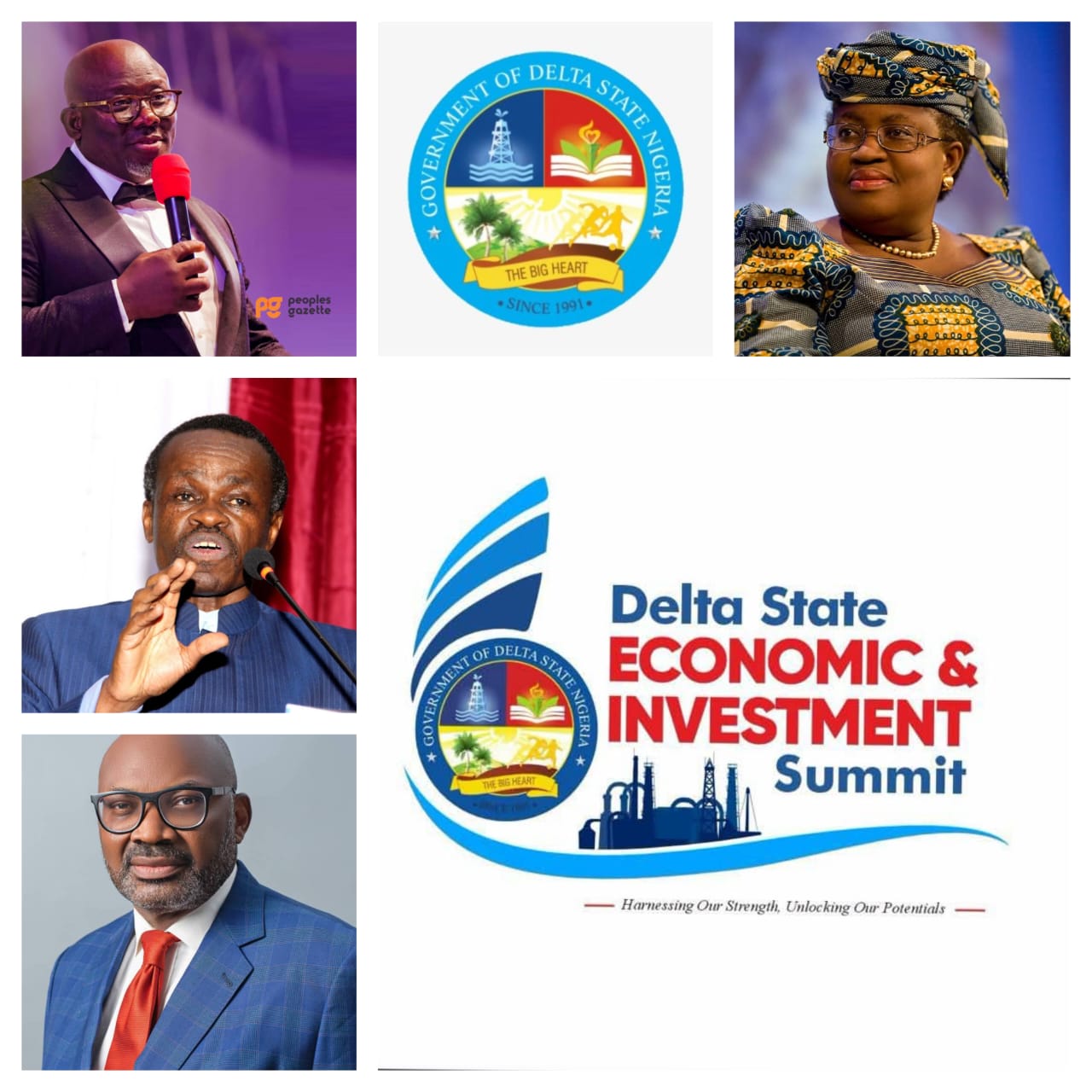
Against this backdrop, the confirmation of globally respected economic and intellectual leaders has added considerable weight to the summit and amplified international interest in Delta State’s economic story. Leading the list is Ngozi Okonjo-Iweala, Director-General of the World Trade Organization, whose participation as keynote speaker brings a level of global visibility rarely associated with sub-national investment summits. As one of the most influential voices in international trade and economic development, her presence places Delta State in direct conversation with global economic leadership and offers a unique platform for showcasing investment opportunities before an international audience.
Joining her is Patrick Lumumba, the renowned Kenyan scholar, Pan-Africanist, and public intellectual whose perspectives on governance, leadership, and Africa’s development have earned global respect. His contribution is expected to enrich conversations on how African economies can harness their strengths, confront structural challenges, and unlock sustainable growth.
The summit will be chaired by Austin Avuru, one of Nigeria’s most respected energy industry leaders. His participation further reinforces Delta State’s strategic relevance within the energy sector and highlights the opportunities that exist in gas development, industrial expansion, and infrastructure investment.
Taken together, the presence of these distinguished personalities sends a powerful signal to the global investment community. It signals confidence. It signals credibility. More importantly, it signals readiness.
In today’s economy, investment decisions are influenced not only by natural resources and market opportunities but also by governance quality, institutional stability, and investor confidence. States that successfully combine these factors are often the ones that attract transformational investments capable of reshaping their economic future.
Delta State is determined to position itself within that category. The recent inauguration of the summit’s Publicity Subcommittee by the Secretary to the State Government, Kingsley Emu, underscores the seriousness with which preparations are being pursued The committee, chaired by Charles Ehiedu Aniagwu, has been tasked with ensuring that investors, development partners, and the wider public fully appreciate the opportunities that Delta State has to offer.
Ultimately, the significance of the Delta State Economic and Investment Summit 2026 will not be measured by the prominence of its speakers or the elegance of its presentations. Its true measure of success will be found in the partnerships forged, the investments secured, the industries established, the jobs created, and the opportunities unlocked for future generations.
For Governor Oborevwori’s administration, the summit represents the logical next step in the implementation of the M.O.R.E Agenda. Having focused on building infrastructure, strengthening governance, enhancing peace and security, and improving the investment climate, the state is now moving to attract the capital required to convert those foundations into accelerated economic growth.
The message to investors is both simple and compelling: the groundwork has been laid, the reforms perfected, the opportunities are abundant, and the government is prepared to partner with the private sector to unlock shared prosperity.
As the world turns its attention to Delta State this August, the summit offers more than a glimpse into the future of one state. It presents a vision of how strategic leadership, prudent governance, and purposeful investment can transform resource wealth into broad-based prosperity.
For Delta State, this is not merely another event on the calendar. It is a declaration that one of Nigeria’s most resource-endowed and best-managed economies is ready for its next phase of growth and ready to do business with the world.