
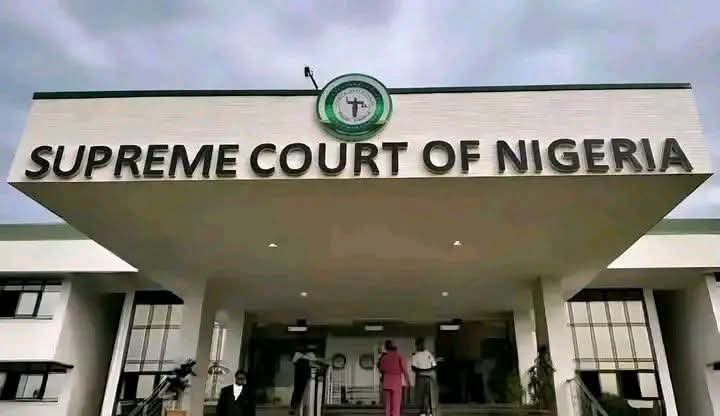
…Say only aspirants who participated in primaries can challenge candidacies
By Our Correspondent
Legal practitioners have clarified that the recent Supreme Court judgment restoring key provisions of the Electoral Act 2026 does not automatically invalidate nominations already made by political parties ahead of the 2027 general elections.
The lawyers also said the judgment does not give the Independent National Electoral Commission (INEC) the power to unilaterally disqualify candidates over alleged defects in the nomination process.
The Supreme Court, on Thursday, September 24, 2026, restored Sections 77(5), 77(6), 77(7) and 84(2) of the Electoral Act 2026, which had earlier been nullified by the Court of Appeal.
The provisions relate to political party membership registers and the nomination of candidates, including requirements concerning the use of membership registers submitted to INEC for primaries, congresses and conventions.
Section 84(2), among other provisions, also deals with the nomination of candidates through direct primaries or consensus.
However, reacting to concerns that the judgment could affect candidates who had already emerged from party primaries, Senior Advocate of Nigeria (SAN), Sulman Jawondo, said the ruling should not be interpreted as automatically invalidating existing nominations.
Speaking in an exclusive interview with National Pilot, Jawondo said the legal effect of any nomination dispute would depend on the facts and circumstances of each case.
“The judgment does not affect any nomination in Nigeria. Nomination is case specific,” he said.
The senior lawyer further argued that INEC does not have the authority to independently disqualify a candidate based on an alleged defect in the nomination process.
“INEC did not have the power to disqualify anybody, no matter how wrong the nomination process is,” he said.
According to Jawondo, the authority to determine whether a nomination is legally defective rests with the courts where a proper challenge is brought.
“It is only the court that can do that,” he said.
He also maintained that not every individual has the legal standing to challenge the emergence of a political party’s candidate.
According to him, the right to challenge a candidate’s emergence belongs to an aspirant who participated in the relevant party primary.
“The only person that can challenge it is an aspirant that participated in the primary election,” Jawondo said.
He consequently dismissed concerns that the Supreme Court judgment had created a fresh legal crisis for existing nominations.
“There is no problem with the legal circle,” he stated.
Nomination Disputes Are Between Aspirants, Not INEC and Parties — Lawyer
Another legal practitioner, Issa Manzuma, similarly said disputes concerning the emergence of candidates should not be misconstrued as a dispute between INEC and political parties.
According to Manzuma, the central issue in a nomination dispute is the relationship between aspirants who participated in the relevant party primary and the candidate eventually nominated by the political party.
https://punchng.com/beneficiaries-of-conditional-cash-transfer-not-on-social-media-yilwatda
“It is the aspirants that can challenge a candidacy in court,” he said.
He stressed that where a dispute arises over the nomination process, the matter is essentially between the individuals who participated in the primary rather than a dispute between INEC and the political party.
“The issue is not between INEC and the party but between individuals who participated in the party primaries,” Manzuma said.
Supreme Court Judgment and 2027 Elections
The lawyers’ comments come amid heightened interest in the implications of the Supreme Court judgment ahead of the 2027 general elections.
The judgment followed an appeal by INEC against a July 2026 decision of the Court of Appeal, which had struck down the four provisions after the Zenith Labour Party challenged their constitutionality.
A seven-member panel of the Supreme Court, in a unanimous decision led by Justice Adamu Jauro, held that the disputed provisions were not inconsistent with the 1999 Constitution.
The apex court consequently restored the Federal High Court judgment that had earlier dismissed the constitutional challenge.
The ruling has since generated discussions among political parties, aspirants and legal practitioners over the implications of the restored provisions for party primaries, candidate nominations and electoral litigation ahead of the 2027 elections.
However, the lawyers’ interpretation is that the restoration of the provisions does not, by itself, invalidate candidates who have already emerged from party primaries. Any specific challenge to a nomination, they maintained, would have to be determined through the appropriate legal process.