
APC Convention: Oborevwori Highlights Governance Gains And Fiscal Stability Under Tinubu
By Fred Latimore Oghenesivbe Esq
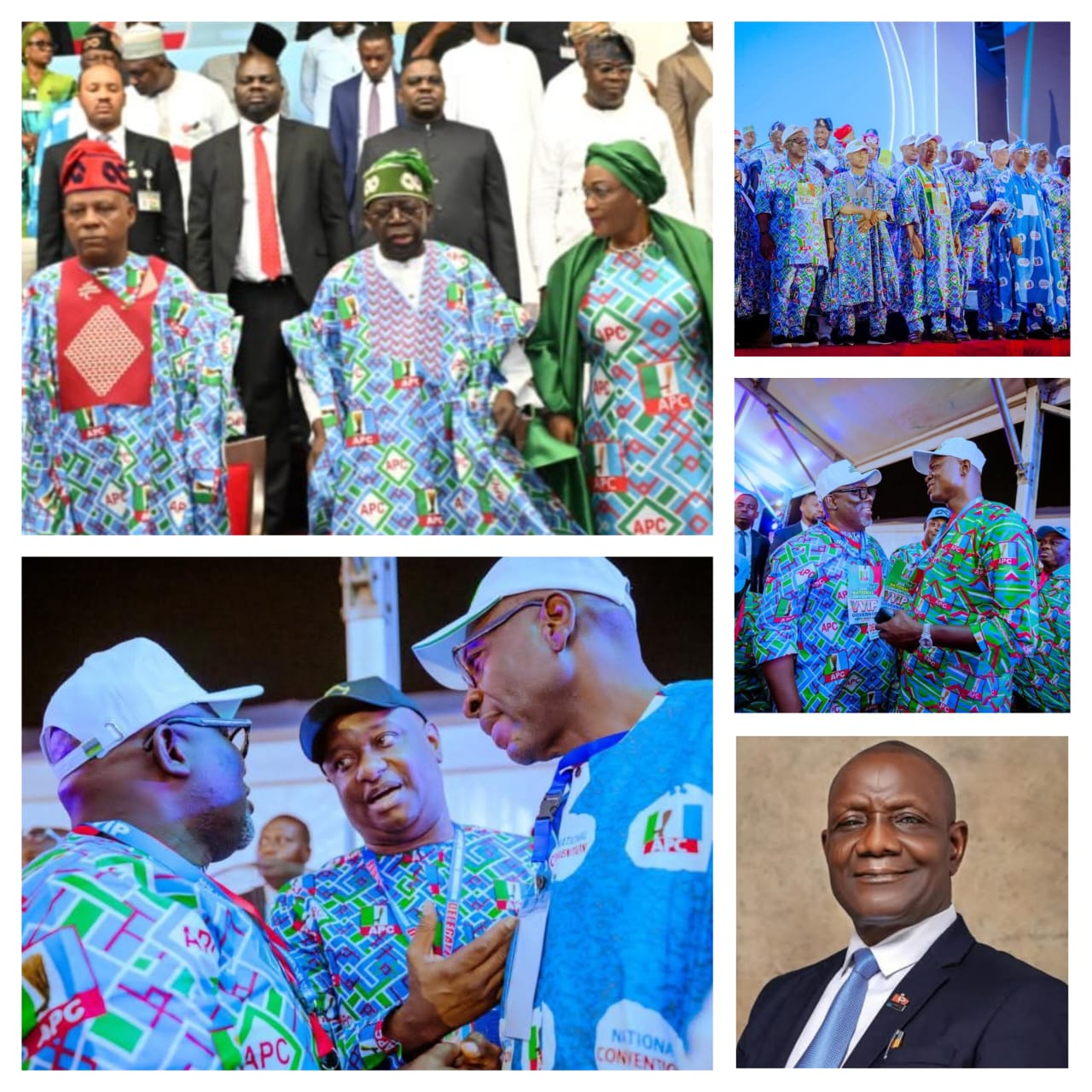
Nigeria’s evolving multi-party democracy took centre stage in Abuja on Friday, as the All Progressives Congress (APC) held its National Elective Convention at Eagle Square, an event that combined political theatre with strategic consolidation of power.
Against a backdrop of party loyalists, 31 state governors, federal leaders and 8,453 party delegates, the gathering underscored the APC’s growing dominance and raised fresh questions about the grossly ineffective opposition politics in the country. It’s crystal clear that opposition parties cannot and will not be able to present a counterweight with the unarguable political dominance of the APC.
At the heart of the narrative was Delta State Governor Sheriff Oborevwori, whose defection to the ruling party in April 2025 has become emblematic of a broader realignment within Nigeria’s political landscape.
Addressing journalists on the sidelines of the convention, Oborevwori framed his move not merely as political reinforcement, but as a calculated step toward strengthening governance through federal alignment. His message was clear: proximity to the centre of power matters in a federal system where resources, influence, and policy direction are often shaped at the national level.
“The decision to join APC was about connecting Delta State to the centre, and that connection is already yielding results,” he said, pointing to improved fiscal inflows and enhanced capacity to deliver on governance priorities.
For Delta State, Oborevwori highlighted tangible gains such as improved infrastructure development, more consistent salary payments, and renewed contractor confidence driven by better fiscal discipline. Roads, healthcare systems, and educational institutions are receiving increased attention, reflecting what the governor described as “a government that is now able to effectively plan and execute with clarity.”
The convention itself carried deeper political symbolism. In a multi-party democracy where competition is expected to foster accountability, the sheer scale of APC’s influence, now boasting 31 governors, signals an era of unprecedented political sagacity, national unity and enhanced participatory democracy.
For supporters of the APC, this massive political strength represents stability and policy coherence; for critics, it raises concerns about the uncertainty of opposition forces and the tendency of diminished voices and staggering political plurality. However, Nigeria remains a multi party system with over 21 registered political parties.
Oborevwori, however, cast the development as a vote of confidence in the leadership of President Bola Ahmed Tinubu, whom he described as “focused and bold” in navigating complex economic reforms. Indeed, much of the convention’s undertone revolved around the reform agenda of the Tinubu administration.
While acknowledging the economic strain experienced by citizens, APC leaders framed current hardships as the inevitable cost of structural correction. Within that context, state governments now benefiting from increased allocations, and repositioned as engines of delivery.
Delta APC Congress: Niboro Hails Oborevwori For Uniting Party, Saving It From Collapse
Beyond infrastructure, governor Oborevwori pointed to improved security in oil-producing areas, a development with both economic and political implications. Stability in the Niger Delta not only boosts national revenue but also reinforces the narrative of effective governance under President Tinubu’s leadership.
For APC stakeholders, the convention was more than a routine party exercise, it was a demonstration of unity, momentum, and strategic depth. For the opposition, it served as a stark reminder of the challenges ahead in presenting a credible counterweight.
As the political dust settles, one thing remains evident: the intersection of governance performance and political alignment will continue to shape Nigeria’s democratic experience.
And for leaders like governor Oborevwori, the message from Abuja is unmistakable; power, when aligned, is not just political capital, but a pathway to accelerated development.
***
The Writer, Dr Fred Latimore Oghenesivbe Esq, is the Director General of Delta State Bureau for Orientation and Communications, Governor’s Office Asaba.