
By Abubakar Yusuf
Three years into the administration of Dr. Rabiu Onaolapo Olowo as Chief Executive Officer and Executive Secretary of the Financial Reporting Council of Nigeria (FRC), the council has embarked on a series of administrative, operational and regulatory reforms aimed at strengthening its institutional capacity and improving financial reporting standards in Nigeria.
Olowo was appointed by President Bola Ahmed Tinubu on October 12, 2023, with a mandate that included repositioning the council, strengthening its operations and improving its effectiveness as Nigeria’s financial reporting regulator.
Since assuming office, the FRC leadership has focused attention on regulatory oversight, staff development, infrastructure, revenue generation, service delivery and greater engagement with stakeholders.
Repositioning the FRC
The reforms under Olowo have been presented as part of the broader institutional renewal agenda of the Federal Government.
One of the areas that has attracted attention is the council’s physical infrastructure and working environment.
After years of operating from less suitable locations, the FRC embarked on efforts to improve its office facilities, including the development and commissioning of its Lagos headquarters.
The improved office environment has provided a more suitable setting for staff and regulatory operations while reinforcing the council’s institutional identity.
For an organisation responsible for financial reporting standards, monitoring and regulatory oversight, the quality of its working environment is also important to its ability to engage regulated entities and stakeholders effectively.
Strengthening Regulatory Operations
Under the current management, greater emphasis has been placed on monitoring, regulatory compliance, financial reporting and service delivery.
The council has also intensified staff capacity-building initiatives through training, retraining and professional engagements designed to improve technical competence.
Staff welfare, career progression and institutional development have similarly featured in the management’s reform agenda.
Regular promotion, training opportunities and official engagements, according to the assessment of the administration’s performance, are intended to create a more motivated workforce and improve productivity.
New Departments, Broader Capacity
Another component of the restructuring has been the establishment of additional departments to strengthen the council’s operations.
The new structure is intended to improve specialisation, coordination and the council’s ability to discharge its regulatory responsibilities.
The reforms have also placed emphasis on strengthening existing departments while improving internal coordination and accountability.
Expanding Revenue Generation
Revenue generation and financial sustainability have also emerged as important areas of focus.
The council has sought to improve its revenue base while developing additional revenue-generation proposals aimed at strengthening its capacity to finance its operations and regulatory responsibilities.
A stronger revenue base could provide the FRC with greater institutional capacity to invest in technology, staff development, regulatory monitoring and other operational requirements.
From National to International Engagement
The FRC’s activities under Olowo have also attracted attention beyond Nigeria.
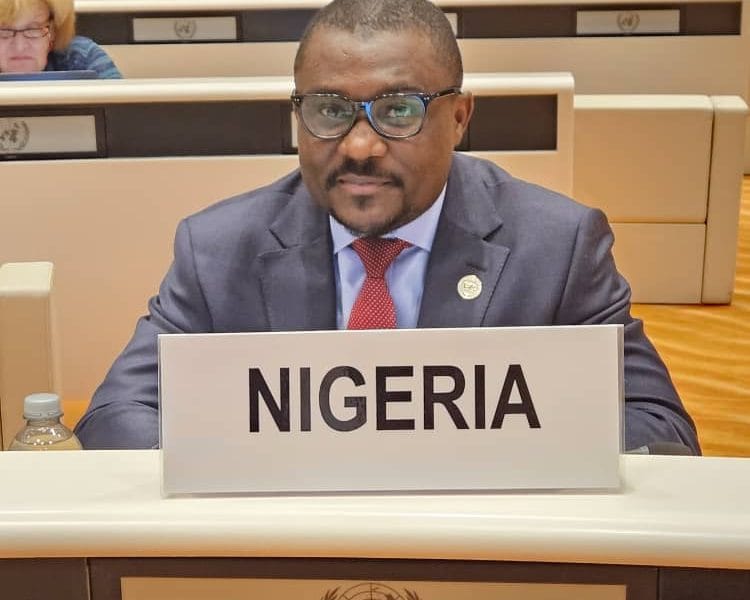
The council’s chief executive assumed the presidency of the 41st session of the United Nations Conference on Trade and Development (UNCTAD), providing an international platform for Nigeria to participate in discussions around trade, development and global economic issues.
The international engagement provided an opportunity for the FRC leadership to project Nigeria’s perspectives within a wider multilateral environment while continuing its domestic regulatory responsibilities.
Human Capital and Staff Welfare
For any regulatory institution, the quality of its workforce remains central to effective service delivery.
The FRC management has therefore placed emphasis on staff development, welfare, professional training and institutional capacity building.
The objective is to ensure that personnel remain equipped to respond to the increasingly complex demands of financial reporting, corporate governance, regulatory compliance and international standards.
Three Years of Institutional Transformation
Three years after the appointment of Olowo, the FRC is presented by its management and supporters as an institution undergoing significant administrative and operational transformation.
The focus has extended from infrastructure and staff welfare to regulatory monitoring, capacity building, revenue mobilisation and international engagement.
The longer-term measure of the reforms, however, will ultimately rest on the council’s ability to sustain these improvements, strengthen compliance with financial reporting standards and deliver measurable value to the Nigerian economy.
https://globaltimesnigeria.com/2026/10/04/delta-anti-trafficking-campaign-oghenesivbe/
For Olowo and his management team, the challenge is to consolidate the gains of the past three years while ensuring that the FRC continues to evolve in line with changing national and global financial reporting requirements.
As Nigeria continues to pursue economic reforms under the Renewed Hope Agenda, the effectiveness of institutions responsible for transparency, accountability and financial reporting will remain an important component of the country’s broader governance and economic development efforts.
Written by Abubakar Yusuf