
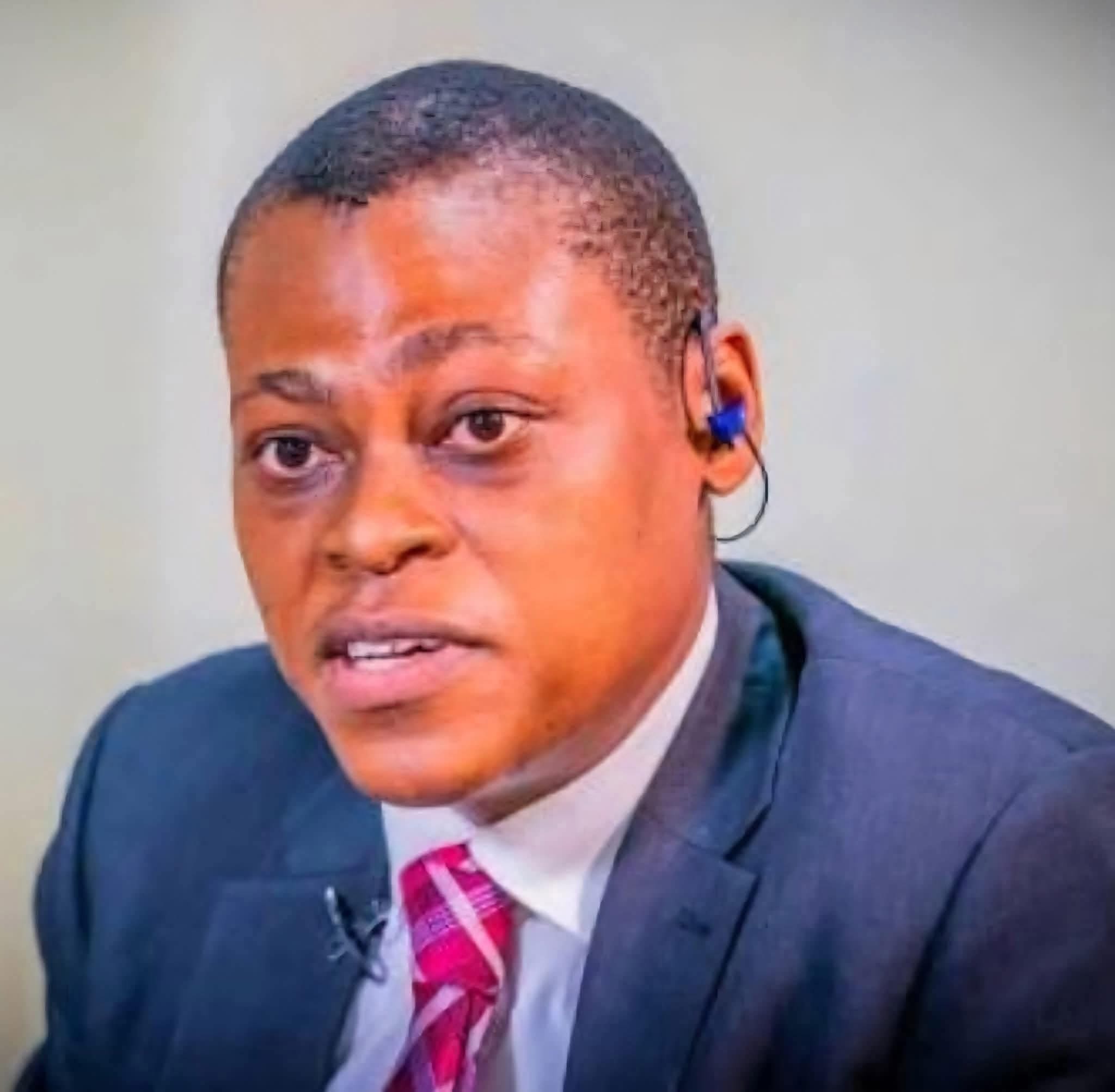
Rufai Oseni and the Journalism Profession (2) by Elempe Dele
In 2022, I wrote the first article with the above title published in Premium Times newspaper of April 29th edition. The reason for the article was the the face-off between Mr. Rufai Oseni of Arise TV and Late Jesutega Onokpasa, SAN, which sent ripples of questions concerning Oseni’s professional conduct as a media personality.
Three years will pass when such direct confrontation would happen again between Oseni and another guest of Arise TV during an interview where he was the host.
This time, the guest was the Minister of Works, Mr. David Umahi.
The confrontation happened after Oseni accused the minister of reporting him to President Bola Tinubu over questions he previously raised about the Lagos-Calabar Coastal road project.
“After you have gone to report me to President Tinubu,” Oseni said, “and said all sorts; I’m not beholden to you… I have empirical evidence; the world watched it when you mentioned the questions I asked you to the president — that was reporting me officially. So, you don’t need to dilly dally about the empirical facts.”
Umahi responded by dismissing the claim after a while, saying Oseni was too insignificant for him to report to the president. “You are too small for me to report to the president. Stop saying I reported you to the President, you’re too small,” he said. Subsequently while the minister was still speaking, apparently being hurt, Oseni served another unfortunate salvo, “keep dignifying yourself and let the world see you for who you are.”
Now, the point which most people are missing in the whole episode is no sane mind is saying Oseni should not ask critical questions; the citizens have a duty to know. As a matter of fact, journalism, which is part of the press and media, is the Fourth Estate.
Apart from reporting news, educating, informing, setting agendas, it has a duty to act as a watchdog in any functioning democracy.
The media (Journalism under our context) also has its core codes and ethics around the world irrespective of the changes that have occurred over time.
The most common shared core elements are the principles of Truthfulness, Accuracy, Fact-based Communication, Independence, Objectivity, Impartiality, Fairness, Respect for Others, and Public Accountability.
This being said, to conduct an interview by an on-air personality(host) there are basic norms that are expected from the him. First, the topic of discussion must be duly researched so as to ask relevant questions.
Open-ended questions are crafted so that the guest can respond with details. The host must listen attentively with rapt attention and show respect to the guest. The host must begin with less complicated questions to help the guest to relax and open up.
The host must pay close attention to the guest’s responses to questions by observing his body language to be able know how to further engage him – if there would be need to show some form of empathy.
The host must do everything possible to keep the guest within course, and he must do so by being polite but persistent if the guest is being elusive. He must however know when the guest is not ready to answer some particular questions. This is where emotional intelligence comes in.
One of the two most important aspect of an interview is that the guest must be respected. There is no option to this.
The host must treat the guest with utmost respect and show him he is being professional by being transparent. Secondly, the host must not be seen interrupting the guest, people have different abilities in process responses during interviews.
So the guest must be given enough time to respond, and if there is need to make them to be time conscious, it must be done with respect and apology.
Anyone who has been watching Oseni interview guests will agree that he has no patience for all the above expectations of a host. We often talk about and make reference to BBC’s Hardtalk; the station’s in-depth interviews with hard-hitting questions and sensitive topics, but we can never say the hosts personalize issues, disrespect their guests or even outrightly insult them. A guest is like an invited king to dine in your house.
The respect of honouring your invitation must not be underestimated. No matter what a guest does during an interview, the host has more of the moral and ethical burden to discharge. The host is the one who is sorting for information, he must stoop low to get the needed information because his audience are eager to know, and he is the conduit.
Generally speaking, people are not attracted to others because they are perfect. People are mostly attracted to others because of their imperfect stories, their sufferings, their challenges, interests they share, the energy they bring to their works…these are parts of the ways we are connected to each other.
If we hide our individual imperfections, people will loose interest in us. We are never perfect, people want to discuss our imperfections, they want to see us in our imperfections, not the projection of the perfect person we claim.
Oseni is not a perfect professional; we must admit this fact whether we like it or not. We love the energy he brings to his work; we must admit this also.
He must therefore leave the prefecture of temperament, the conduct under suffering of personalizing interviews and issues just as doctors are not emotionally attached to their patients. He must realize he has a duty to his audience, not in competition with his guests.
His guests are part of his playground as a professional. He must not be seen as littering the playground with torns and brimstones.
He must start holding flowers before his guest with warm smiles and embrace them as they walk into his alter after honouring his invitations.
He is not doing it for himself, his mind is made up already over most of these issues he ask questions about, he should know he is doing it for the people out there. Of what use, the poet said, is the gay jingling brass bells on the froughty necks of sacrificial lambs? Of what use are unconcluded interviews to the audience?
Elempe Dele is a journalist, an original mind, a poet, a writer and the author of Season of Imperfections. He wrote this article from Abuja.
elempeolubamidele@gmail.com