
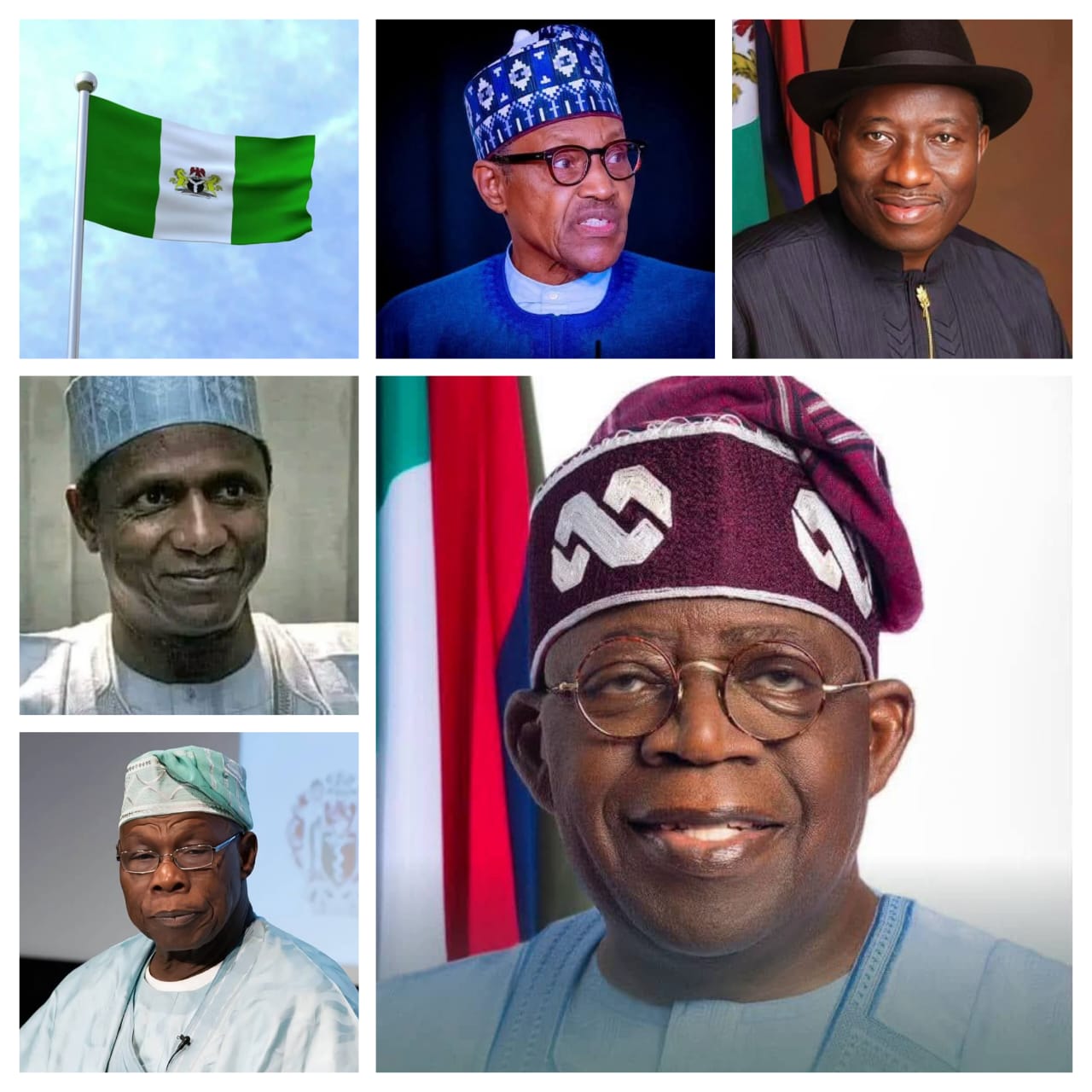
From Independence to Democratic Continuity, Economic Renewal and the Renewed Hope Era
By Fred Latimore Oghenesivbe, Esq.
As Nigeria marks its 66th Independence Anniversary on October 1, 2026, the Green-White-Green flag once again flies across the country, symbolising a nation whose journey has been defined by resilience, sacrifice, adaptation and an enduring determination to remain united.
Sixty-six years after independence, Nigeria’s story is not one of perfection. It is a story of survival, institutional development and continuous national renewal.
From the parliamentary democracy of the First Republic through military rule, the Civil War, economic transitions and constitutional reforms, Nigeria has experienced some of the defining challenges of nation-building.
https://globaltimesnigeria.com/2026/09/29/delta-govt-nigerian-army-92rri-recruitment-2026/
Yet, since the restoration of democratic rule in 1999, the country has sustained an uninterrupted democratic order that has become one of the most significant achievements of the Fourth Republic.
The peaceful transfer of presidential power from President Olusegun Obasanjo to President Umaru Musa Yar’Adua, the constitutional succession of President Goodluck Jonathan following Yar’Adua’s death, the 2015 transition from Jonathan to Muhammadu Buhari and the 2023 transition from Buhari to Bola Ahmed Tinubu demonstrate the continuing evolution of Nigeria’s constitutional democracy.
The Buhari-to-Tinubu transition, in particular, reinforced the principle that presidential authority can change hands without disrupting the constitutional order.
Democracy, however, extends beyond elections. It requires strong institutions, constitutionalism, respect for the rule of law, accountable leadership and citizens who participate actively in national development.
Tinubu and the Economic Reform Agenda
It is against this democratic background that the administration of President Bola Ahmed Tinubu should be viewed.
When the administration assumed office in May 2023, it inherited substantial economic and structural pressures, including fiscal constraints, energy challenges, foreign-exchange distortions, infrastructure deficits and security concerns.
The administration responded with a reform programme covering taxation, petroleum-sector reforms, foreign-exchange management, public finance, investment and infrastructure.
The stated objective has been to establish a stronger productive economy capable of attracting investment, increasing government revenue and reducing structural dependence.
The central challenge now is ensuring that economic growth translates into jobs, stronger businesses, increased household purchasing power and improved living standards.
Infrastructure as an Engine of Growth
Infrastructure remains central to Nigeria’s development ambitions.
The federal government has continued to pursue major road, rail, port, airport, housing and power projects across the country. Among the strategic road corridors being developed are the Lagos-Calabar Coastal Highway, Sokoto-Badagry Super Highway, Abuja-Kaduna-Zaria-Kano Road and sections of the East-West Road.
Infrastructure is not merely about roads and bridges. It is about connecting farmers to markets, manufacturers to consumers, businesses to ports and communities to essential services.
Reliable transportation infrastructure can reduce logistics costs and strengthen economic activity across the federation.
Energy and Domestic Refining
Energy security remains equally important.
Nigeria’s industrialisation ambitions depend heavily on reliable electricity, improved transmission and distribution systems, gas utilisation, renewable energy and decentralised electricity solutions.
The development of domestic refining capacity also provides an opportunity to reduce dependence on imported petroleum products, conserve foreign exchange and create new industrial value chains.
Nigeria’s long-term objective should be an energy system capable of powering manufacturing, agriculture, transportation, digital services and households.
Agriculture and Food Security
Agriculture remains one of Nigeria’s greatest economic assets.
With improved mechanisation, irrigation, agricultural financing, quality inputs, storage facilities, processing capacity and access to markets, the sector can become a major engine of employment and national prosperity.
The objective should be to develop an agricultural economy capable of feeding the country while producing competitive goods for regional and international markets.
Investing in Human Capital
Nigeria’s youthful population is perhaps its greatest strategic resource.
Education and skills development must therefore remain at the centre of national planning.
Federal education initiatives covering technical and vocational education, STEMM development, teacher professionalisation, digital learning and student financing are aimed at aligning education with the needs of a changing economy.
The Nigerian classroom must increasingly connect with the Nigerian economy.
Universities should produce knowledge and research; technical institutions should develop practical skills; and schools should prepare young Nigerians for opportunities in artificial intelligence, digital technology, biotechnology, advanced manufacturing, renewable energy and other emerging sectors.
Healthcare and Social Development
Economic growth must be accompanied by improvements in healthcare and social development.
Investment in primary healthcare, specialist facilities, emergency medical services, health insurance, housing and social protection is ultimately investment in the nation’s human capital.
https://www.naijanews.com/2026/09/30/nollywood-actor-cjay-is-dead/
A healthy population is better positioned to participate productively in the economy.
Security and Development
Security remains fundamental to national development.
Terrorism, banditry, kidnapping, oil theft and other criminal activities continue to pose challenges to communities, businesses and national productivity.
However, security cannot be viewed solely through a military lens.
Education, employment, infrastructure, electricity and economic opportunity can also contribute to long-term stability.
A road that connects an isolated community to markets, for instance, can support both economic development and security.
The Fight Against Corruption
Nigeria’s anti-corruption framework is anchored by institutions including the Economic and Financial Crimes Commission and the Independent Corrupt Practices and Other Related Offences Commission.
The next phase of anti-corruption efforts should increasingly combine enforcement with prevention through digital governance, transparent procurement, stronger auditing, beneficial-ownership transparency and institutional integrity systems.
The ultimate objective should be public institutions where accountability becomes standard practice rather than an afterthought.
Nigeria’s Global Role
Nigeria’s international profile is also evolving.
The administration’s 4D Foreign Policy, Democracy, Development, Demography and Diaspora, seeks to connect Nigeria’s demographic strength, economic interests and global citizenry to its diplomatic engagement.
Nigeria’s role in African integration, regional security and multilateral diplomacy remains significant.
Its participation as a BRICS partner country and its involvement in international disarmament diplomacy provide additional platforms through which Nigeria can pursue economic and strategic interests.
The Nigerian diaspora is another important national asset.
Millions of Nigerians living abroad contribute through remittances, professional expertise, investment, technology transfer and international networks.
Diaspora engagement should therefore remain an important component of national development.
The Nigeria We Must Build
No administration can complete the Nigerian project.
Every government inherits something, builds upon something and leaves something for its successor.
That is the essence of democratic continuity.
As Nigeria looks beyond its 66th year, the national ambition should be clear: a country where security protects communities, electricity powers homes and industries, roads and rail connect farms with factories and markets, ports operate efficiently, education prepares young people for the future and healthcare is accessible.
It should be a Nigeria where agriculture is productive, manufacturing creates jobs, technology drives innovation and public resources are transparently managed.
Democracy must also be experienced beyond the ballot box.
Citizens should encounter government through functional institutions, accessible justice, responsive public services, accountable leadership and meaningful economic opportunities.
Nigeria’s journey since 1960 has been difficult, but it has also produced remarkable achievements.
The country has survived historic national tests, restored democratic government, expanded infrastructure, produced globally competitive entrepreneurs and professionals and maintained an important role in African and global affairs.
The challenges are real, but so are Nigeria’s capabilities.
Renewed Hope and the Road Ahead
President Bola Ahmed Tinubu’s Renewed Hope Agenda forms part of this larger national continuum.
Its enduring significance will ultimately depend on whether reforms become sustainable institutions, infrastructure becomes productive capacity, economic growth becomes shared opportunity, security becomes lasting peace, education becomes human capital and democracy becomes a lived experience of dignity.
At 66, Nigeria is still a work in progress.
The road ahead is long, but the national destination remains clear: a secure, prosperous, democratic, united and globally respected Nigeria.
That is the Nigeria we must build.
That is the Nigeria we must bequeath.
And that is the Nigeria worthy of the sacrifices, hopes and dreams of the nation’s founding generation.
Happy 66th Independence Anniversary, Nigeria.
God bless the Federal Republic of Nigeria.
Fred Latimore Oghenesivbe, Esq., is the Director-General, Delta State Bureau for Orientation and Communications, Governor’s Office, Asaba, and a member of the Nigerian Institute of International Affairs (NIIA).